
The phrase “best cooking games for Android” covers a lot of ground. Sometimes you want that pure, single-level rush where every second matters. Other times you want a slower, cozier loop that lets you sink into a routine, decorate a space, or follow a story without a timer barking at you. The Play Store has oceans of food games, but many feel identical after ten minutes. The ones below don’t. They each have a strong core loop, a sense of identity, and enough progression to keep you checking back in. They also cover different tastes: classic time management, narrative slice-of-life, idle management, and builder-style cafe sims.
One note on expectations. Most mobile cooking games rely on free-to-play economies. That usually means upgrade timers, energy systems, or currency gates. The good versions balance pace and pressure so you can move forward without hitting a grind wall every night. I’ve focused on titles that respect your time and feel fair, even if you never spend a cent. And because people search this topic looking for games they can download today and actually enjoy, I’ve kept the picks to seven. It’s enough to cover the bases without tossing in reheated clones.
Good Pizza, Great Pizza
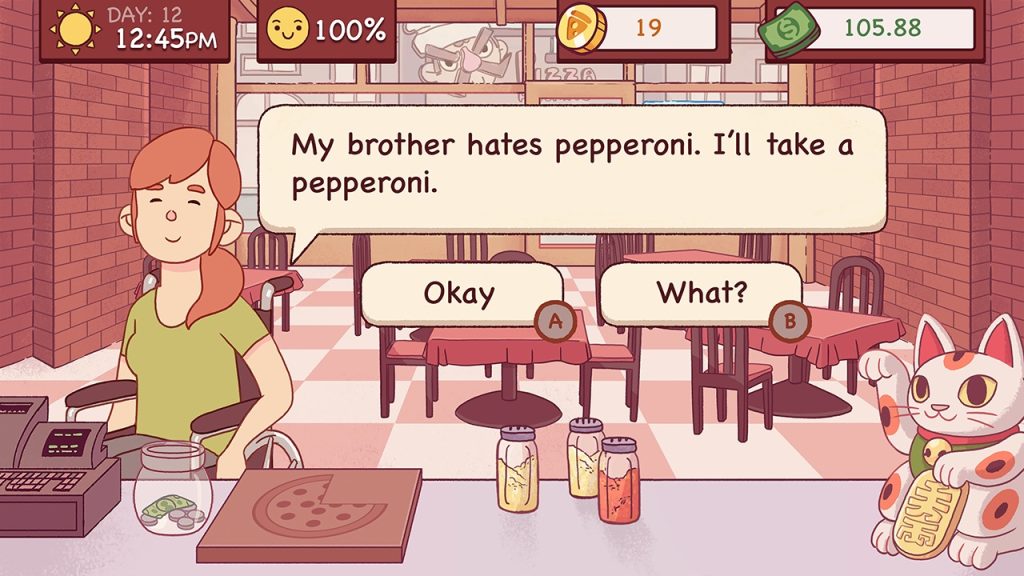
If most cooking games are marathons of multitasking, Good Pizza, Great Pizza moves to a calmer beat. You run a small pizza shop, one day at a time. Customers file in with oddly specific requests. Some speak clearly. Others hint. “I want it crispy, but not too crispy,” or “Half pepperoni, but only on the left.” Your job is to interpret those orders, make the pie, bake it the right amount, slice it the right way, and keep the lights on with a thin margin.
The core loop is steady and satisfying. You pick the dough, add sauce and cheese, portion toppings, and slide the pie into the oven. You decide when to pull it to hit the requested doneness. Then you slice into the number of pieces the customer expects. Each step is tactile and a little fussy in a good way. Money from the day goes toward new toppings, equipment upgrades, rent, and sometimes repairs. Progression is clear. Better gear helps you bake faster and more evenly. New toppings invite trickier orders and higher payouts.
What stands out is how the game uses ambiguity as challenge instead of reflex speed. Decoding a request and getting it exactly right is the point. You feel it when you hand over a perfect pizza and the customer smiles. You feel it even more when you misread a request and watch your margin shrink. It is not a twitchy, multi-counter frenzy. It is a focused, task-by-task rhythm that plays well on a commute or sofa. Sessions last a few in-game days, then you stop naturally.
Monetization is present but light-touch. The main loop doesn’t force daily logins to keep up. If you want shiny cosmetics or faster upgrades, you have options, but the base game remains intact. If your idea of a cooking game is puzzle-like precision and gentle pressure instead of constant panic, this is the one to start with.
Cooking Fever
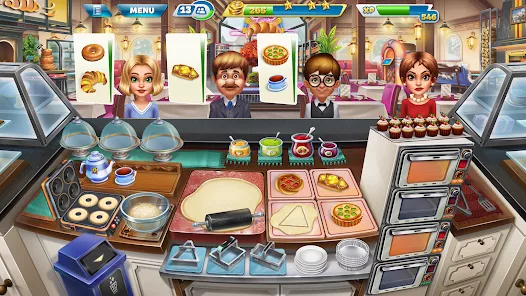
Cooking Fever is the template a lot of copycats chase. You stand behind a counter, grill or fry items, assemble orders, and fire them out to impatient customers who line up in waves. The loop is pure time management. As levels progress, your menu widens, customer patience tightens, and your kitchen fills with appliances that need to be juggled like plates at a circus.
It works because every decision happens in motion. Do you queue two burger patties or three? Do you pre-toast buns to shave a second off each order at the risk of burning them? Do you serve the simple coffee first for a quick tip or finish the complex combo to keep a finicky customer from leaving? Those tiny choices add up to levels that are short, intense, and strangely replayable. You will fail by half a second and immediately hit retry.
Progression is split between equipment upgrades and decor. Upgrades make your appliances faster or add capacity. Decor increases your tip rates and customer patience. The result is a steady push-and-pull between skill and stats. You can beat a level with tight execution or blunt it by improving the kitchen. The difficulty curve is tuned to keep you just a little uncomfortable without turning mean.
There is a well-known currency pinch built into the gem economy. If you are allergic to resource gating, you will feel it when you want to unlock new restaurants quickly. That said, the game’s strength is the minute-to-minute flow. It’s the most polished expression of classic mobile cooking chaos, and sessions are perfect for five-minute breaks that somehow last an hour.
Pick Cooking Fever if you enjoy that arcade rush, don’t mind replaying levels to perfect your route, and want a long runway of content that keeps layering mechanics without losing clarity.
Cafeland World Kitchen

Cafeland World Kitchen lands in a slightly different lane. Instead of standing at a counter slamming out meals by the second, you run the cafe itself. You place stoves, counters, and decorations. You choose recipes to cook on timers, collect the finished dishes, and watch customers arrive, eat, and leave coins behind. The core loop is light management rather than reflex play. Set up your kitchen, queue dishes, decorate for bonuses, complete quests, and expand your floor plan.
Progression has that builder-game feel. Early on you’re unlocking staple recipes that cook in minutes, using the earnings to buy better appliances and prettier decor. Quests nudge you toward themed sets and menu variety. As your cafe grows, your choices matter more. Do you invest in long-cook recipes that you can set and forget, or keep the kitchen moving with short dishes to maximize coin per hour when you’re actively playing? Do you chase decor synergies for extra customer satisfaction or save for a major expansion? There is satisfaction in walking away and coming back to a cafe that feels a little more alive every session.
Events and seasonal items help break the routine. You’ll see limited-time recipes and decor lines that give you something to aim for beyond the next appliance upgrade. Social features pop in if you want to visit other cafes or trade a bit, but nothing here requires you to become a social coordinator to progress.
Monetization follows the standard builder model. Premium currency can accelerate build times or unlock decor you’ll want for theme sets. It’s the kind of system that is best if you set your own pace and treat the cafe as a long-term sandbox. If your idea of a cooking game is relaxing management with a design itch to scratch, Cafeland World Kitchen is the comfortable pick.
Cooking Madness
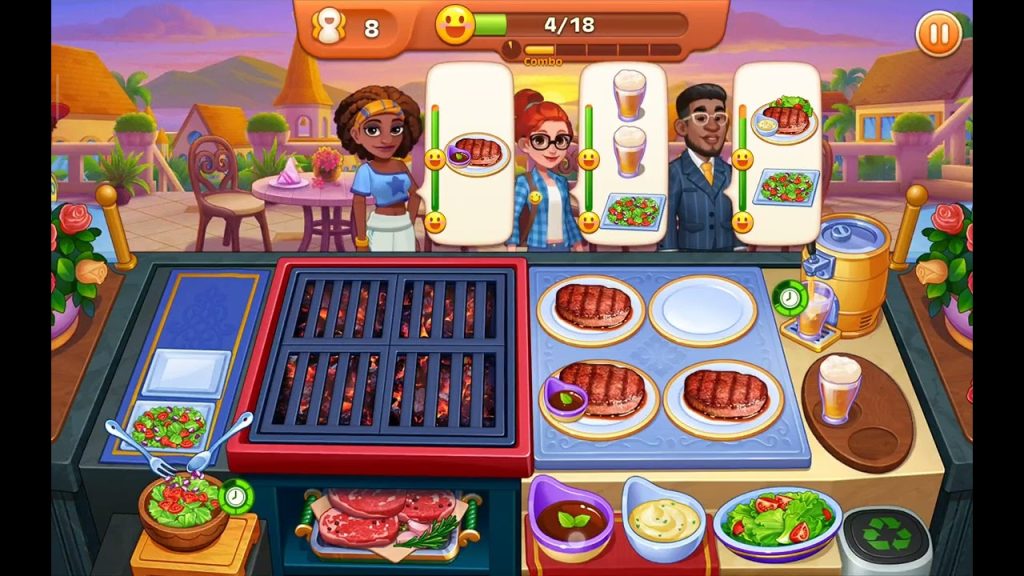
Cooking Madness is for players who want that frantic, plate-spinning energy and prefer a bolder, punchier presentation. The levels are short, the UI is loud in a good way, and the pace ramps up quickly. You bounce between restaurants with different station layouts and recipes, and the game wastes zero time introducing combos, chain bonuses, and picky VIPs who punish sloppy sequencing.
The loop leans hard into flow. You cook items in batches, assemble orders, collect payments, and keep your combo streak alive to earn more coins and stars. It rewards aggressive prep. Queue another steak before you need it. Toast extra bread during a lull. Keep the drink machine gurgling. The game also punishes waste. Overcooking loses product and precious seconds. Serving the wrong dish resets your chain. This turns each round into a route-optimization problem that never drags since most levels take under two minutes.
Progression is straightforward. Upgrade appliances to reduce cook times and add slots. Upgrade ingredients to boost payouts. Each restaurant adds twists that test different habits. A soup stall where timing the ladle matters. A sushi bar where assembly speed decides everything. A bakery where bake cycles overlap in ways that beg for a perfect rhythm. It feels like a greatest-hits remix of time-management tricks, tuned for mobile sessions.
It uses the familiar star gates to move forward and sprinkles in special levels and challenges to keep you from grinding the same stage to dust. If you like to chase three stars with precise sequencing and don’t mind a bit of repetition in exchange for mastery, Cooking Madness scratches that itch and keeps delivering new wrinkles as you go.
Hungry Hearts Diner
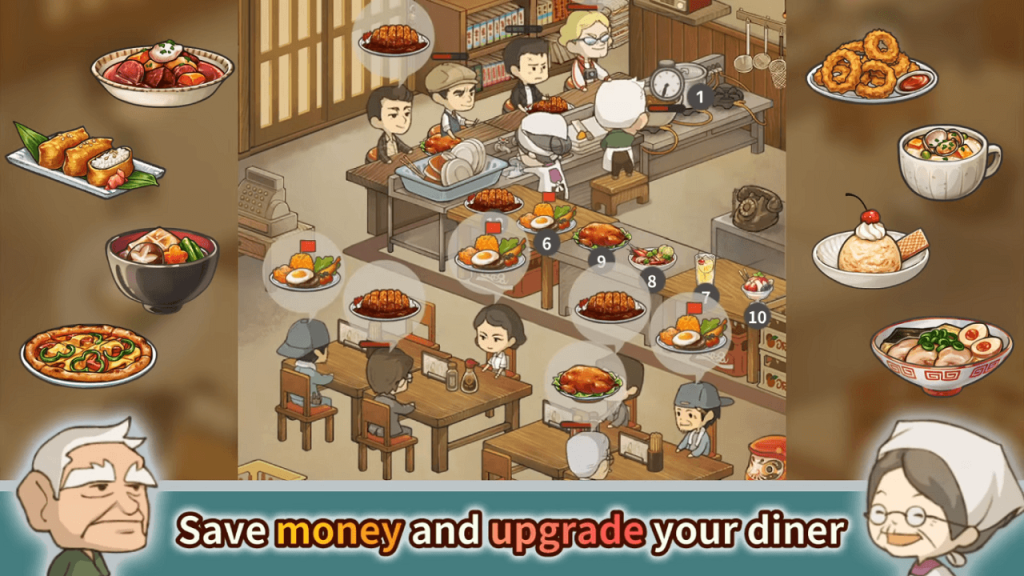
Hungry Hearts Diner is the outlier on this list and a good reminder that cooking games don’t have to be stress machines. You play as an elderly woman running a tiny diner that serves Japanese comfort food. The first minutes feel small. A few tables. A handful of recipes. Customers who wander in and order without any fuss. Then it opens up. You discover new recipes by experimenting with ingredients and prep times. Regulars return with stories. There is life happening between bowls of udon.
The loop is gentle. You prep dishes, set them out, collect coins, and restock. The challenge is not about juggling timers under pressure. It is about pacing, curiosity, and paying attention to your patrons. The joy is in slowly expanding your menu, meeting a character again after a tough day in their life, and unlocking a dish that fits their story. The writing has heart without leaning into sap, and the art style matches the quiet tone.
Progression happens on two tracks. The diner grows with better equipment and more recipes. The narrative moves forward through light quests tied to your regulars. There are moments where you step away and come back later, which suits the mobile format. This is the game you keep on your phone for bedtime wind-downs and lazy Sundays. It respects your time by never asking you to sprint, and it earns your attention with small, grounded details.
Monetization is comparatively low pressure. You can watch an ad here and there for a little boost, but nothing breaks the mood if you ignore it. If you want a cooking game with a story you’ll remember more than your score, Hungry Hearts Diner is an easy recommendation.
SpongeBob: Krusty Cook-Off
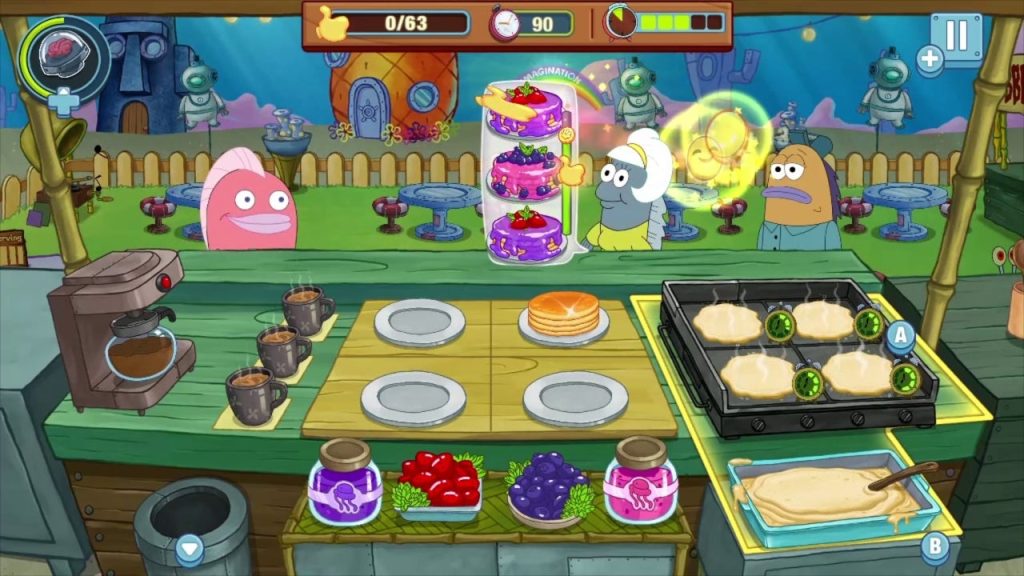
Licensed games can coast on brand recognition. This one does the opposite. SpongeBob: Krusty Cook-Off takes the classic service-counter format and dresses it in Bikini Bottom’s personality without getting in the way of play. You start at the Krusty Krab flipping Krabby Patties and expand across recognizable spots with new menus and layouts. The cast pops in for flavor, but the spine is a sharp time-management game.
The pace is brisk. Levels encourage early prep, precise upgrades, and smart use of boosters. You learn each restaurant’s flow. Where to pre-build, where to wait, when to serve out of order to save a combo, when to hold a dish to align two orders. The UI is readable even when the queue piles up, which is more important than it sounds in a game that asks you to tap a dozen things a second during peak waves.
Progression mixes cosmetic unlocks with functional upgrades. You improve grills, toasters, condiment stations, and drinks, each shaving fractions of seconds that matter when the screen fills. Decorative items exist for fans, but they also carry small bonuses so they feel like true upgrades instead of shelf dressing. Seasonal events add short-term goals that pay out useful rewards, making it easy to justify returning even if you only have ten minutes.
Like most time-management titles, it gates some progress behind stars and occasionally nudges you toward consumable boosters. If you want to brute-force later levels, you may end up watching a few ads or spending premium currency. Still, it stays fair enough to beat with clean play and a little patience. For fans of the show, the tone is on point. For everyone else, it’s simply a polished, fast-moving cooking game that knows how to build a satisfying level cadence.
Animal Restaurant
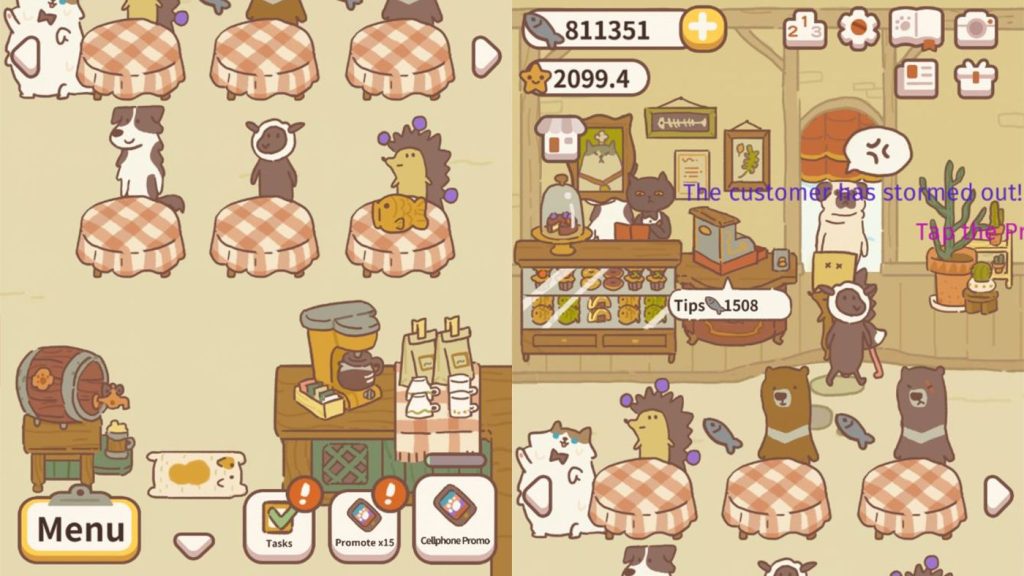
Animal Restaurant sits at the cozy end of the spectrum. It is an idle-leaning management game where you run a restaurant for adorable animal customers. Instead of hammering trays and ovens, you’re building a space, hiring quirky staff, unlocking recipes, and decorating with a slow-drip cadence that feels more like tending a garden than beating a stage.
The loop is straightforward. Customers wander in, place simple orders, and leave currency behind. You reinvest in new facilities, recipes, and staff that automate more of the work. Unlocking new areas brings in more types of customers and gives you fresh decor sets to chase. The hook is less about fine motor skill and more about small, steady progress and the pleasant ritual of checking in. Come back, collect, improve a little. Repeat.
The charm does a lot of heavy lifting. Characters have personalities that peek through short snippets. Decor isn’t just stat jewelry; it nudges the mood of the whole place. If you like games that make your phone feel like a window into a tiny, cheerful world, this will do the trick. It is not trying to be a hardcore simulation. It is a vibe that lets you tweak, arrange, and enjoy without worrying that an order timer will explode while you answer a text.
As with most idle games, the economy eventually introduces mechanisms that slow you down unless you engage with events, ads, or premium currency. The difference here is that the slowdown feels like a natural pause rather than a wall if you set your own rhythm. It pairs well with a bus ride or lunch break. When you want a break from the chaos of traditional cooking games but still want food at the heart of the theme, Animal Restaurant is a cozy palate cleanser.
Why these seven work well together
Lists like this are more useful when the games don’t overlap completely. These seven cover a range of play styles and moods so you can match your next download to the way you like to play right now.
- Want precision and interpretation over speed? Good Pizza, Great Pizza.
- Want the purest expression of fast, level-based cooking chaos? Cooking Fever.
- Want relaxed cafe management with decorating and long-term progression? Cafeland World Kitchen.
- Want speedy, combo-chasing time management in short bursts? Cooking Madness.
- Want a heartfelt story anchored by food, no timers required? Hungry Hearts Diner.
- Want a brisk, polished time-management game with a familiar world? SpongeBob: Krusty Cook-Off.
- Want an idle, cozy management loop with cute characters? Animal Restaurant.
The mobile cooking genre is crowded with lookalikes that pretend choice equals variety. A hundred restaurants, the same three-button loop. The trick is finding games that invest in their own identity. The ones above either refine the classic counter-service formula or push into narrative, idle, or builder territory with intention.
Practical tips that carry across games
Regardless of which one you pick, a few habits help.
- Upgrade bottlenecks first. If a station consistently causes delays, that’s where your next coin should go. Faster grills and extra slots often beat flashy decor early on.
- Respect prep windows. In fast games, pre-make low-risk staples between waves, but avoid overstocking items that spoil or overcook quickly.
- Chase early combos. Chain bonuses multiply gains. Learn the smallest movement pattern that touches multiple stations with minimal back-and-forth.
- Set-and-forget smartly. In builders and idle titles, queue longer recipes before stepping away and shorter ones when you plan to be active.
- Decorate with purpose. Even cozy games often tie light bonuses to decor placement or themes. It’s not just aesthetics.
What about the many lookalikes you see advertised?
You will see dozens of games with identical screenshots: a chef with a flaming pan, three burners, five customers, a buffet of icons at the bottom. Some are fine. Many are forgettable. The crucial difference is in rhythm and friction. Good time-management games feel hectic but fair. Input registration is crisp. Upgrade paths are readable. Failures feel correctable with better play, not just more premium currency. Cozy builders feel like a place worth returning to rather than a menu of timers. If a game opens with four hard currency prompts before you’ve made a single dish, trust your instinct and uninstall.
The bottom line
The best cooking games on Android either embrace the high-wire act of time management or lean into the ritual of tending a space. If you want speed and skill checks, Cooking Fever and Cooking Madness deliver sharp, repeatable stages. If you want to read the room and get a single order exactly right, Good Pizza, Great Pizza rewards patience. If you want to build a place and live with it, Cafeland World Kitchen and Animal Restaurant make pleasant daily rituals. And if you want food as a backdrop for a human story, Hungry Hearts Diner is quietly special. SpongeBob: Krusty Cook-Off sits in the middle with quick play and a familiar setting.
Start with the one that fits your mood today. Keep a second pick installed for when that mood changes. You might be surprised how often you end up swapping between frantic service and cozy management. Variety is the spice of mobile cooking.