Android gaming continues to evolve at an impressive pace. What was once dominated by simple mobile experiences now includes expansive open-world adventures, competitive multiplayer titles, sophisticated strategy games, and console-quality RPGs. In 2026, Android players have access to a broader and more polished selection of games than ever before, with many titles offering cross-platform support, regular content updates, and gameplay depth that rivals traditional gaming platforms.
This guide highlights the best Android games in 2026 across multiple genres. Rather than focusing solely on popularity, these selections emphasize gameplay quality, long-term value, technical performance, and overall player experience.
What Makes a Great Android Game in 2026?
The Android ecosystem is more competitive than ever, which means only a handful of games truly stand out. The best Android games typically excel in several key areas:
- Consistent gameplay that remains engaging over time
- Strong technical optimization across a wide range of devices
- Fair monetization systems
- Regular developer support and content updates
- Accessible controls designed specifically for touchscreens
- A clear identity within their genre
The games featured below represent some of the strongest examples currently available on Android.
The Cursed Castle: Online RPG (indie game)
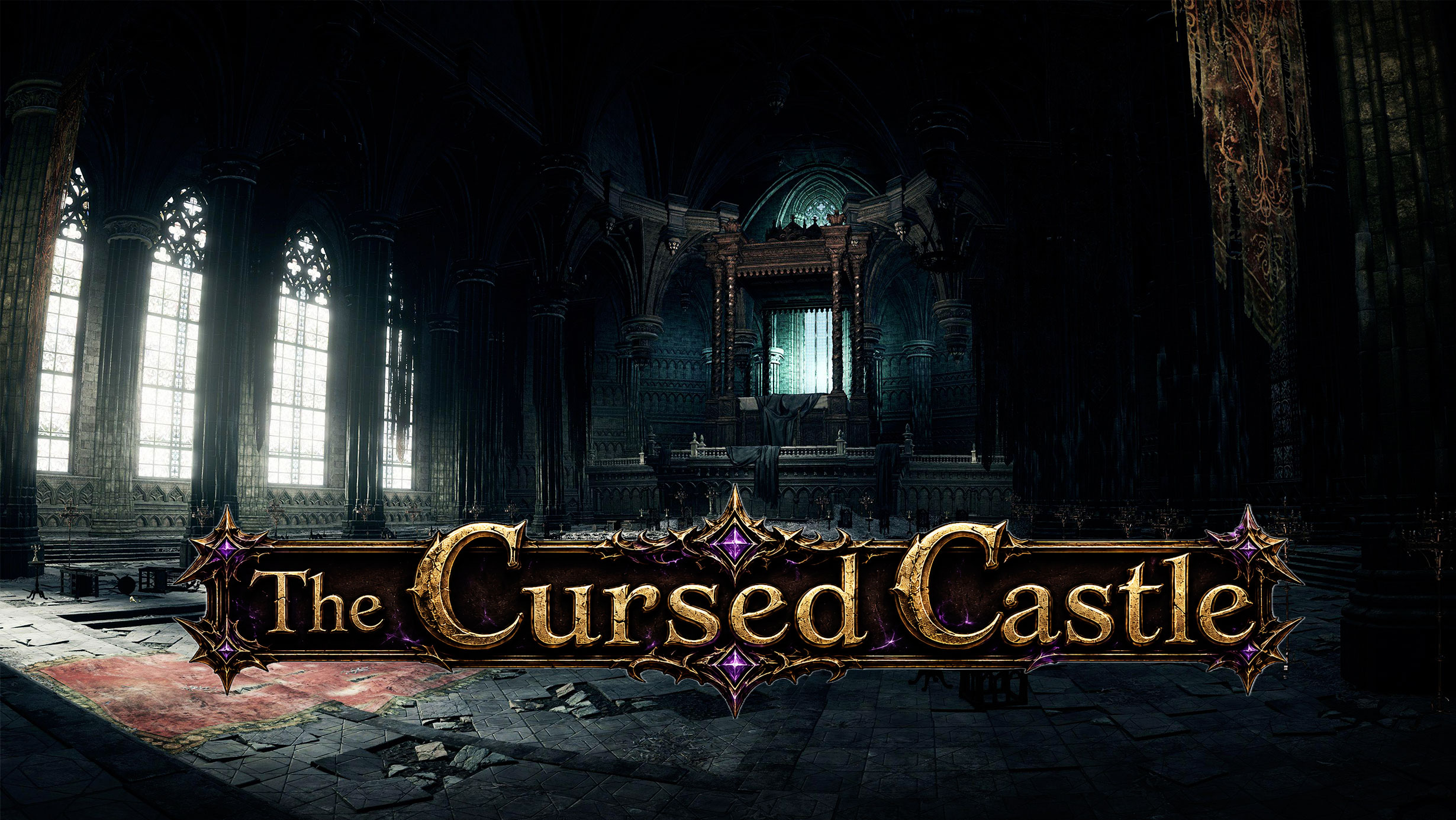
A pretty unique game, I have to say. I wasn’t entirely sure whether to put this in the list of not, but I have to say I was truly surprised to find out an indie game could be so intriguing.
First off, The Cursed Castle is an unusual Roguelike RPG, set into an abandoned castle. The background story talks about a young boy running away from the Castle due to an invasion from evil creatures, who comes back years later to find revenge and, hopefully, free the castle from the curse.
During the journey, you’ll find story characters which will slowly tell you the (sad) truth, but I’m not going to spoiler anything, hehe.. for this you gotta play the game!
The combat-system is a turn-based match between the main character, a wizard and various evil creatures and bosses you’ll find along the path, but this game is filled with interesting concepts, such as the fact you can actually determine your fate by picking the right (or wrong) door, as every time you enter a room, you’ll be presented with 1 or more doors to walk in, and each of them will cause a “modifier” to be applied into the next room.
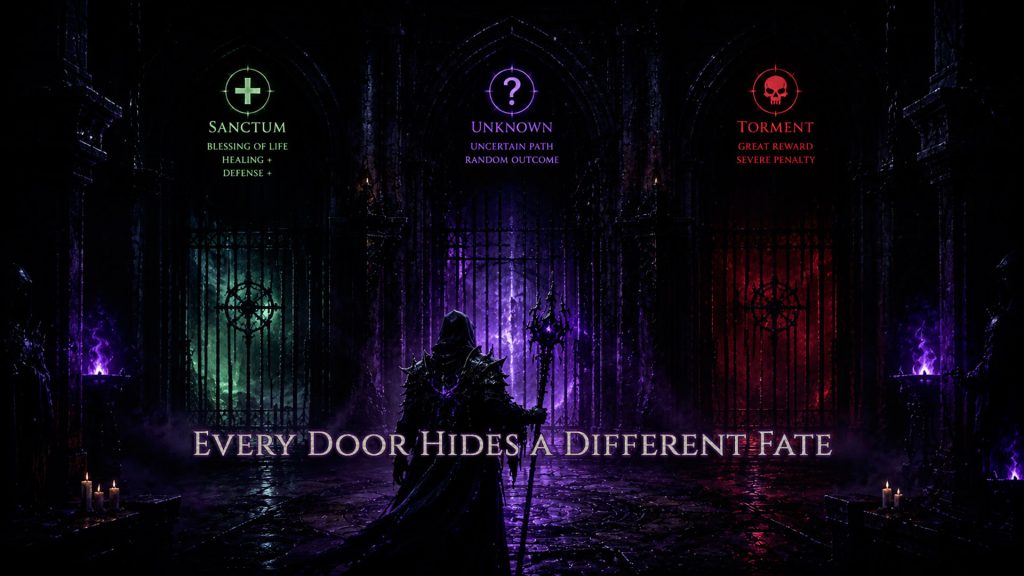
What’s impressive is the amount of different “modifiers” (room effects) this game has, coupled with the bonuses and maluses, without talking about the HUGE amount of inventory items such as spells, potions, rings, amulets, chests and the great variety of interactable items placed around the castle.
If I have to be honest, this game kind of reminds me of Buriedbornes, but that game probably lacked enough depth and interactivity The Cursed Castle didn’t miss to implement.
Furthermore, this game implements a PvP tournament, an online community automatically linked with your in-game account (how cool is that?), daily quests, rewards, events and a live chat!
Considering it’s an indie project, and still in development, The Cursed Castle is definitely worth to try. It may not really be “the best” out there, but the efforts behind this game are crazy, and I’m sure its next updates will bring even more exciting content!
Genshin Impact
I still think the most unusual thing about Genshin Impact is how often it convinces you to stop doing whatever you originally logged in to do.
A lot of mobile games are built around objectives. Clear task, collect reward, move on. Genshin starts there, certainly, but then a glowing puzzle appears on a hillside, or you notice a chest halfway up a cliff, and twenty minutes later you’re nowhere near the quest marker anymore. The game seems strangely comfortable with players getting sidetracked. Maybe that’s why it stays in people’s routines for so long.
There are entire sessions I barely remember in terms of progression. I remember gliding somewhere. I remember climbing a mountain because there looked like there might be something at the top. There wasn’t, at least nothing important. Then I spotted something interesting from that mountain and headed off in another direction entirely.
The combat gets talked about a lot, but what sticks with me is usually the movement between fights. Running through forests, crossing regions you’ve already visited dozens of times, noticing some small detail that somehow escaped you before. On a phone, that still feels unusual. Most mobile worlds eventually reveal their boundaries. Genshin often feels like it’s hiding one more thing slightly beyond where you’re currently looking.
That doesn’t mean the experience works for everyone. There are people who want games to respect a direct objective. Go here, do this, finish that. Genshin keeps interrupting itself. Even the story can drift into lengthy conversations when all you really wanted was to reach the next area. I’ve had evenings where I felt ready to explore and ended up sitting through far more dialogue than expected.
And then there are the decisions that make sense in the moment. Spending resources on a character because their abilities seemed fun rather than optimal. Pulling for someone you definitely weren’t planning to pull for. Building a team around personal preference and discovering much later why nobody else was doing the same thing.
The recurring feeling, at least after all this time, is curiosity more than progression. That’s what separates it from many modern mobile games. The rewards matter, the characters matter, but they aren’t usually what pulls me back. It’s the sense that if I walk in a random direction for long enough, something unexpected will eventually happen.
Most of the time, it does. Not always in a meaningful way. Somehow that almost makes it feel more convincing.
Call of Duty: Mobile
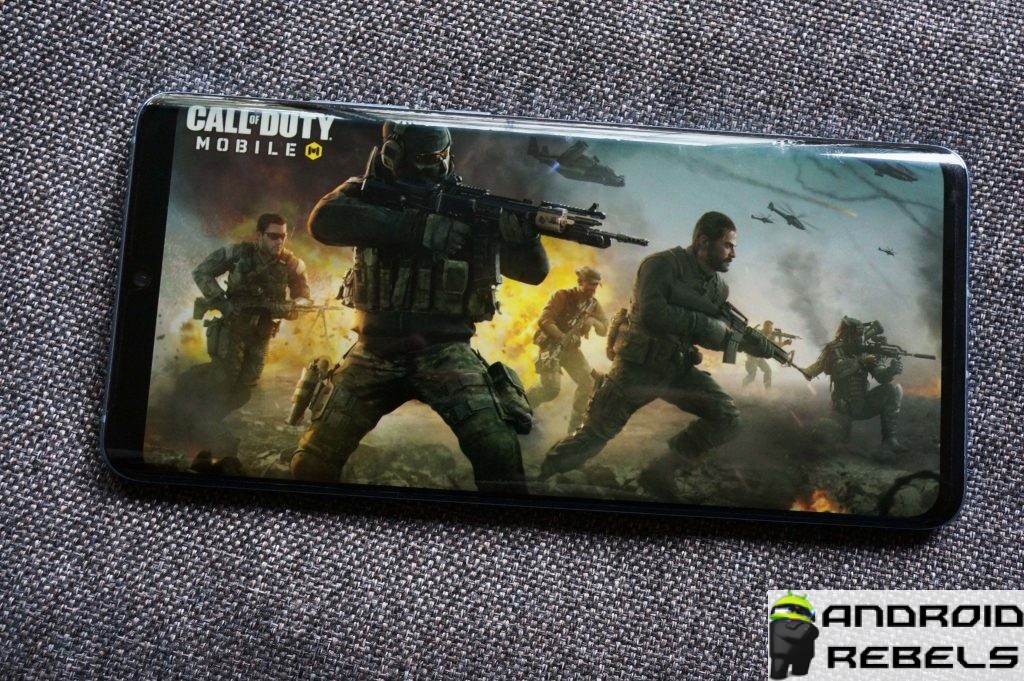
What I keep coming back to with Call of Duty: Mobile is how little patience it has for setup. You launch it, tap through a few menus almost on instinct, and within moments you’re already sliding around a corner making a decision you probably didn’t think through. Most mobile games spend a surprising amount of time convincing you to play them. This one tends to assume you’ve already decided.
There was a period where I’d open it intending to play a single match before doing something else. That’s usually how it starts. Then you finish a game that ended a little too close, or maybe you got eliminated because you challenged a fight you had no business taking, and suddenly another match feels necessary. Not for progression. Just because the previous one is still stuck in your head.
The strange thing is that I don’t even think about Call of Duty: Mobile as a mobile game anymore. Not really. The controls stop feeling like touch controls after a while. You learn where your thumbs are supposed to go and eventually the entire thing becomes muscle memory. Then you switch to another shooter on mobile and realize how unusual that is.
I still remember wasting several matches trying to make a sniper loadout work on maps where it clearly wasn’t the right choice. Not because it was effective. It wasn’t. But every now and then you’d land one ridiculous shot across the map and that single moment would justify twenty minutes of bad decisions. That’s the kind of logic the game encourages without ever saying so directly.
The battle royale mode creates its own distractions. You’ll head toward an objective, hear gunfire somewhere off to the side, change direction immediately, loot buildings you didn’t intend to enter, and twenty minutes later realize you’ve completely forgotten why you traveled across the map in the first place.
Its biggest limitation might actually be the pace. Not everyone enjoys being dropped into matches where hesitation gets punished almost instantly. Some players want room to settle in, to experiment slowly. Call of Duty: Mobile rarely waits for that. It has always felt slightly impatient.
Maybe that’s why it remains memorable. There is a recurring sensation that every session could end with a completely forgettable match or a sequence you’ll replay mentally hours later. Most of the time you’re just chasing that possibility again, even when you know exactly what the game is doing.
Honkai: Star Rail
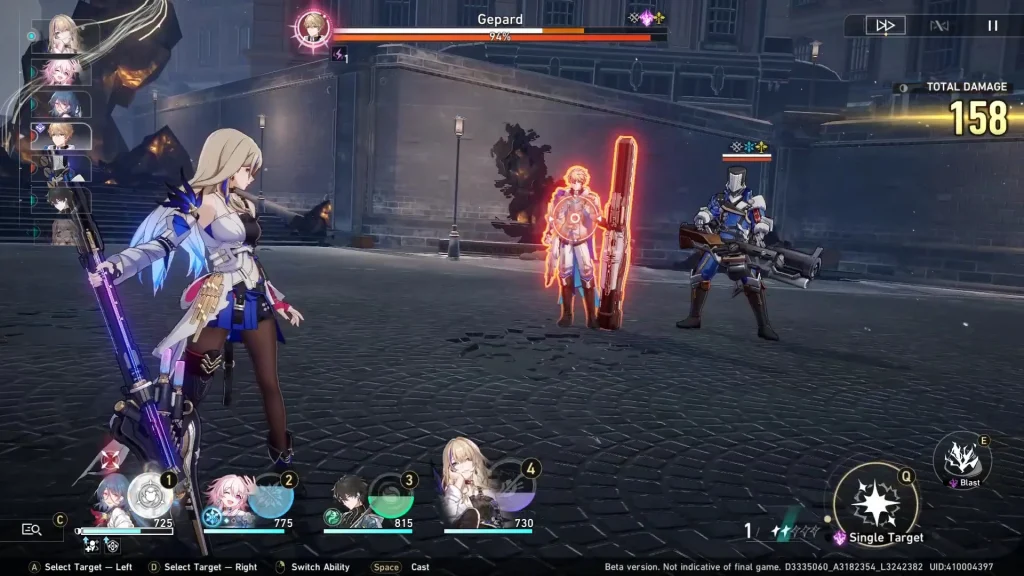
What stayed with me about Honkai: Star Rail wasn’t really the combat, which sounds strange considering how much of the game revolves around turn-based battles. It was more the habit it created. I’d open it planning to spend ten minutes burning through daily tasks, then end up wandering through some side area because an NPC mentioned something odd three conversations earlier and I suddenly remembered it.
A lot of mobile games seem terrified of letting players slow down. Everything points toward the next reward, the next upgrade screen, the next timer. Star Rail occasionally does that too, obviously, but it also gets distracted by its own world. There are stretches where you’re reading messages on a trash can, following a joke that should have ended several dialogue boxes ago, or standing around a space station because you noticed a corridor you somehow ignored the first time.
I remember spending resources on a character I wasn’t even sure I wanted long term. It wasn’t efficient. A few days later I pulled someone stronger and immediately regretted it. Then, somehow, that original character stayed in my team much longer than planned. Star Rail has a way of making decisions feel permanent right before convincing you they weren’t as important as you thought.
The turn-based structure helps. On mobile especially. There are moments when you’re half paying attention, waiting somewhere, progressing through a few encounters without needing the constant focus that action RPGs demand. Then a boss fight appears and suddenly you’re staring at the screen longer than intended, trying to squeeze one more turn out of a team composition that probably wasn’t built for that encounter in the first place.
The limitation, at least for me, has always been the rhythm of progression. There are days when the game feels incredibly generous with things to do, and then there are evenings where you realize you’re mostly waiting for resources to recover. Not everyone enjoys that relationship with a game. People who want complete freedom to play for hours whenever they feel like it usually bounce off much earlier than expected.
And yet I kept returning to it. Not because I needed to see bigger numbers. It was more that recurring feeling of having one small objective, then drifting somewhere else entirely. A quest becomes exploration. Exploration becomes reading lore. The lore somehow leads to another character banner you’re telling yourself to ignore.
Usually unsuccessfully.
Pokémon Unite
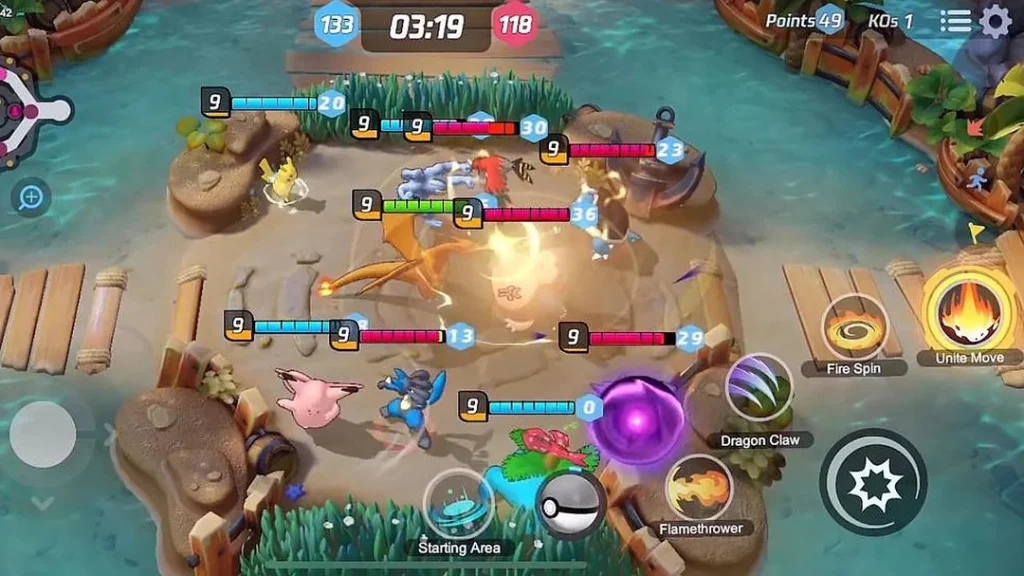
What I keep coming back to with Pokémon Unite is how often a match feels completely under control right before it stops being under control.
Not in the dramatic way competitive games usually advertise. More in that slightly annoying, slightly fascinating way where you’ve spent eight minutes doing the right things, winning fights, securing objectives, building a lead, and then suddenly everyone is staring at the center of the map because the match has reached that point. Anyone who has played for a while knows the point I’m talking about.
The funny thing is that I wasn’t even sure I liked that at first.
A lot of mobile games reward consistency. Pokémon Unite rewards consistency until it doesn’t. Then it asks whether your team can stay organized for another thirty seconds. Some matches feel decided by hundreds of small decisions. Others feel like they come down to one chaotic fight where half the players probably aren’t making optimal choices anymore.
Maybe that’s part of why I kept playing.
The matches are short enough that mistakes never sit with you for too long. You lose, queue again, and tell yourself you’ll rotate earlier next time. Then you get distracted chasing an opponent with almost no health remaining, abandon your lane, and somehow repeat the exact mistake you had already identified ten minutes earlier.
I’ve definitely done that more than once.
There is a particular rhythm to Pokémon Unite that separates it from a lot of mobile multiplayer games. Most MOBAs feel like they want your full attention and several uninterrupted hours. Unite feels aware that you’re playing on a phone. The matches move quickly. The map is readable. The objectives matter immediately. Even the downtime between fights feels compressed.
And yet, beneath that accessibility, there is more decision-making than people often give it credit for.
You notice it after enough matches. Positioning starts mattering. Timing matters. Choosing when not to engage matters even more. There are games where I barely remember the final score, but I remember one unnecessary fight near an objective because I knew it was a bad idea while I was walking toward it.
The Pokémon theme probably helps people get comfortable faster than they otherwise would. Recognizable characters have a way of lowering the barrier to entry. Then, several dozen matches later, you realize you’re arguing internally about lane assignments and objective timing while controlling a giant yellow mouse.
That progression feels oddly natural.
One limitation never fully disappears, though. Team coordination remains important, and solo queue can produce some genuinely baffling moments. You learn to accept that not every teammate sees the same match you do. There is a certain amount of peace that comes from lowering your expectations there.
People looking for a relaxed Pokémon adventure usually bounce off Unite fairly quickly. The game has Pokémon in it, but the feeling is competition. Constant low-level competition. Even during matches that seem comfortable, there’s a background tension that never quite leaves.
Maybe that’s the feeling I associate with Pokémon Unite most. Not pressure exactly. More like the sense that every match is quietly stable until the moment it isn’t.
Minecraft

Besides the many games similar to Minecraft listed here, the original one keeps creating the same situation for me, even after all these years.
I open the game with a plan. Not a big plan. Usually something boring and practical. Expand a storage room. Gather coal. Finish a wall that has been half-built for days. Then I notice a cave entrance nearby, or a distant patch of forest I haven’t explored, and the original objective quietly disappears. Three hours later I have accomplished almost everything except the thing I originally logged in to do.
Most games would consider that a failure of design. Minecraft somehow turns it into the entire experience.
That still feels unusual on mobile. So many Android games are built around efficiency. They want every minute accounted for. Rewards collected. Progress measured. Minecraft has never seemed particularly interested in whether the player is being productive. The world just exists. You enter it and start making small decisions, then follow the consequences.
A lot of those decisions are bad, by the way.
One of my longest-running worlds contains a bridge that shouldn’t exist because I could have walked around the river in twenty seconds. It contains an abandoned mine that I stopped using halfway through because I became convinced there had to be a better cave nearby. There is also a house that was supposed to be temporary. Somehow it became the main base.
That kind of messy history accumulates naturally. After enough time, a Minecraft world starts feeling less like a game map and more like a collection of evidence.
The funny thing is that none of this sounds especially exciting when described out loud. Digging tunnels. Moving blocks. Planting crops. Organizing chests. Yet there is a strange loop at the center of Minecraft where every small task creates another possibility, and that possibility creates three more. You leave home looking for iron and return with sheep, a map, and a completely unnecessary tower overlooking a lake.
The game doesn’t really stop you from wasting time. Sometimes it practically encourages it.
Not everyone enjoys that. People looking for strong direction often bounce off Minecraft because it can feel oddly indifferent to the player’s attention. There are evenings when you load into a world and realize the game has absolutely no opinion about what you should do next. Some players find freedom in that. Others just find uncertainty.
I think that’s why Minecraft has lasted so long. Not because of crafting, survival mechanics, or building systems individually, but because it leaves room for aimless curiosity. Modern mobile games often feel designed around keeping players on a track. Minecraft keeps handing you opportunities to step off it.
And eventually you do.
Usually for a reason that seemed important at the time and makes almost no sense when you look back later.
We couldn’t stop here, there’s a lot about Minecraft that it deserved a dedicated article about it you may enjoy reading.

League of Legends: Wild Rift
The thing I didn’t expect from Wild Rift was how quickly it stopped feeling like a mobile game and started feeling like an obligation I had voluntarily signed up for.
Not in a negative way, exactly. More in the sense that every match asks for your attention immediately and then refuses to give it back. You open the game thinking you’ll play one quick round. Twenty minutes later you’re staring at the defeat screen replaying a decision that happened near the river three objectives ago, wondering why you chased a kill instead of backing away when you already knew it was a bad idea.
That thought tends to linger longer than the match itself.
A lot of modern mobile games are comfortable letting players drift. Wild Rift isn’t built like that. It keeps demanding choices, even small ones. Do you help a teammate who’s clearly overextended? Do you contest an objective that’s probably already lost? Most mistakes happen because you convince yourself there’s still time to fix something.
There usually isn’t.
I remember matches where I spent the first few minutes focused entirely on my lane, farming carefully, playing responsibly. Then someone starts fighting on the other side of the map, pings begin appearing everywhere, and suddenly you’re abandoning the original plan. Wild Rift has a way of pulling players into situations they never intended to join. Half the game seems to happen because somebody made a questionable decision and four other people felt obligated to participate.
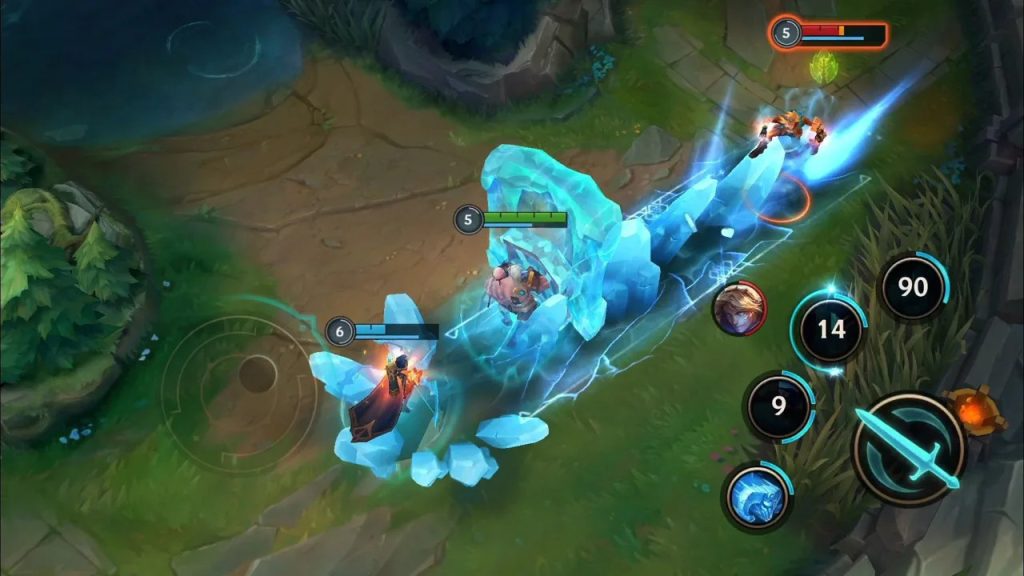
That’s probably also where its biggest limitation comes from. Some people simply don’t enjoy carrying a match around in their head after it’s over. Wild Rift creates that kind of mental residue. A good match feels rewarding, but a frustrating one can stay with you much longer than expected. Not everyone wants that relationship with a game they’re playing on a phone.
The champions, strangely, aren’t what I remember most. It’s the moments between major events. Waiting in a bush slightly longer than necessary because you suspect someone will appear. Rotating toward an objective and changing direction halfway there because a teammate got caught out. Buying the wrong item by accident, then spending the next ten minutes pretending it was part of the plan.
What keeps bringing people back, I think, is the recurring sensation that every match contains a turning point you only recognize afterward. A fight that looked insignificant at the time. A rotation nobody noticed. A decision made in two seconds that ends up shaping the next fifteen minutes.
Wild Rift is full of those moments. You rarely see them coming. That’s probably why they remain memorable.
Stardew Valley
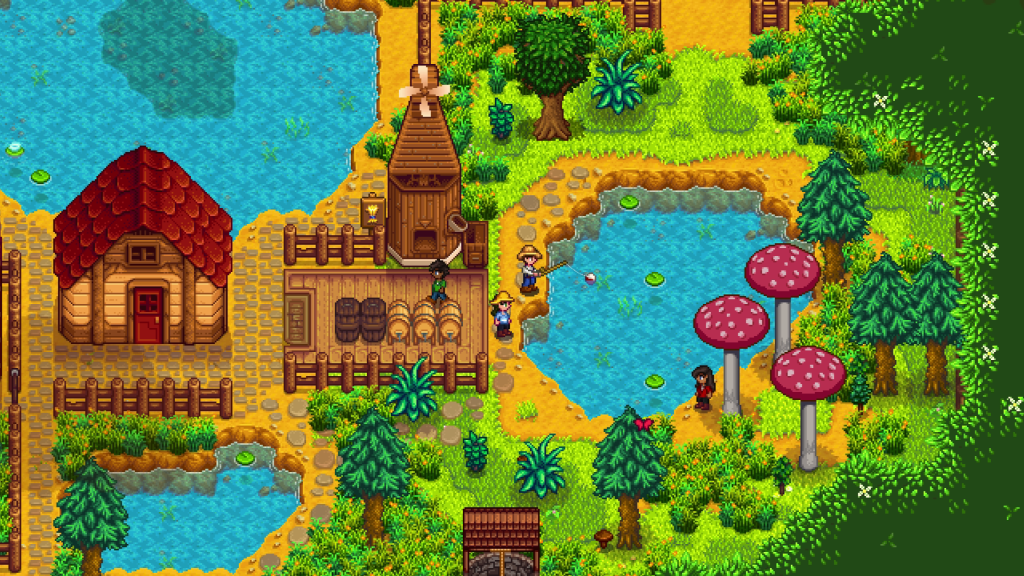
What always surprises me about Stardew Valley is how often I remember things that were never part of any objective.
Not harvests. Not profits. Not even the larger milestones that technically move the farm forward.
I remember walking toward town to buy seeds and noticing forageables scattered along the path. Then spotting a worm tile in the ground. Then realizing I should probably check the beach before heading back. At some point the original reason for leaving the farm disappears entirely. A full in-game day can vanish that way.
Most mobile games spend a lot of effort trying to create urgency. Timers. Events. Limited opportunities. Stardew Valley almost feels indifferent to whether you’re being efficient. The game certainly rewards planning, but it never seems particularly impressed by it. I’ve had seasons where everything was organized perfectly and others where half the farm looked abandoned because I became distracted by fishing for several days.
Actually, fishing is a good example.
There have been evenings where I opened the game with every intention of expanding buildings or managing crops. Then a few successful catches turned into an entire session spent standing near the same stretch of water. Nothing dramatic happened. That’s kind of the point.
The limitation is tied to that same philosophy. People looking for constant momentum often bounce off it. There are long stretches where the reward is simply the satisfaction of maintaining routines you’ve created for yourself. If that sounds uninteresting on paper, Stardew Valley may never fully click no matter how much time you give it.
And yet the routines become strangely personal. You develop habits that aren’t necessarily optimal. Visiting certain locations in a particular order. Keeping crops you should probably sell. Saving resources because they might be useful later, even when experience suggests otherwise. I once filled multiple chests with items I was convinced would become important. Most of them never did.
What makes Stardew Valley feel different from so many modern mobile games is that progression rarely dominates the experience. The farm grows, relationships develop, new areas open up, but those things often happen while your attention is somewhere else entirely.
The feeling I associate with the game after all these years is difficult to pin down. Not excitement. Not achievement.
More like a recurring sense that there is always one more small thing worth doing before ending the day.
You water a few crops. Then you check the animals. Then maybe the mine for a moment.
The day ends much later than expected. It usually does.
Best Android Games by Player Type
For Open-World Exploration
- Genshin Impact
- Minecraft
For Competitive Multiplayer
- Call of Duty: Mobile
- League of Legends: Wild Rift
- Pokémon Unite
For RPG Fans
- Honkai: Star Rail
- Genshin Impact
- The Cursed Castle
For Relaxing Gameplay
- Stardew Valley
- Minecraft
BONUS: Indie Games
- The Cursed Castle: Online RPG
FAQ
What is the best Android game in 2026?
There is no single answer for every player. Genshin Impact offers one of the most complete overall experiences, while Call of Duty: Mobile, Minecraft, and Honkai: Star Rail excel in their respective genres.
Are free Android games worth playing in 2026?
Yes. Many of the highest-quality Android games are free to download and receive ongoing support through optional purchases rather than mandatory payments.
Which Android game has the best graphics?
Most of the games mentioned above deliver impressive visuals, including Genshin Impact, Honkai: Star Rail, and Call of Duty: Mobile. The best choice depends on personal preferences and device capabilities. We’d of course exclude Minecraft and Stardew Valley, if we talk about “HD” graphics, but those games have a unique style, which may not be HD but contributed to make them some of the best games out there.
Can Android games compete with console games?
In some genres, modern Android games offer production values, multiplayer systems, and content depth that approach traditional console experiences, especially on high-end smartphones and tablets. The main difference could be touch input vs joysticks/controllers/keyboards, but, honestly, you can easily grab a bluetooth or wifi controller and use it on your device without issues.
Final Thoughts
What stands out isn’t any single game on this list. It’s how different mobile gaming feels compared to a few years ago.
There was a time when “Android game” immediately suggested something small, disposable, and designed around a few spare minutes. That distinction has become increasingly difficult to make. Some of the games people play on their phones now demand the same commitment, attention, and emotional investment once reserved for PCs and consoles.
Whether that’s a good thing probably depends on what you’re looking for.
Sometimes the best mobile game is the one you spend hundreds of hours mastering. Sometimes it’s the one you open for ten minutes while waiting for a coffee. Most players end up keeping both on their device anyway.