If you search for solitaire on Android, you fall into a sea of near-identical icons, copied screenshots and vague promises of daily challenges. The genre is simple, but the apps are not all the same. Some are chill time-wasters that feel like shuffling a real deck. Others are puzzle sagas where your score line is as important as your card sense. The best Android solitaire games make your time feel respected: smart shuffles, quick animations, optional hints, and a fair approach to ads and in-app purchases.
This roundup focuses on seven Android solitaire games that are easy to recommend right now. It’s a mix of classic Klondike, TriPeaks and Pyramid variants, plus a couple with bolder themes. I looked for steady gameplay loops, clear progression systems, a good balance of difficulty and relaxation, and the kinds of quality-of-life touches that matter when you’re playing with one hand on a train. If you want the purist experience, you’ll find it. If you prefer a level-based puzzle with streak multipliers and a meta-game layered on top, that’s here too.
Before getting into picks, a quick note on what to pay attention to when choosing an Android solitaire app:
- Game loop: Do you want endless classic deals or a level-based progression where each hand is a “stage” with boosters and goals?
- Variants: Klondike is the standard. Spider, FreeCell, Pyramid and TriPeaks change the rules and rhythm in meaningful ways.
- Session length: Some games favor 2-minute hands. Others invite half-hour streaks with events and quests.
- Monetization: Classic solitaire apps usually show an ad between hands, often removable with a one-time purchase. Level-based saga games often use lives/energy and optional power-ups.
- Offline play: Not every solitaire game works without a connection. If you want something for flights or dead zones, check this first.
With that in mind, here are the best solitaire games for Android that still feel great after the novelty wears off.
Microsoft Solitaire Collection
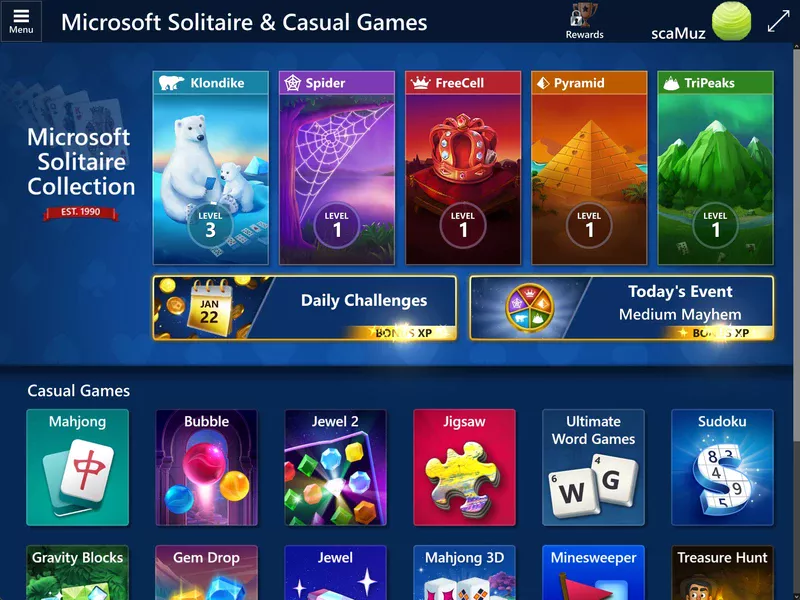
Microsoft didn’t invent solitaire, but its Windows-era stamp still carries weight. On Android, the Collection earns its keep by giving you five well-tuned variants in one place: Klondike, Spider, FreeCell, Pyramid and TriPeaks. Each mode feels thoughtfully balanced. There’s a satisfying snap to moves, sensible auto-complete when a deal is solved, and quick shuffling that doesn’t leave you waiting to play. Daily challenges and rotating events give you a reason to check in, but the app never insists on it.
The gameplay loop is flexible. If you only want to grind a few Klondike wins on a commute, it behaves like a traditional deck on a small table. If you’re in the mood to chase goals, daily challenges put small twists on the rules without turning them into chores. You can adjust options like draw-one vs draw-three in Klondike, enable right- or left-handed play, and ramp Spider’s difficulty by using more suits. That lets you steer the pace toward a relaxing flow state or a proper brain teaser.
The Collection tends to treat your time with respect. Animations are clean, not flashy. Hints are available but not nagging. And because it consolidates multiple solitaire styles, it’s one download that can cover a week’s worth of different moods without bouncing between apps. It plays well offline, and you can sign in if you want cloud sync and cross-device progress, but you don’t have to.
- Best for: Players who want a reliable, no-drama suite of solitaire modes with daily goals and sensible options.
- Pace: Short to medium sessions; easy to dip in and out.
- Monetization: Ads by default; optional purchase removes them. No energy timer.
- Offline: Works for core play; online required for events and syncing.
Solitaire by MobilityWare
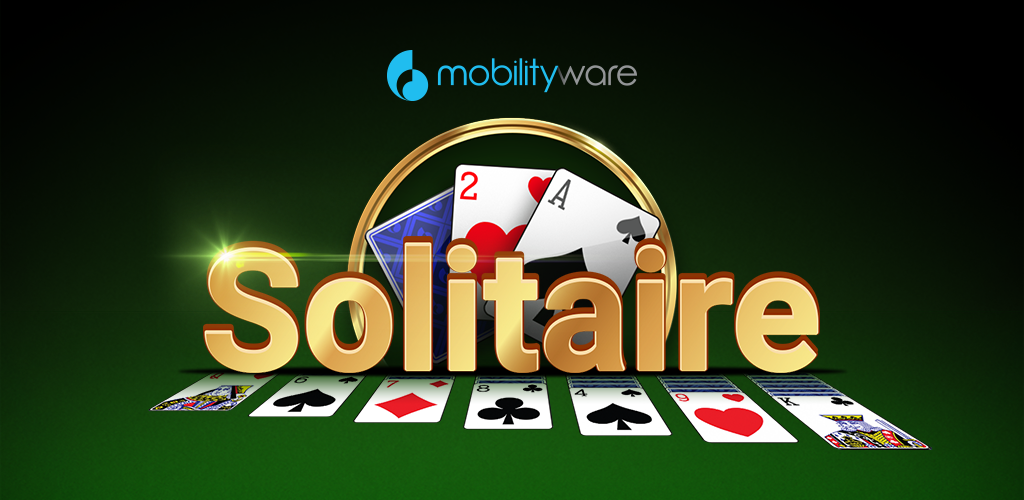
If your ideal Android solitaire is just “a great Klondike deck that feels right,” this is it. MobilityWare has quietly refined its Solitaire for years. The result is an app that gets the tactile details correct: card spacing that reads at a glance, snappy drag-and-drop or tap-to-move, obvious undo and hint buttons that never feel like upsells. It’s the game many people end up keeping for years because it behaves like a familiar habit rather than a target for daily engagement metrics.
The loop is as simple as it gets. Open the app, play a hand, win or restart, repeat. There’s a daily challenge if you want a low-key goal, and stats if you enjoy tracking win rates, streaks and time. The “winning deals” toggle is practical if you hate dead ends, though turning it off keeps the experience closer to a real deck. It also supports left-handed layouts, single-tap moves, and adjustable draw rules so you can match your old Windows-era set-and-forget configuration.
It’s also a solid offline pick. You can play without a connection and watch an occasional ad between games when you’re back online, or pay to remove ads and settle in for distraction-free runs. There are no energy gates or power-ups, just cards and rhythm. If that sounds boring to you, this won’t change your mind. If that sounds exactly right, you won’t need anything else.
- Best for: Pure Klondike fans who want a dependable, uncluttered app with great feel.
- Pace: Bite-size sessions; endlessly replayable.
- Monetization: Ads with a straightforward option to remove; no lives or boosters.
- Offline: Yes.
Solitaire TriPeaks (often listed as Tiki Solitaire TriPeaks)
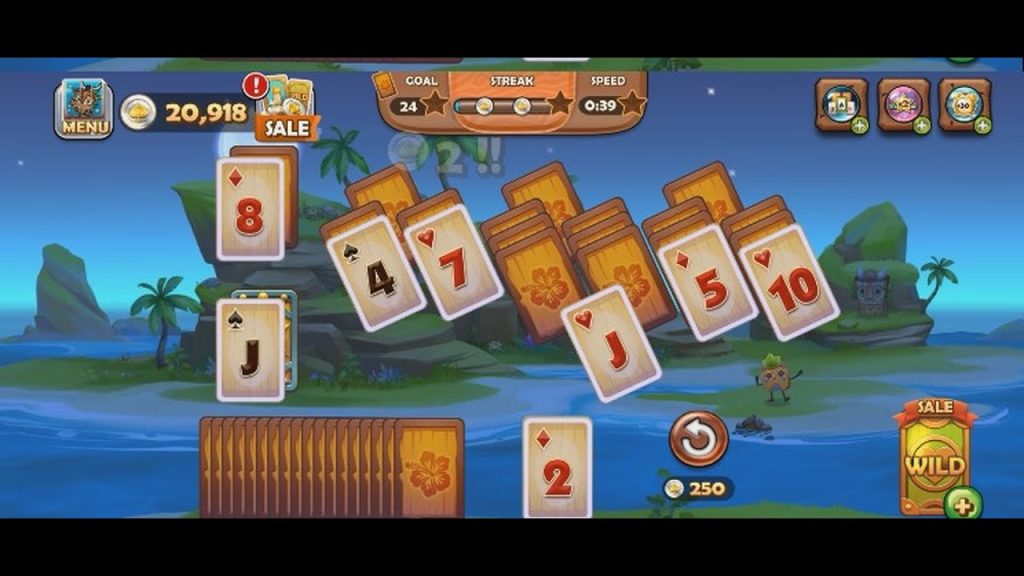
TriPeaks is a different beast. Instead of building suits to foundations, you’re clearing a landscape of face-up cards by playing one rank up or down from a discard. Streaks matter. Timing wild cards matters. And in most mobile versions, you progress through a map of bite-size hands with score targets, bonuses and hurdles. Solitaire TriPeaks is one of the staples of that formula on Android: fast levels, a clear streak-reward system that feels good when you’re in a groove, and a club setup if you like chasing community events.
The core loop is hands that take under a minute but ask for just enough planning to keep you engaged. You scan the peaks for cards that will extend your chain, decide whether to burn a wild early or hold for a tougher pocket, and manage the tension between flipping the draw pile and fishing for one more perfect ladder. Levels throw in twists that are practical rather than gimmicky: covered cards, locks that open with key cards, score thresholds that push you to be slightly greedy. When a streak clicks, these hands give you that mini speedrun high that Klondike doesn’t.
Like most level-based solitaire, TriPeaks uses lives or energy to pace sessions and sells boosters that cushion bad luck. The game can be played for free in short daily bursts, and clubs can reduce the friction if you enjoy teaming up for rewards. If you prefer a timeless deck with no meta, this is not that. If you want quick-hit puzzles that reward execution as much as planning, TriPeaks lands the format cleanly.
- Best for: Players who enjoy short, satisfying streak puzzles and light social events.
- Pace: Very short sessions that can chain into longer runs when you’re hot.
- Monetization: Lives/energy with optional power-ups; designed for free play with occasional waits.
- Offline: Generally expects a connection for progression and events.
There are also several modded builds around, making this game a lot more enjoyable for free.
Solitaire Grand Harvest
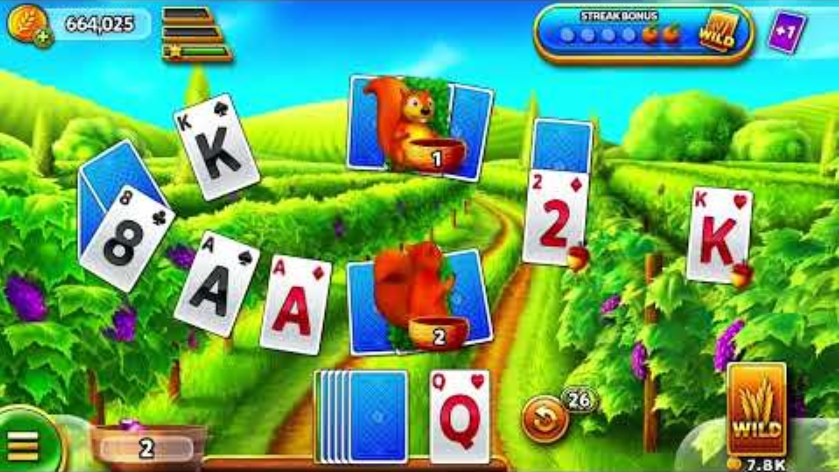
Solitaire Grand Harvest layers a cozy-farm meta on top of TriPeaks mechanics. Every hand you clear seeds your farm with coins and resources, which you spend to expand plots, unlock helpers and dress up your little patch of land. If that sounds twee, it can be, but it also gives a tangible arc to an inherently snackable game. Instead of just moving node to node on a map, you see your farm changing because you played a handful of good streaks before bed.
The TriPeaks here is on the forgiving side early and grows more tactical as layouts add blockers, vault cards and score gates that force you to plan a few moves ahead. The harvest loop is simple but sticky: clear a stage, pocket rewards, put them back into upgrades that nudge you further next time. It’s the kind of structure that rewards routine. Ten minutes a day keeps the upgrades rolling, and the designers nudge you with quests and seasonal events that layer bonus objectives over regular play.
As with most saga-style solitaires, there’s an energy system and a suite of optional boosters. Played patiently, it’s a friendly daily ritual. If you dislike timers or any meta that sits around your cards, you’ll be happier with a classic pick. If you want a more guided, cozy loop where wins feed small visible progress, Grand Harvest is a good balance of breezy and purposeful.
- Best for: TriPeaks fans who like a gentle farm-building meta linked to steady daily play.
- Pace: Short stages; long-term progression through your farm.
- Monetization: Energy and optional boosts; designed to be playable free with paced sessions.
- Offline: Typically expects an online connection for sync and events.
Pyramid Solitaire Saga
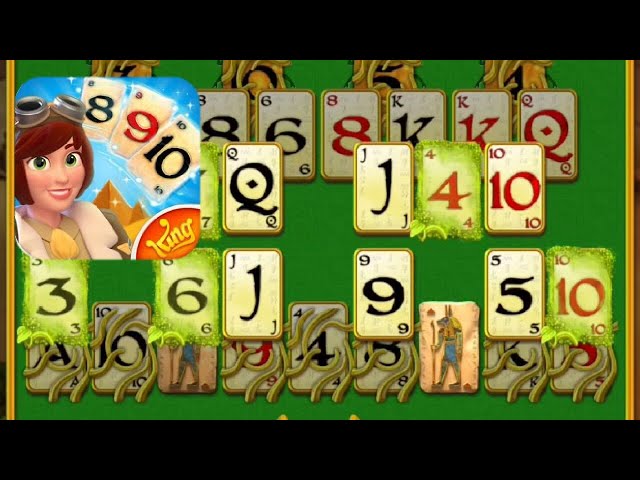
Pyramid Solitaire swaps building foundations for pairing cards that total thirteen. You’re constantly weighing whether to use a visible pair now or draw deeper to expose the card that might open half the board. King’s Pyramid Solitaire Saga leans into that tension with compact, puzzle-like layouts and level goals that escalate at a fair clip. It’s closer to a puzzle game than a meditative deck, which makes it a nice change of pace if you’ve been playing Klondike for years and want a new mental rhythm.
Each level is a quick scenario. You might need to clear golden scarabs hidden beneath layers of cards, or hit a target score before you run out of draws. Blockers and gimmicks can sound obnoxious on paper, but here they’re usually tight enough to make you adjust without bogging the game down. It helps that hands are short. If you fail, you re-roll and you’re back in less than ten seconds. When you succeed, you feel like you threaded a needle, not just ran good luck.
Expect a familiar mobile structure around it: lives that regenerate over time, optional boosters that undo tough mistakes, and a visual theme that stays light and readable. If you’re turned off by saga-style progression, this won’t change your mind. If you enjoy compact, rules-driven puzzles built on solitaire bones, Pyramid Solitaire Saga is one of the more consistent examples on Android.
- Best for: Players who want a brisk, puzzle-forward take on solitaire with clear goals.
- Pace: Very short levels; easy to binge a dozen in a row.
- Monetization: Lives with optional boosts; fully playable for free with patience.
- Offline: Core play may work offline, but progress and events lean online.
Fairway Solitaire
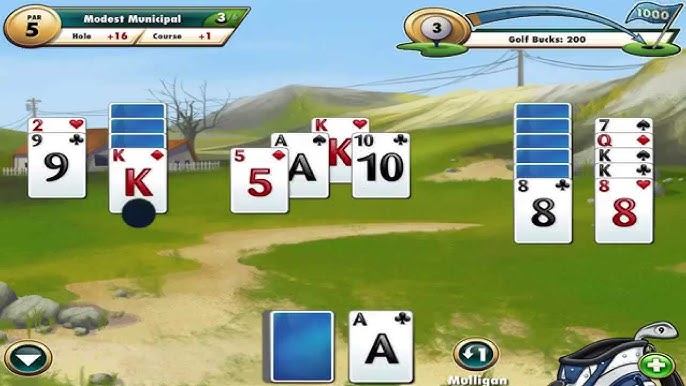
Fairway Solitaire dresses TriPeaks in golf clothes, and the theme does more work than you might expect. Hazards, rough and water aren’t just jokes in the UI. They’re mechanics that lock cards behind conditions you have to play around. Your “golf bag” of wild cards gives you tactical insurance, and challenging layouts reward planning a combo that hops across the tableau like a well-played approach shot. When you hit a long streak, the scoring SFX and cards flying off the table make it feel like a clean drive down the fairway.
The hand-by-hand loop is quick, but there’s more runway than a bare-bones TriPeaks clone. Courses bundle a set of hands into a mini tour, with medal targets and special rules that spice up your routes through the tableau. Some days it feels like an arcade game. Other days it feels closer to a puzzle you’re picking apart one layer at a time. Either way, it’s a good bridge between pure solitaire and a fuller casual game that asks you to think about risk and tempo, not just the next legal move.
It does carry the usual trappings: lives or energy gating long binges, plus optional boosters that trim frustration. If you want a no-monetization purist deck, this won’t scratch the itch. If you’re comfortable with a friendly free-to-play loop and like the idea of a theme that changes how TriPeaks plays, Fairway remains an easy recommendation.
- Best for: Anyone who wants TriPeaks with more personality and a slightly deeper puzzle feel.
- Pace: Short hands; courses encourage medium sessions.
- Monetization: Standard F2P structure with optional boosts; fair if you pace yourself.
- Offline: Generally expects an internet connection.
Disney Solitaire
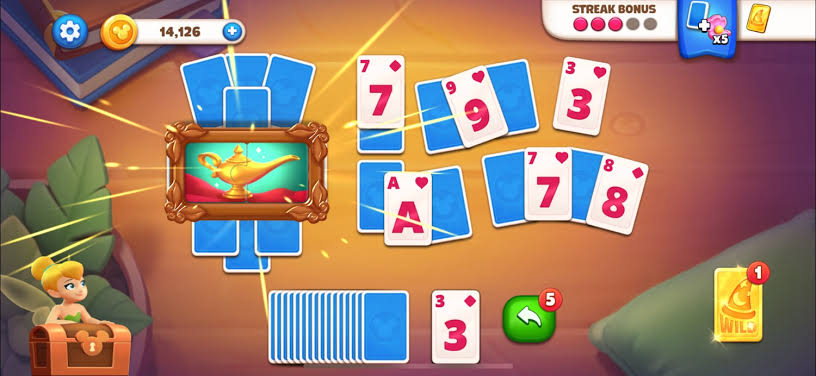
Licensed solitaire can be a minefield, but Disney Solitaire lands on the pleasant side of the spectrum. The hook is simple: it’s solitaire with Disney and Pixar art, themed card backs and ambient music that leans into the films without getting in your face. Underneath, you’re primarily playing classic solitaire hands with gentle goals layered on top, or short event-style puzzles that give you a reason to try a different layout. It’s not trying to reinvent the rules. It’s trying to take the edge off a long day with familiar characters and a slower pace.
The loop is relaxed. You play a hand or two, unlock a themed cosmetic, clear a small quest, and step out. This is not a game you grind for hours. It’s a palette cleanser between emails or while you wait in line. The value is how light it feels. Where many themed mobile games are loud by default, this one usually keeps the UI clean and the animations purposeful, which matters in solitaire where readability is everything.
As with many licensed apps, availability and event rotations can vary by region and over time. Expect ad support with optional purchases to smooth the experience. If you want a pure, no-frills deck, go with Microsoft’s Collection or MobilityWare. If you want your classic solitaire dressed up with Disney charm without turning into a completely different game, this is an easy win when you can find it in your local store.
- Best for: Fans who want calm, classic solitaire wrapped in Disney/Pixar themes.
- Pace: Short, relaxing sessions; a few hands at a time.
- Monetization: Typically ad-supported with optional purchases; no heavy pressure.
- Offline: Core play may be possible offline, but events and rewards are online.
Altough this game shouldn’t normally require any in-app purchases, many casual gamers often enjoyed modded builds for Disney Solitaire which help speed-up the game progression.
Which one should you start with?
If you’re not sure whether you’re a classic or puzzle-variant player, start with Microsoft Solitaire Collection and Solitaire by MobilityWare side by side. After a week you’ll know if you keep gravitating to pure Klondike or if you’re itching for a different tempo. From there:
- If you want pure, timeless solitaire with minimal fuss, keep MobilityWare installed and call it a day.
- If you enjoy switching modes and chasing daily goals without heavy monetization, stick with Microsoft’s Collection.
- If you like quick-hit puzzles with streaks and a sense of “levels,” try Solitaire TriPeaks next. It’s the template for a reason.
- If you want a cozier loop that makes your wins feel like progress on a small project, pick up Solitaire Grand Harvest.
- If you prefer short, puzzle-like problems that reset fast, Pyramid Solitaire Saga is focused and satisfying.
- If you want TriPeaks with more personality and hazards that change how you plan, Fairway Solitaire is the sweet spot.
- If you just want a calmer classic solitaire with Disney flavor, Disney Solitaire is a pleasant side deck when available in your region.
There’s no single “best solitaire” because the rules you enjoy are personal. Klondike can be meditative in a way TriPeaks never is. TriPeaks can deliver those short, almost arcade-like streak highs that Klondike rarely offers. Pyramid scratches a distinct puzzle itch. What matters is whether an app respects that loop without drowning it in pop-ups, timers or chaotic art.
How I picked these seven
This isn’t a dump of every high-traffic solitaire on Android. I spent time with the current builds, ignored clones that offered nothing new, and weighted the list toward games that still feel good after a month. The aim wasn’t to split hairs between identical Klondike apps, but to surface real variety: a polished suite (Microsoft), a pure classic (MobilityWare), two strong TriPeaks takes (Solitaire TriPeaks and Grand Harvest), one puzzle-forward Pyramid (King’s Saga), one themed twist with meaningful mechanics (Fairway), and one licensed option (Disney Solitaire) for players who want familiar characters without throwing the rules out the window.
There are other good options on Android, and some regional differences in availability. If a title disappears from your local store or gets weighed down by aggressive monetization, the safe fallbacks are Microsoft Solitaire Collection and Solitaire by MobilityWare. Both are stable, readable and respectful of your time.
Final thoughts
The best solitaire game for Android is the one you actually open every day. If that’s a calm Klondike deck you play before bed, go classic. If it’s a streaky TriPeaks level you knock out while the kettle boils, go puzzle. The seven picks here cover both ends and the middle in a way that should keep a spot on your home screen for a long while. Start with one, see how it feels, and don’t be afraid to keep two: a quiet deck for offline moments and a level-based saga for quick bursts when you’re online. That’s usually the sweet spot.