If you search for the best choice games for Android, you are not looking for another idle RPG with dialogue trees that change nothing. You want games that react. Games that make you pause before tapping a dialogue bubble because you know the next hour could look different if you pick the other option. Android has plenty of those, but they come in very different shapes: narrative adventures, survival sandboxes that quietly judge your ethics, slick swipe-based monarch sims, and unapologetically pulpy romance anthologies. The seven picks below cover that range without bloating your library.
Each one is here because choices are the core of the experience, not window dressing. Some are premium, some free with optional purchases, and one requires a Netflix account to install. All of them run well on modern phones, and most reward repeat play. If you are wondering where to start, skim for the kind of pace that suits your time and mood. Short sessions on the bus? There is a quick-swipe kingdom you can mismanage. Want a longer, slower burn? Try world travel against the clock or a week surviving in a ruined city where you cannot save everyone. None of these games will waste your time with fake stakes.
80 Days
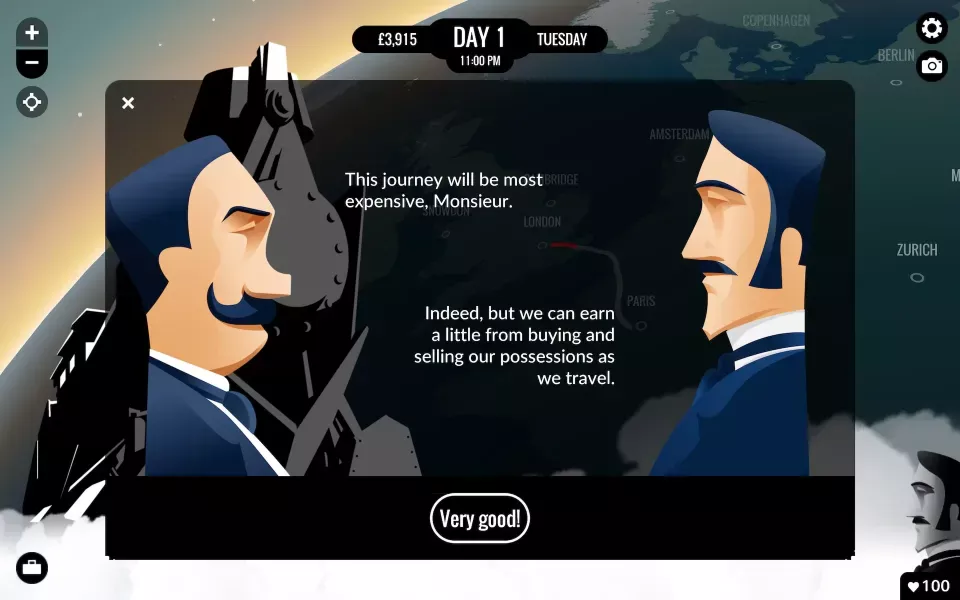
80 Days is a travel game that treats your decisions as the engine. You play as Passepartout, valet to Phileas Fogg, and the loop is simple enough to explain: pick your route around a steampunk globe, manage your time and money, talk to strangers to unlock new paths, and improvise when things go wrong. The trick is that almost everything you do threads through a reactive narrative web. A chat with a conductor might open a backdoor route to a city you did not know existed. Overspend on fancy luggage and you might miss a faster connection because you are weighed down. Refuse to help someone on a platform and watch that choice circle back two continents later.
Progression in 80 Days does not look like a level bar. It looks like knowledge. You learn which ports are friendly to your budget, which ship routes run on a schedule that aligns with your cash flow, which items turn into lifelines in certain regions. A good run is half planning, half accepting that your plan will collapse somewhere between Reykjavik and Yokohama. Events are written with a light hand, so even when you fail to make it back to London in time, it rarely feels like a dead end. Instead you carry forward a mental map and a traveler’s instinct for risk.
It is a text-forward game, but not slow for the sake of it. You are always making a decision within a few lines, and the next departure tick is never far away. If you enjoy the poetry of packing exactly the right coat, choosing the overnight train over the scenic ferry, or squeezing in a black-market deal to afford your next leap, this hits that blend of management and story perfectly. What sets it apart on Android is how well it fits short or long sessions. Ten minutes gets you through a leg of the journey. An hour melts away when a detour turns into a subplot. The world is big but personal, and your route is your story.
Reigns
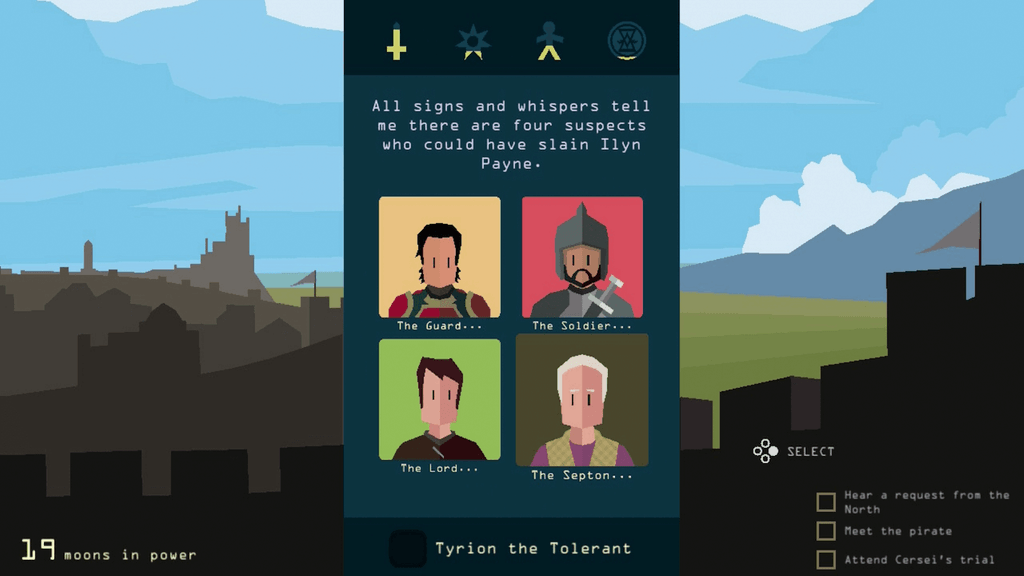
Reigns turns the politics of a kingdom into the cleanest interface choice games have: a stack of cards you swipe left or right. Each decision shifts four meters at the top of the screen, representing the church, the people, the military, and the treasury. Let any of them run dry or overflow and your reign ends, often hilariously. The key is not to maximize any one thing, but to live in that uneasy balance where everyone is just content enough not to overthrow you or drain your gold.
What starts as a novelty quickly reveals a wicked rhythm. A witch brings a mysterious cure. Swipe right to support her work and you score favor with the people but risk angering the clergy. A general suggests a border skirmish. Swipe left to avoid conflict and your soldiers sulk. Encounters chain in ways that often surprise you. Unlock a character and new cards start to appear in future reigns, seeding fresh mini-stories into the deck. You will die a lot. That is the design. Each failure becomes a new entry in your kingdom’s oddball chronicle, and your brain begins to read the deck like a living rulebook you are still learning.
The pace suits a phone better than most narrative games. You can squeeze in three reigns between stops on the train and still feel like you accomplished something. If you get hooked, there are sequels that play with the formula, but the original remains the cleanest version of the idea. It is not about being the perfect ruler. It is about living with trade-offs, gut calls, and the weird consequences that drop into your lap ten swipes later. There is no busywork here, no grind. Only choices and the grin or wince that follows them.
Life Is Strange

Life Is Strange is a five-part story about Max, a photography student who discovers she can rewind time. On paper that sounds like it undermines the whole point of a choice game. In play it does the opposite. The rewind lets you test a response, see how a character reacts, then choose whether to own that version of events or try something else. It makes small decisions feel deliberate because you are never stuck guessing in the dark. When the game takes that power away, which it does at key moments, you feel the loss. You have to live with a call without a do-over, and the tone shifts accordingly.
Moment to moment you explore dorm rooms, parking lots, junkyards, school halls, and you talk. Sometimes you solve light environmental puzzles. Often you just listen and pick your path. The story is not shy about push-button topics that teenagers actually talk about. It also makes space for quiet. There are scenes best played with headphones where Max sits, the world hums, and you feel the weight of a campus that watches and remembers. The Android version translates that slow-burn pacing well. Touch input suits the conversational flow and the photo-collecting side activity. You will want a bit of storage space free and you will want to play with sound on.
Unlike many conversation-driven games that treat choices as flavor, Life Is Strange lets decisions echo across episodes. Offhand remarks to a classmate can shift later scenes. Who you trust rewires entire branches of the back half. You can finish it once and be content, or come back a year later to chase the roads you deliberately did not take, which makes more sense here than in most narrative adventures. It is earnest, sometimes messy, and very human in a way that makes your choices land harder than a metrics screen tallying good and bad ever could.
This War of Mine
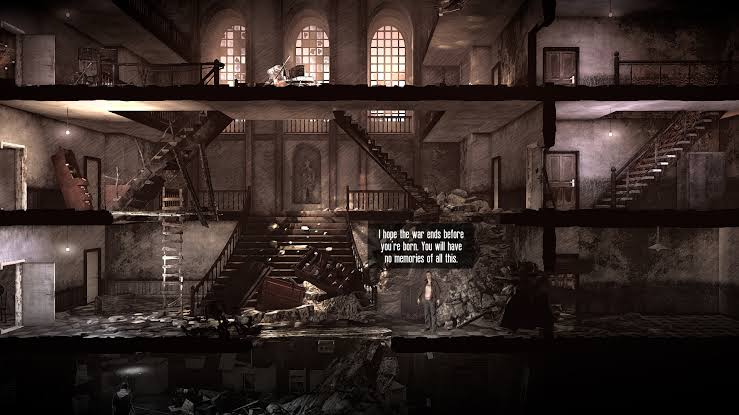
This War of Mine is the game you play when you want your choices to have weight and not just in a scoreboard sense. You are not a soldier. You are a handful of civilians trying to survive in a besieged city. By day you craft, patch holes in the walls, filter water, and choose what to cook. By night you send one person out to scavenge, hoping they will not run into someone desperate enough to fight. It looks like a survival sim on paper, but the heart of it is what you decide to do when all the options feel wrong.
There is a rhythm to the days. The radio gives context. People come to the door, sometimes to trade and sometimes to ask for help. Saying yes to a plea might cost you food you cannot easily replace. Saying no might protect your stockpile but drag someone in your group into a mood they struggle to shake. The game never wags a finger at you. It simply tracks the world you built and lets the atmosphere do the judging. Over time you get better at reading the flow. You learn which supplies matter most, which upgrades are worth burning materials for, when to risk a dangerous scavenge and when to settle for a quieter night with less to show for it.
What makes it a choice game rather than a survival check-list is the way it binds resource calls to ethics. Stealing from someone worse off than you is an immediate gain with a cost you do not measure in numbers. Protecting a stranger can spin into a story a week later that makes a run you thought was doomed feel almost hopeful. It is not a cheerful play. It is absorbing, honest about the kind of compromises people make under pressure, and it respects the player enough to let choices sting without melodrama. On a tablet it can take over your evening. On a phone you can manage a day or two on a lunch break and still feel the knives.
Oxenfree: Netflix Edition
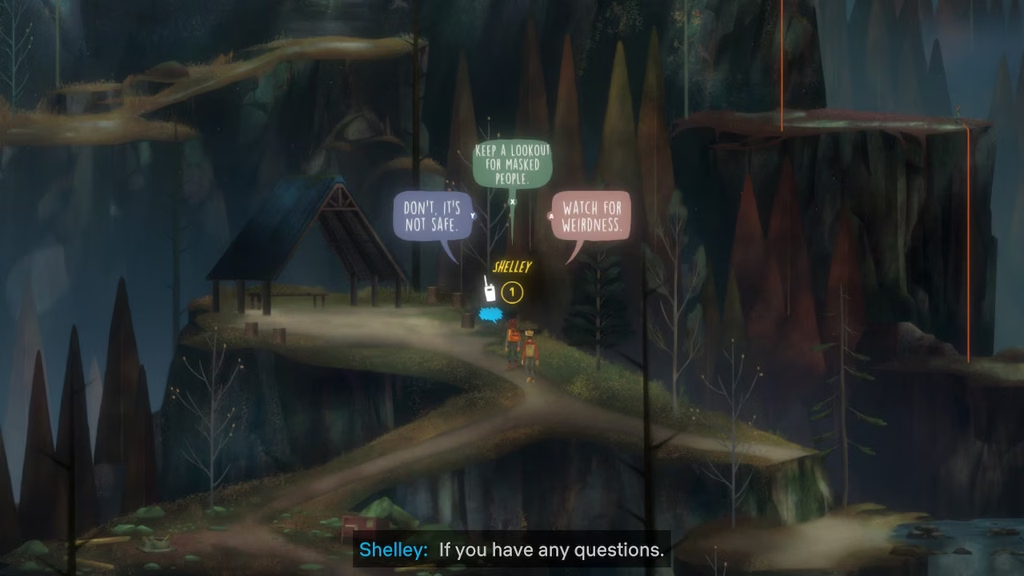
Oxenfree is a ghost story that breathes through conversation. You play Alex on an overnight trip to a foggy island with friends, and everything interesting you do depends on what you say and when you say it. Dialogue bubbles pop up in real time while you walk, climb, tune a handheld radio, and prod at old secrets. Sometimes a silence is the choice. Sometimes you interrupt, and that interruption becomes the moment your friend remembers when the night is over.
The radio is more than a puzzle gimmick. Tuning feels like opening little windows into the island’s history, and the game lets those eerie scraps bleed into conversations you thought were grounded and safe. On Android, the controls keep that flow intact. You will swipe and tap to move, but the dialogue keeps rolling even while you fiddle with a dial, which protects the illusion that these are real kids dealing with something they barely understand. The story branches around relationships rather than a single binary. You can push people toward each other, push them away, or just let them drift with choices you make without thinking.
The version on the Play Store is published under the Netflix label, which means you need a Netflix membership for access. If you already watch shows on your phone, that is a small hoop to jump through. The payoff is an intimate adventure that respects your time. You can play in a couple of long sittings or take it in chapters and still feel the continuity. It is also one of the few narrative games that takes replay seriously. A second run does not just ask you to make different picks. It reframes what you think is happening and lets you act on knowledge your character technically should not have. That extra layer gives your choices a slightly different flavor the next time you round the bonfire.
Choices: Stories You Play
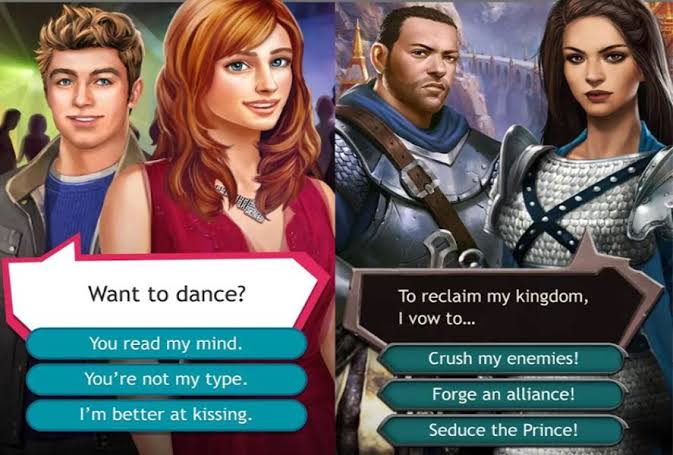
If you want a constant stream of decision-driven drama rather than one self-contained story, Choices is the reliable tap. It is a hub of visual novels across genres, but romance and high-drama fantasy rule the roost. The loop is consistent across series. You pick a book, customize a look, and work through chapters that end on cliffhangers. Along the way you spend keys to start chapters and diamonds to unlock premium choices and outfits. You can absolutely play without paying, but the app is up front that some branches and scenes sit behind a currency gate. That is a turn-off for some players and a non-issue for others depending on how you treat mobile games in general.
Underneath the monetization, the reason it belongs on a list of choice games is simple: your picks steer tone and relationships in immediate, visible ways. Romance routes lock in or slip away based on how you handle key scenes. Allies remember who you supported. Many chapters make room for quieter character moments that pay off only if you invested in someone earlier. This is not the kind of branching where you change the world map. It is the kind where a heart-to-heart in a hallway after a bad day becomes your favorite chapter because you chose to be there.
Sessions are short. A chapter fits into a ten-minute window, which makes it perfect for the dead space in your day. The writing ranges from breezy to melodramatic and rarely apologizes for it. That is part of the appeal. It is a place where you pull the strings in genre stories that know exactly what they are and let you lean into them. If you are in the mood for sharp turns, last-minute rescues, and outfits that clearly telegraph a big moment, this is the reliable comfort watch you can play, and your choices actually matter to the people you come back to each night.
BitLife
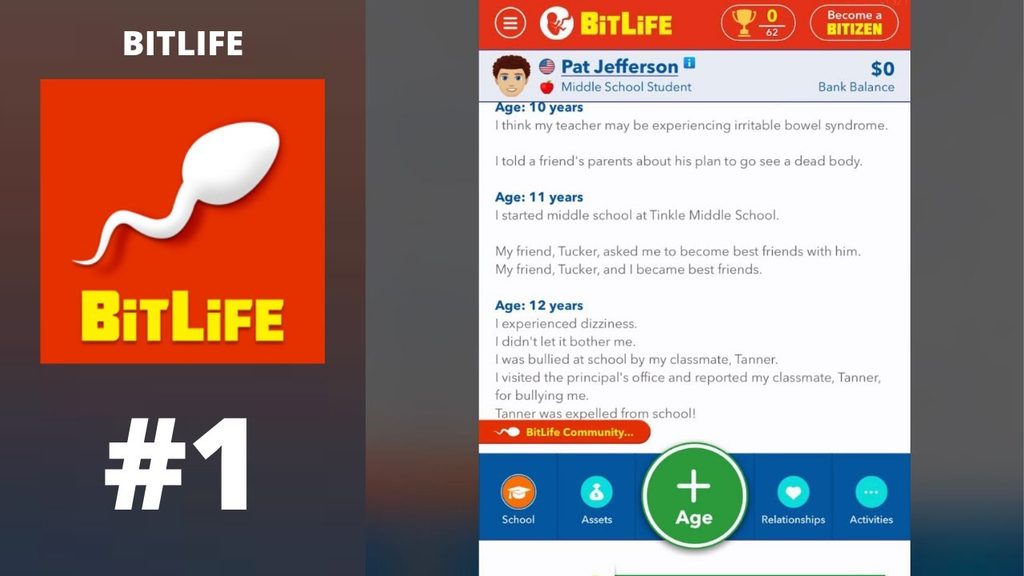
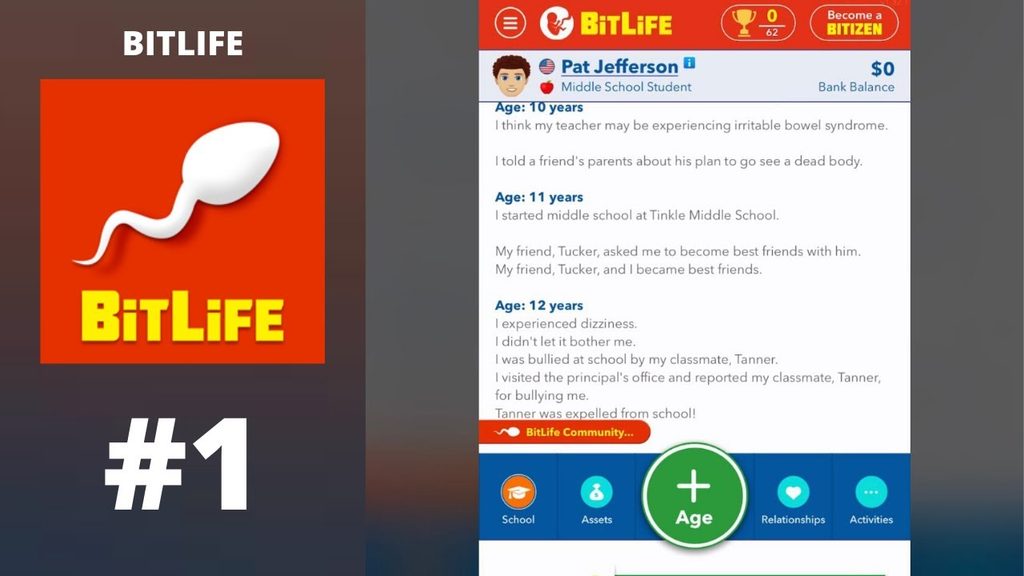
BitLife turns an entire human life into a scroll of decisions. You start as a baby with a handful of stats and each tap moves you up an age. Every year throws small prompts at you. Do you study or coast. Do you tell the truth or lie. Do you take a risky job offer or stick with something stable. It is part life simulator and part chaos machine. The fun is not in min-maxing a perfect person. It is in watching how one impulsive pick at 19 spins into a midlife you did not expect and then somehow lands you in a quiet retirement you did not plan.
Because it is so granular, the game leaves space for personality. It is not just a string of big forks. It is the hundred micro-choices you make and the way they cascade. You can try to live squeaky clean, get a degree, marry early, play it safe, and then decide to take up a side hustle that slowly consumes your life. Or you can go off the rails, rack up a criminal record, and spend a run seeing how far the simulation will let you push your luck before it pushes back. The interface is pure text, which makes it quick to play, but the knock-on effects of your picks build stories that read back almost like diaries.
BitLife is free to start with optional upgrades that tidy up the experience. The design fits a phone to a fault. You can make a few decisions in a minute, put it down, and come back later to deal with the fallout. There is a lot of randomness in the events you see, which helps the game feel fresh but also means you should not expect precise control. That looseness is the point. If you want a choice game that lets you chase different lifestyles, experiment without fear, and commit to a new persona every time you launch it, BitLife is a dependable way to turn idle time into pocket biographies.
How to pick your first one
Choice games are about tempo as much as they are about branching. If you crave a quick loop, Reigns and BitLife are built for short bursts. If you want that slow, satisfying knot of cause and effect, 80 Days and This War of Mine are at their best when you have room to think. If you want conversation-driven stories that live or die on character writing, Life Is Strange and Oxenfree are safe bets. If you prefer a steady stream of bite-size chapters that you can dip into nightly, Choices fits a different kind of habit.
There is no wrong pick on this list. The better question is what kind of decision-making feels good to you right now. Your phone can handle both the grand tour and the tiny mess of a life lived one tap at a time. And when a game meets you where you are, your choices stop feeling like buttons to press and start feeling like stories you own.