People searching for the best slingshot games for Android tend to want one thing: that clean, tactile moment when you pull back, judge the arc by instinct, and watch structures give way in a tidy chain reaction. It’s a very specific itch. A good slingshot game doesn’t just have birds or boulders. It has readable physics, levels that tempt you to try one more time, and enough variety that your twelfth attempt still feels interesting rather than stubborn.
If you’re just here for angry birds 2, it’s our easy recommendation, and it’s below. But if you want alternatives that stretch the idea in other directions, these seven picks cover the breadth of the genre: tournament-style score chasing, minimalist timing puzzles, 3D catapult sieges, and longer campaign arcs. All of them feel good under the thumb and reward steady aim.
How we judge a good slingshot game
Across dozens of Android physics puzzlers, the standouts share a few things:
- Clear, honest physics. Shots behave consistently, so you can learn without guessing. If a stone arcs a certain way on attempt one, it should be reliable on twelve.
- Readable structures. Good levels communicate weak points through shape and material. You shouldn’t need a magnifying glass to find the fulcrum that topples the lot.
- Short restarts and snappy feedback. A failed shot should reset fast, with just enough sound and crumble to make the retry tempting.
- Varied problems. Some levels are surgical, others theatrical. The best mixes keep your aim sharp.
With that in mind, here are the seven Android slingshot games we actually recommend right now.
1) Angry Birds 2
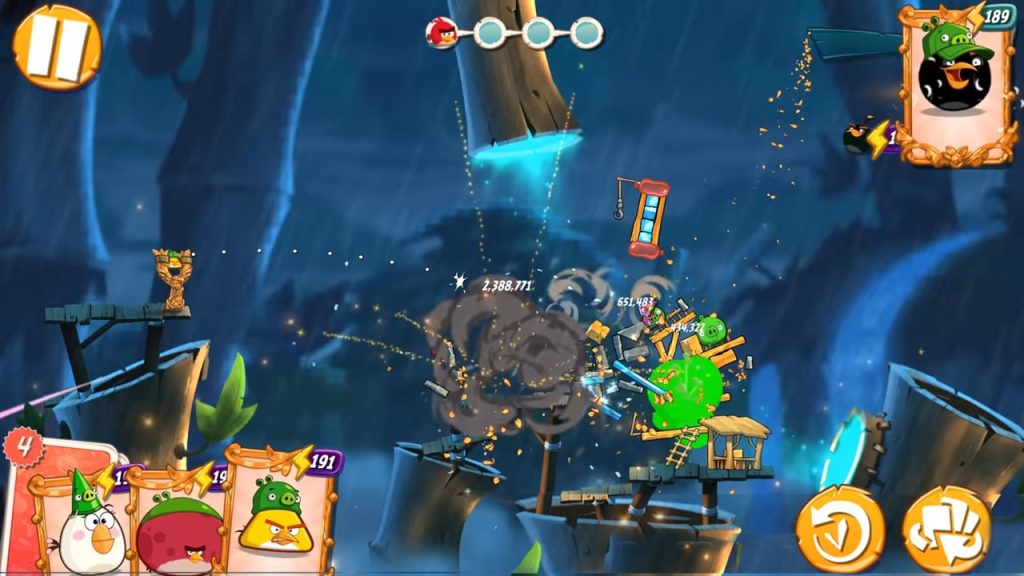
This is still the immediate answer when someone asks for a modern, polished slingshot game on Android. Angry Birds 2 refines the original’s feel without losing the snap. That familiar stretch of the band, the subtle elastic resistance, the soft bounce when you miss by an inch, the way glass shatters compared to wood or stone: the tactile feedback remains the series’ secret weapon.
The core loop is simple to explain and hard to put down. You enter a set of multi-stage levels where each room presents a different piggy fortification. Bird selection adds a layer of strategy. You’re not just lobbing whatever comes next; you often decide which bird to use in which order, based on structure layout. A Matilda drop bomb changed your first attempt? Try delaying it for the second stage. Telegraphed weak spots matter more than ever, and the game is good at inviting clever angles, not just brute force.
What keeps it fresh day to day are the shifting level sets and side modes. The daily challenges are quick hits that push you to adapt. The arena scratches the competitive itch, with score-chasing that rewards clean arcs and smart shot economy. Boss encounters break pace with moving targets or layered defenses, asking you to set up rather than immediately demolish.
For returning players: the physics are still readable, and the multi-stage structure rewards planning. For newcomers: you’ll learn the difference between grazing a hinge and blasting a beam by playing, not by reading a tutorial. It remains the genre’s friendliest on-ramp without being dull to veterans.
Best for: Anyone who wants the definitive pull-and-release feel, strong level variety, and a reason to improve their shot selection beyond basic demolition.
2) Angry Birds Friends
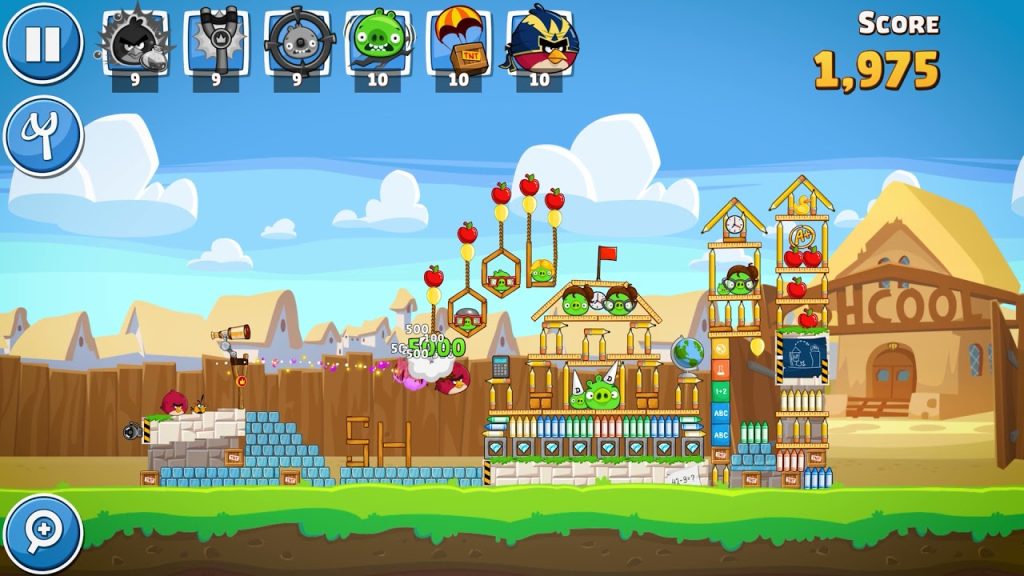
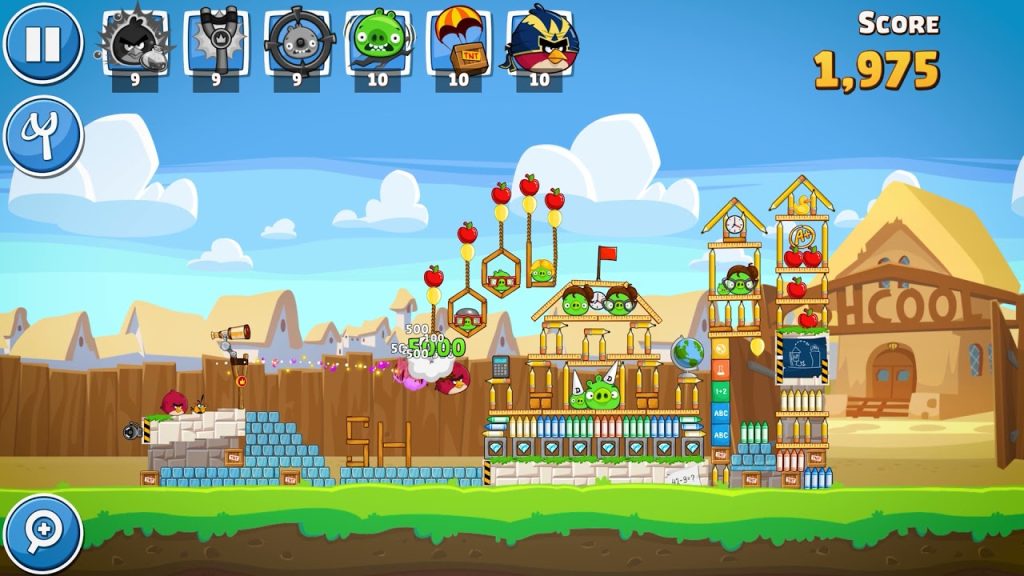
If Angry Birds 2 is the campaign-driven entry, Angry Birds Friends is the weekly proving ground. It’s built around short bursts of competition, with new sets of levels rolling in on a schedule. Every player faces the same layouts, which makes scores a fair comparison of your aim, your route through a structure, and your ability to squeeze points out of debris.
The feel of the slingshot is classic Rovio: predictable arcs, distinct material properties, and satisfying sound when a perfect shot triggers a long, slow collapse. Where Friends stands out is in the way it asks you to iterate. The first attempt is reconnaissance. You see how the support beams carry weight, how TNT chains, where a single well-placed shot causes the most mayhem. Then you refine. Maybe you loft a high arc to clip a ledge that nudges a boulder into a lower platform. Maybe you go low and skip a bird along a slope. Shaving a few thousand points off a replay because a plank fell better than before is its own reward.
This one leans into the scoreboard mindset. If you like the idea of practicing the same level until it folds exactly how you planned, it suits that habit. If you prefer big campaigns with evolving mechanics, you might bounce back to Angry Birds 2. But for competitive types, the weekly rhythm is a nice way to keep your aim sharp.
Best for: Players who want a regular slate of identical challenges to compare scores and deconstruct levels shot by shot.
3) Catapult King
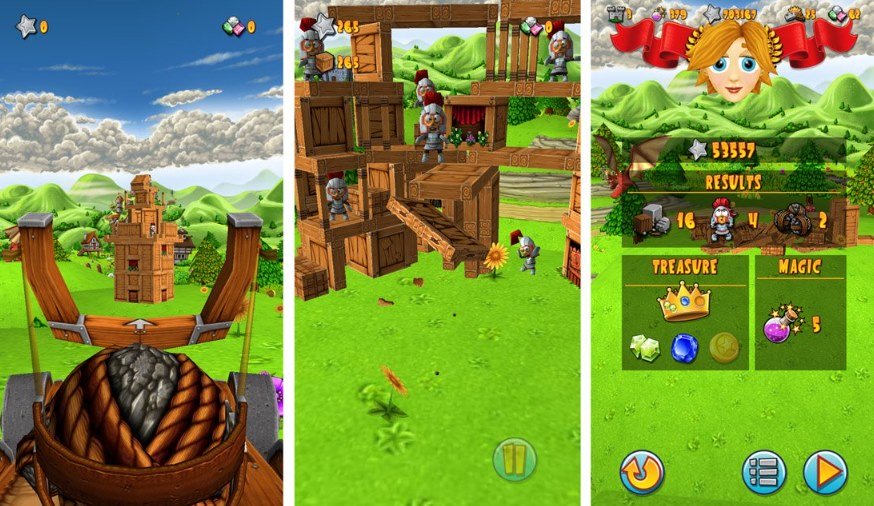
Catapult King flips the angle to a first-person catapult, which changes how you read distance. Instead of a side view with an obvious arc, you’re looking down the field at stacked towers, knights, and the occasional dragon. You set angle and power with a drag-and-release, but the perspective forces you to think about height and depth differently. It’s easy to overshoot a mid-field tower and undershoot a back-row target until you recalibrate.
What sells it is the immediate feedback of 3D destruction. Timber, stone, and metal blocks tumble in more theatrical ways than a 2D camera can show. A shot that glances off a brace might still cause a lovely cascading mess as beams teeter, shift weight, and take a tower with them. The game occasionally toys with your sense of stability, too, building structures that look fragile but hold, or vice versa, so you learn to look for actual load-bearing spots rather than just aiming at the middle.
Levels escalate by adding moving parts, tricky distances, and layered defenses that reward threading shots through arches or punching through corner joints. There are special shots that let you change approach when a level demands precision you don’t yet have, but the heart of the game is simple catapult mastery. When you pull off a far-shot that peels a battlement into the moat and topples half the structure in a chain, it scratches the exact itch you came for.
Best for: Anyone who wants classic slingshot physics but from a head-on 3D perspective, with showy collapses and longer sightlines to judge.
4) Crush the Castle: Siege Master
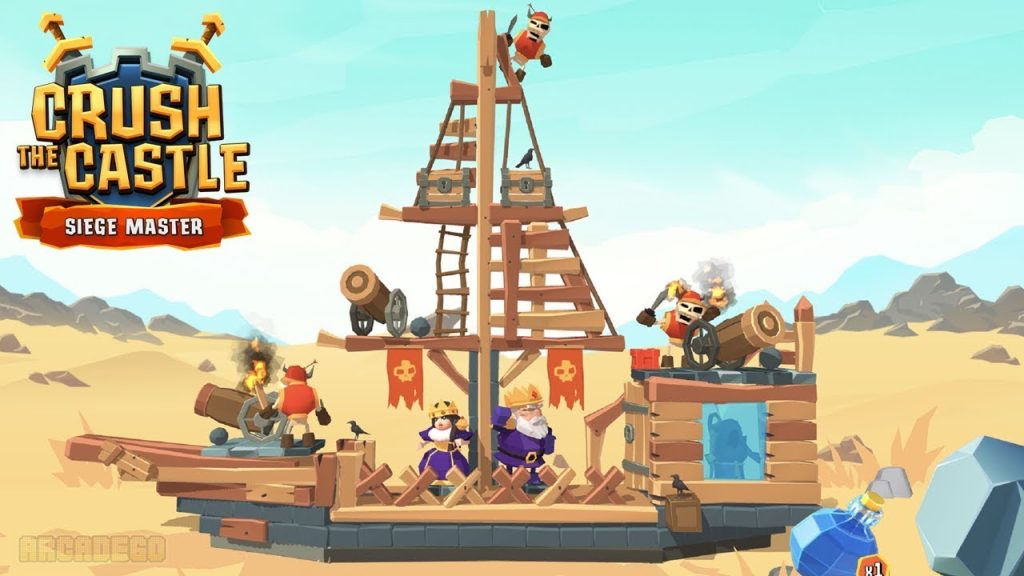
Crush the Castle is the older cousin of the genre, and Siege Master on Android keeps the spirit intact: you load a medieval launcher and send different projectiles into Rube Goldberg castles that beg to be unraveled. It is slower and more deliberate than most bird-flinging games. That’s the point. You study how the castle is braced, pick your shot type, nudge the angle, and find the pressure point that turns a solemn keep into a timber slide.
The satisfaction here comes from cause and effect. Logs scrape along beams, weights transfer, joints buckle. You might fire a heavy round to soften a wall, then follow with a spiked shot that bites in and leverages a collapse. Bombs, when given, ask for timing rather than raw power. On a replay, tiny adjustments matter: a degree higher or lower sets off a different chain. Levels often bake in alternate solutions, so watching replays or experimenting can reveal a clean one-shot route where you previously needed three.
The presentation is straightforward, with a clean side view and quick restarts that encourage iterating. Later areas get playful with contraptions: swinging cages, stacked platforms that teeter, even little surprises tucked into geometry. It’s quietly generous with the amount of ways a castle can fall apart, and it rewards patience over spammy firing.
Best for: Players who enjoy measured, puzzle-first sieges where reading the architecture beats spraying shots.
5) King Oddball
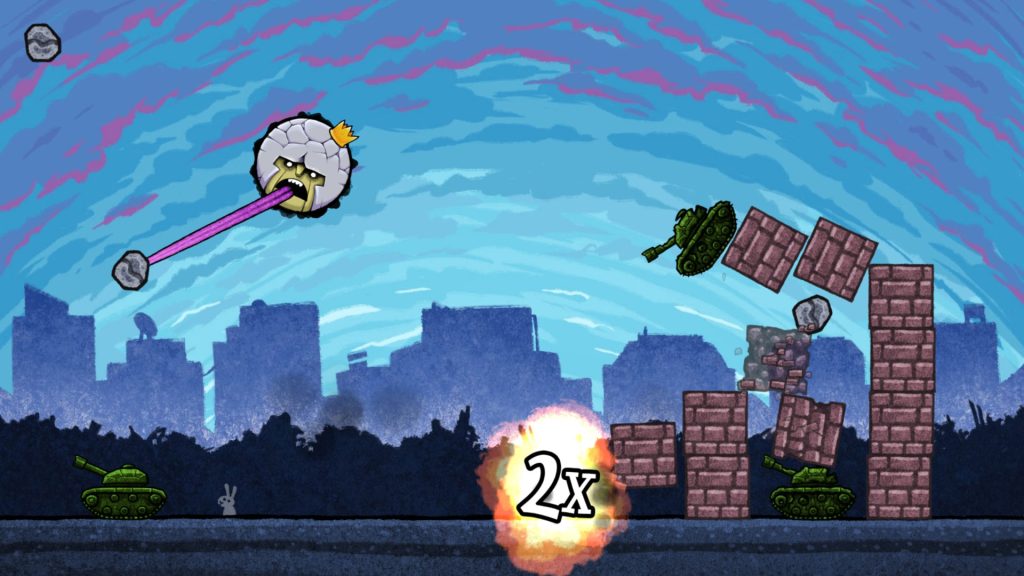
King Oddball looks like a joke and plays like a timing drill. A giant stone-headed king dangles a boulder from his tongue, swinging it back and forth over a line of enemies and breakables. You don’t pull to aim; you tap to release at the right moment, and the rest is gravity plus rebound. The first five minutes feel silly. The next five teach you that release timing and rebound geometry matter as much as any pull-and-release slingshot.
What makes it stick is how readable everything is. The arc is simple, rebound angles are consistent, and levels are designed to reward bank shots. You’re always trying to take out multiple targets with one rock, often by hitting a weak block that frees a second boulder, which bounces into a third platform, which finally lands the finishing hit. It becomes a study in planning two bounces ahead. There’s room for improvisation, too. When a stone barely kisses a corner and dribbles into an explosive finish, it feels like you discovered a magic line nobody else spotted.
It’s a minimalist game that respects your time. Failures are quick. Successes are cleaner when you leave pieces unthrown. Bonus stages twist the formula without losing what works, and there are just enough visual themes and small mechanical wrinkles to keep you iterating.
Best for: People who love the geometry of a slingshot game and want it boiled down to timing and bank shots, with no fuss.
6) The Catapult 2
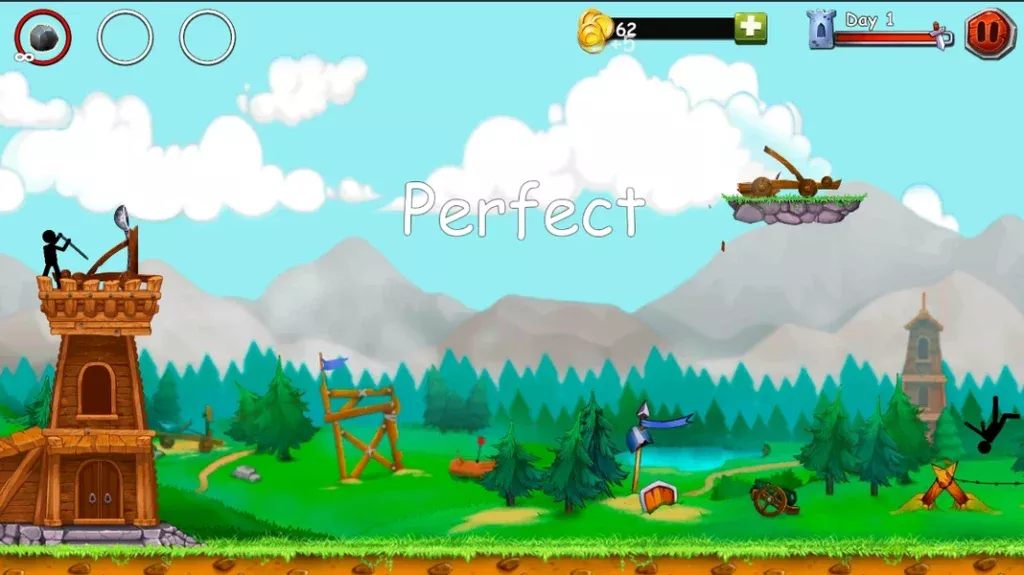
If you like the tactile act of lobbing stones but want something closer to a light campaign, The Catapult 2 is a dependable choice. It’s a side-view defense game where you man a tower and shoot incoming stick-figure armies and siege machines. On paper that sounds like a shooter. In practice, it uses classic arc and power control. Many targets move in slow, arcing paths, so you end up leading shots and judging distance like any other slingshot puzzler. You pay attention to travel time. You plan lobs that intercept rather than react at the last second.
The pace is different from puzzle levels. Instead of solving a single structure, you manage waves, switch between threats, and decide when a precise lob is worth delaying a closer target. There are segments that lean into artillery feeling, with heavier shots that curve less and land with weight. Interludes and boss-style enemies push you to get comfortable with mid-screen arcs so you can swap aims quickly.
Progression introduces new toys at a steady clip. Alternate projectiles shift how you approach certain enemies or fortifications, defensive add-ons give you breathing room to aim, and set-piece moments break the routine so you’re not just trading shots. The input remains pleasingly simple throughout: drag, judge the parabola by feel, and release.
Best for: Players who want sustained sessions with a sense of advancement and a familiar arc-based core, not just discrete puzzle boards.
7) Knock Down
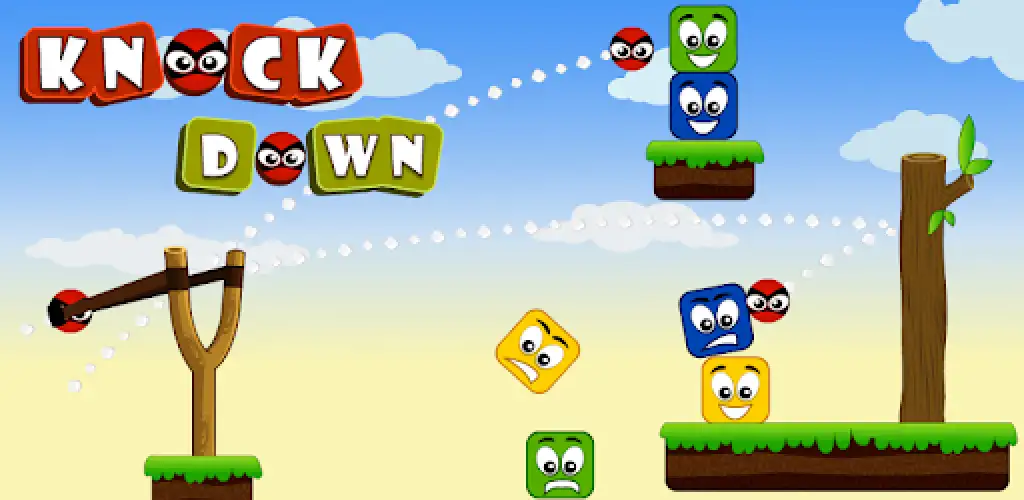
Knock Down takes the slingshot idea back to basics. You have a band, a set number of balls, and a stage full of targets perched on shelves, balanced on planks, tucked behind obstacles, or sliding along simple mechanisms. Your job is to flick a clean, accurate shot that dislodges whatever the level designer thinks will make you mutter “okay, one more try.”
Because it strips the concept to its essentials, it lives and dies by two things: the feel of the band and the readability of the setups. Fortunately, both are right. The pull has a consistent weight that lets you judge power after just a few levels, and the layouts communicate intent well. Early on you’ll learn that a shot below a bottle resting near an edge can skid it off with minimal force, while a direct hit might pin it in place. Later puzzles start hiding those neat interactions behind ricochet-friendly surfaces, moving platforms, or precarious stacks that punish overhitting.
Levels are short and reset instantly. It’s the classic “wait in line, try two puzzles, feel clever, pocket your phone” kind of game, but it also holds up if you sit for an hour and chase clean clears. There isn’t much story or dressing around the edges, which is by design. It respects that part of your brain that likes to sight a line, commit, and see if you were right.
Best for: Anyone who enjoys pure, uncluttered slingshot challenges where precision and soft touches matter as much as power.
Choosing the right slingshot game for your mood
Slingshot games all share the same skeleton, but they scratch different itches depending on how you like to play:
- Want a polished all-rounder with constant variety? Angry Birds 2.
- Prefer competitive score-chasing and weekly goals? Angry Birds Friends.
- Crave theatrical 3D collapses and longer sightlines? Catapult King.
- Like puzzle-first sieges with deliberate pacing? Crush the Castle: Siege Master.
- Love minimalist timing and bank-shot puzzles? King Oddball.
- Want a light campaign and wave defense built on arcs? The Catapult 2.
- Need short, clean, tactile stages? Knock Down.
Practical tips that carry across all seven
Even though the games differ, a few habits pay off everywhere:
- Learn the midpoint of your pull. Spend a minute intentionally under- and over-pulling to find a reliable “medium” that your thumb remembers. Muscle memory saves retries later.
- Aim for load-bearing spots. Don’t just hit the middle. Scan for columns, beams at joints, or anything that looks like it supports two pieces at once. The best shots move weight, not just delete a block.
- Respect rebound. In 2D games especially, a slightly off-center hit that rolls or bounces can do more than a perfect dead-on strike. Visualize the first bounce before you let go.
- Use the first shot as recon. Watch how things settle. If a tower leans but holds, your second shot can exploit the new angle for an easier finish.
- Lift your anchor finger smoothly. Jerky releases can nudge the last pixel of your aim. A calm lift means cleaner arcs.
Why these seven made the cut
There are many ways to fling a projectile on Android, but not all of them feel like slingshot games. We focused on titles where your sense of arc and power directly creates the outcome, rather than click-to-fire systems or pure tap timing without trajectory awareness. We also looked for games with clean visual communication. When a player improves, you want it to be because they learned to read structures and arcs, not because they discovered a hidden hitbox or a quirk in the engine.
Every pick here also respects the retry loop. Fail fast, try again, and celebrate the small mastery gains. If a game made us wait to restart or buried the shot in layers of friction, it didn’t make the list.
Quick reference: what you’ll actually do in each game
- Angry Birds 2: Tackle multi-stage pig forts, choose birds per room, set up clever collapses, chase daily challenges and score targets, dip into competitive runs.
- Angry Birds Friends: Replay rotating level sets, refine routes for higher scores, compare results in a shared competitive frame.
- Catapult King: Fire a first-person catapult at 3D towers, learn depth and height judgment, enjoy physics-heavy crumbles.
- Crush the Castle: Siege Master: Select projectile types, plan sequential shots, exploit architecture to bring keeps down with precision.
- King Oddball: Tap-to-release swinging boulders, chain bank shots, clear compact levels with minimal throws.
- The Catapult 2: Defend a tower in side view, lob intercepting shots at advancing foes, progress through a light campaign with set-piece battles.
- Knock Down: Use a barebones slingshot to pop targets off perches, value precision and soft touches, reset quickly and iterate.
Whichever you pick, give it fifteen minutes to teach your thumb the arc. The fun starts when that little internal meter clicks and you can feel the shot before you take it.