
If you are searching for the best theme park games for Android, you are probably looking for more than a quick novelty. You want that particular loop only this genre nails: laying out rides and paths, tuning a layout so the crowds flow, watching a parade of guests react to your decisions, then zooming in for a ride view just to enjoy your own creation. Mobile has more of that than you might expect. It ranges from proper coaster-by-piece simulations to gentler, session-friendly park management and even ride operations that put you in the control booth.
This list sticks to Android titles that actually make you feel like you are running or building a park. No filler, no vague city builders in disguise. Each pick brings a different angle, whether it is classic tile-by-tile design, story-led park building with familiar characters, or idle-friendly upgrades that let you nudge a park along when you have a spare minute. Disney Magic Kingdoms is here, as requested, but the rest of the lineup matters too. If you have a specific taste, you will likely find a match below.
RollerCoaster Tycoon Classic
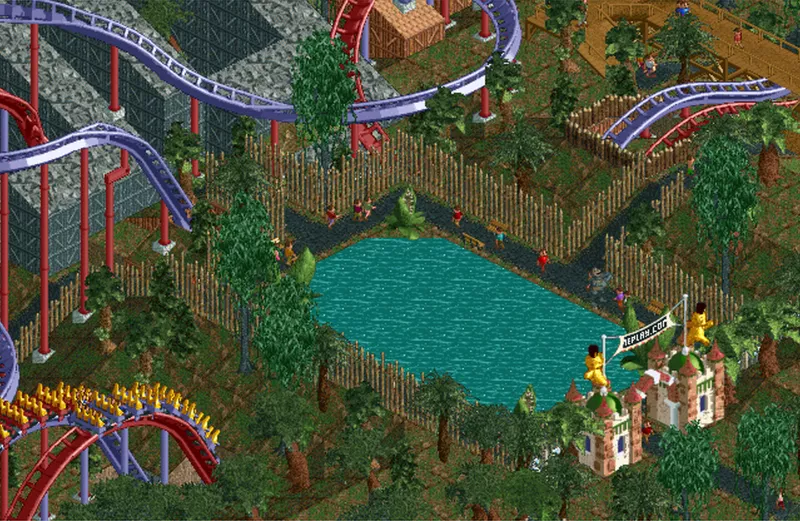
RollerCoaster Tycoon Classic is the closest thing to opening up a classic PC window on your phone and losing an evening to it. The structure is unchanged: a scenario drops you into a mostly empty map with a goal and a time limit. Build up from a handful of gentle rides and stalls, hit the objective, then move on to a new map with new constraints. It still uses an isometric viewpoint and tile-based building that makes sense on a touchscreen, and it still expects you to think like a park manager instead of a decoration artist.
The real hook is the piece-by-piece coaster construction. You snap down a chain lift, pitch into a drop, yank the track through a corkscrew, maybe add a helix and a gentle brake run. Then you test. Numbers pop out that matter: excitement, intensity, nausea. Chase a bump in excitement and you might nudge intensity into the red, which turns a crowd pleaser into a barf machine. Tweaking one section at a time to find the sweet spot remains a small engineering puzzle with a very satisfying result. You feel it as much as you see it.
Outside of coaster tinkering, Classic has the whole management spread. Hire handymen to sweep paths and water gardens. Place mechanics near problem rides and assign patrol routes so breakdowns do not linger. Entertainers take the edge off a crowd that has been waiting too long. Food, drink and bathrooms become part of your layout in a real way. Positioning a drinks stand near a high-gee coaster helps, not because a menu says so but because the visitor sim reacts to your layout. Marketing works when you can handle the extra guests. It all feeds into a steady rhythm of improvements that the game never has to shout about.
Why it stands out on Android is not nostalgia. It is the way touch controls make the tile grid feel logical. Drag to place paths, tap to swap a fence to a queue line, pinch to zoom when you want detail. The scenarios are short enough to fit into mobile sessions but layered enough to feel like proper management. If your idea of a good theme park game is a sandbox of levers with clear feedback and wonderfully fussy guests, this is still the benchmark.
RollerCoaster Tycoon Touch
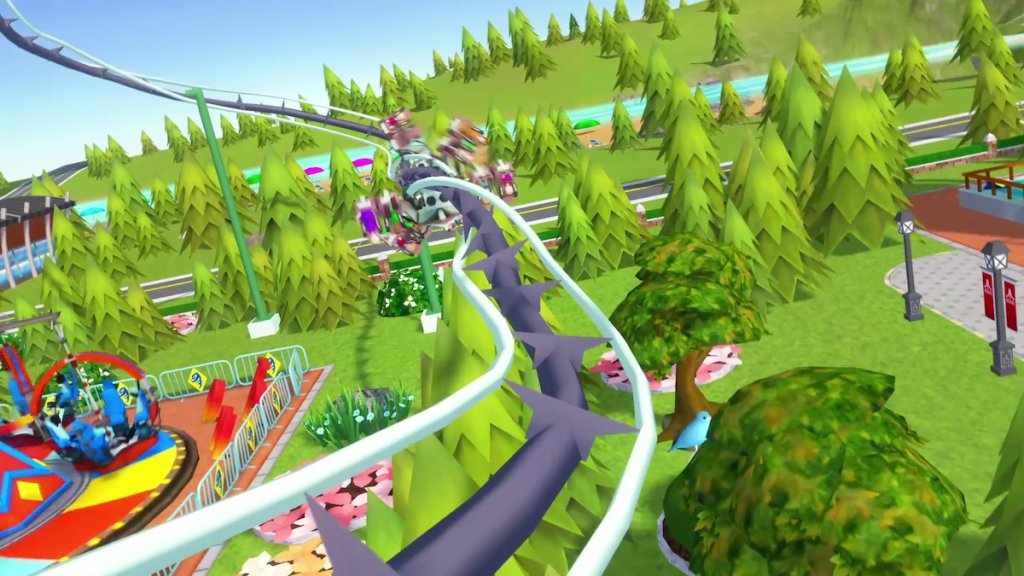
RollerCoaster Tycoon Touch takes the same brand and points it at a more contemporary, always-growing style of park. It trades the tight, objective-led scenarios for an open-ended map and a slow spread of attractions, decorations and systems. The camera moves freely across a fully 3D park, and building happens in a way that suits phones well. Rides click down with a thumb, paths bend around obstacles with a bit of patience, and you get to add a level of visual flourish that the older isometric style never encouraged.
The coaster builder is approachable without being trivial. Instead of sweating every single component, you chain together segments, bend and shape them, then jump into a first-person ride to see how it feels. It is quick to sketch something silly and surprisingly easy to iterate into something that looks like a proper layout. It is not a full-on engineering simulation, which is the point. The fun lives in the moment where a wobbly first draft becomes a smooth, flowing coaster that threads your own scenery.
What you manage in Touch leans into crowd flow and visual design. You are constantly thinking about how guests traverse the park and where to place complementary facilities. A thrill ride wants a snack stand in sight of the exit. A quieter stretch benefits from a carousel or a fountain to keep the vibe up. Decoration sets help you theme sections, which makes the map look right and gently boosts performance. There are timed challenges, seasonal events and optional tasks that offer structure when you want it, but the core loop is still build, refine, admire, repeat.
Touch is for players who want to see their park in full 3D, ride the coasters they design and treat the whole map as a creative canvas. It respects the fantasy of being a theme park maker without asking you to micromanage every last bolt, and that makes it a good fit for the time you spend on a phone.
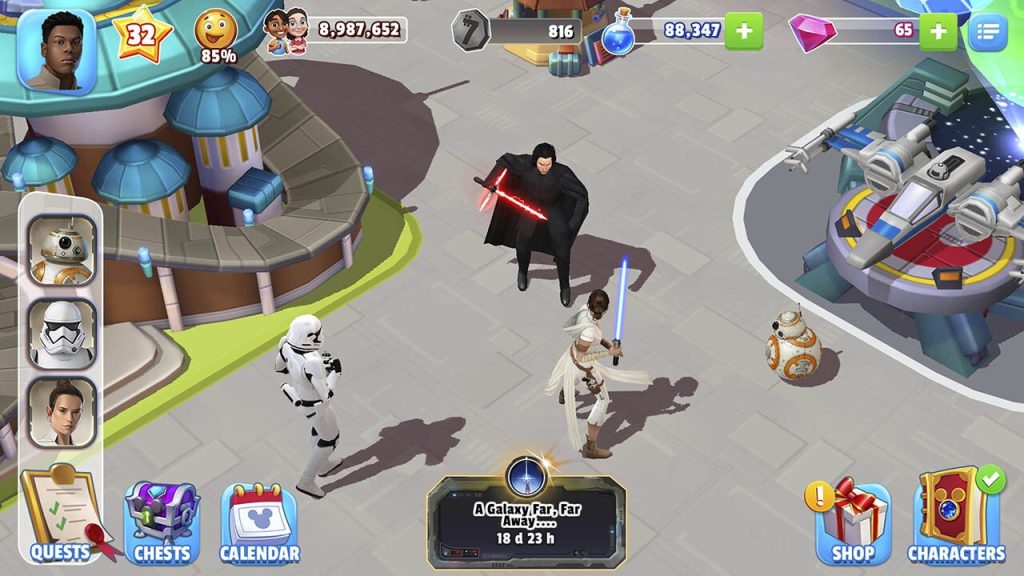
Disney Magic Kingdoms
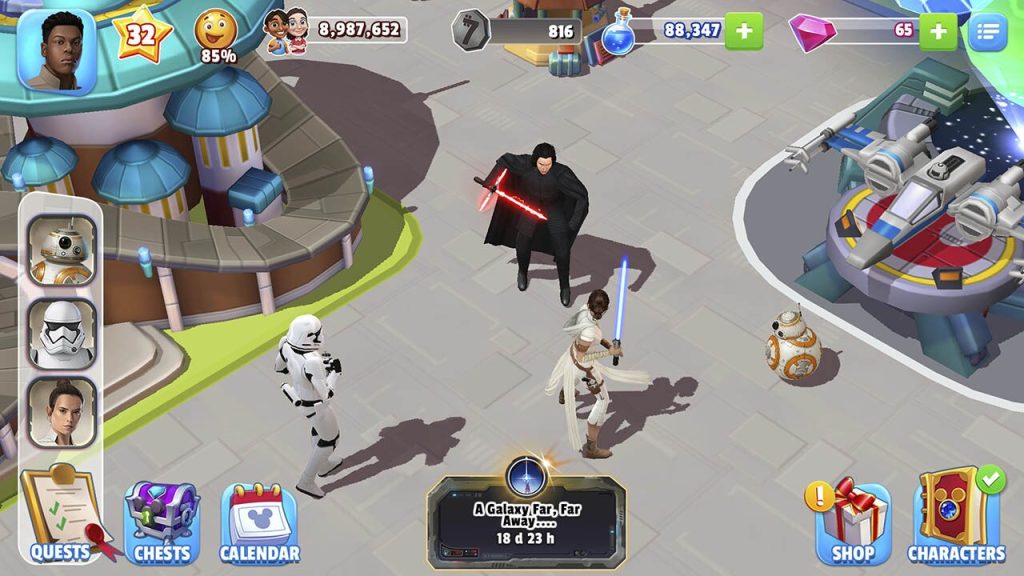
Disney Magic Kingdoms is not shy about what it wants you to do. Build an iconic park, welcome familiar characters, and clear the fog of a curse that has settled over the land. It is a classic island unlock loop wrapped around a story that uses Disney and Pixar casts in a way that feels like a proper park day. One minute you are placing an attraction with a soundtrack you know by heart, the next you are watching Toy Story characters chat through a quest that slots into the wider narrative.
The play pattern is gentle and deliberate. You set a plan, send characters off to run activities, then check back to see how the park has changed and which new pieces are ready to place. Attractions and decorations do not just look right, they tie into character arcs and story beats. If you are the sort who knows exactly where a statue should sit relative to a parade route, you will find yourself fussing over layout more than you expect. The map gradually opens up as the curse recedes, letting you carve out themed areas that mirror real-world park logic.
Because the cast is the heart of it, Magic Kingdoms spends time making characters feel like more than menu items. The animations are specific. The quests reference the films with the kind of small details that would make an Imagineer smile. Watching a duo meet up near a ride that matches their world is a small delight that lands because the art, animation and audio all commit. There is a park builder here, yes, but there is also a light narrative adventure that gives each placement more weight than a mere score boost.
If you love the idea of constructing a park that looks and sounds like a Disney day, this is the Android game that serves that fantasy cleanly. It is less about complex operations and more about the satisfaction of curating a space that celebrates characters you know. The management layer is present, but the real drive is completing sets, opening new lands and seeing the next bit of story play out among the rides you placed.
Dream Park Story

Dream Park Story distills the genre down to its essential decisions and then adds the oddball charm Kairosoft has been shipping for years. The presentation is retro and neat, but the systems have teeth. You are handed a small plot, a few attractions and the bones of a staff roster. From there it becomes a grid puzzle of adjacency bonuses, synergies and careful investment. Put a food stall where it will catch a post-ride crowd. Drop a restroom beside a queue to blunt frustration. Pair a gift shop with a themed attraction for a surprise bump. The game surfaces these linkages with satisfying clarity, so every change feels intentional.
Progression moves in seasons and years, with special events punctuating the routine. There is a goal to climb rankings and impress sponsors, but you get there by building a park that runs smoothly. Staff level up, learn specialties and change how efficient different parts of the park become. Research unlocks new rides and facilities, which gives you more pieces to juggle. A new attraction is not a trophy to be plonked anywhere, it is another opportunity to redraw a section for better flow. Because the park area is finite, you get real trade-offs. Do you keep that charming but low-earning ride for variety, or swap it out to chase a theme set bonus and a higher capacity?
The loop is tight and deliberately low friction, perfect for a commute or a set of short sessions. It still scratches the itch of tinkering with throughput and guest happiness. The pixel art masks a game that rewards observation. You start to see patterns in visitor movement and adapt the grid accordingly. It creates that rare management rhythm where a few minutes of attention have visible results. If you want a park sim that is lighter on spectacle and heavier on smart placement, this is a lovely fit.
Jurassic World: The Game
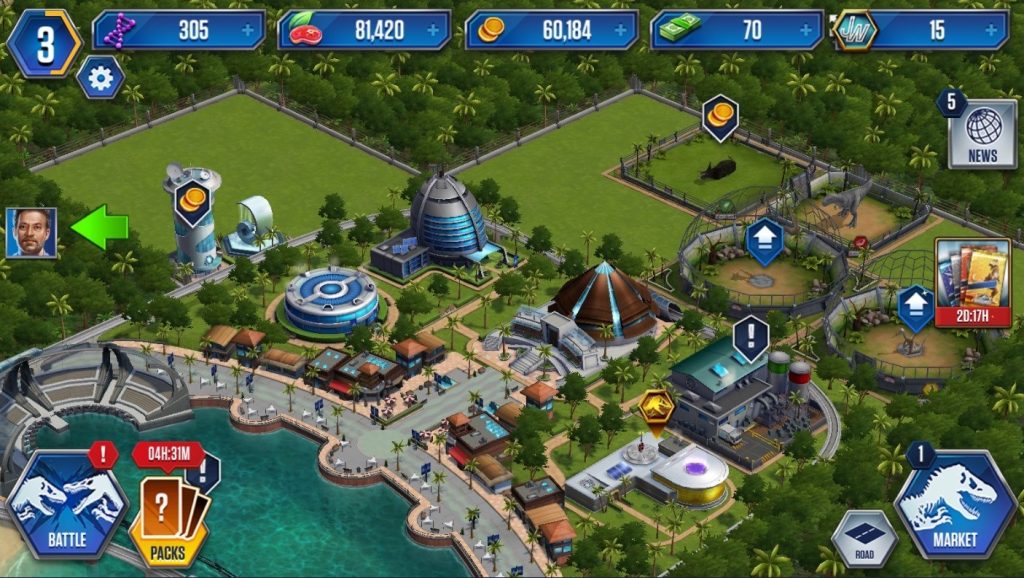
Jurassic World: The Game bends the idea of a theme park toward a very specific fantasy: you are building a showcase of living dinosaurs, balancing spectacle with logistics. The park layout matters, but so does what lives inside each enclosure. You place habitats, expand the grounds, and decide which species to bring in. Feeding, caring for and evolving those species becomes part of the day-to-day. The game ties visual park growth to your roster of dinosaurs, which is a clever way of keeping management decisions and collection decisions in the same loop.
There is a steady backbone of missions that nudge you forward, often through familiar names and places from the films. One day you are upgrading a key building to expand capacity, the next you are improving a dinosaur so it can take part in a challenge. The result is a cadence that swings between park work and creature work, which keeps the routine from feeling one-note. Over time the park turns into a genuine showpiece, a sprawl of enclosures intercut with paths and facilities, with a skyline that changes as bigger species arrive.
Where it differs from pure theme park sims is obvious. The attractions are alive, which changes what matters. A coaster does not complain, a carnivore does. Enclosure size, placement and variety feed into visitor excitement in a way that is more dynamic than a ride count. There is also a competitive layer built around battles that uses your collection in a tactical way. You do not have to lean hard into that side to enjoy the park building, but it gives you a reason to keep developing your creatures beyond aesthetics.
If you grew up drawing park maps filled with dinosaur paddocks instead of looping steel, this is the Android pick that matches that exact daydream. It is management with a creature-collector heart, and it works because both halves respect each other.
Idle Theme Park Tycoon
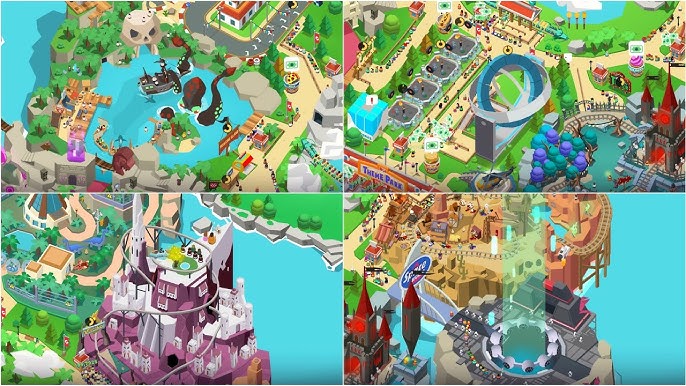
Idle Theme Park Tycoon is honest about what it wants from you. Check in, nudge a few upgrades, make a couple of structural changes and come back later to see the results. It is not trying to be a spreadsheet. Instead, it focuses on the satisfying part of park management that sits between design and throughput: spotting chokepoints and smoothing them out. The UI directs you to weak links with clear metrics, and the upgrade paths give you a couple of choices at each step.
You unlock new areas of the park in chunks, each themed around a different slice of amusement park culture. One zone is built around a classic coaster and supporting rides. Another leans into water flumes and splashes. As you spread, you keep returning to fundamentals. Where are people queueing too long. Which upgrades give the best bite right now. Would shifting a facility ease foot traffic or just move the problem. Over time, the park feels like a network you understand, not a pile of disconnected attractions.
What sells it on mobile is pace. Because every decision is quick, it makes sense to open the game for three minutes, make a handful of moves and close it again. The presentation is bright without being noisy and the feedback is immediate. You can see a queue shrink or a ride whip through visitors after a smart investment. Nothing here is trying to be a perfect coaster sandbox. It is a management toy box that understands why optimizing a flow can be more satisfying than placing a hundred tiny props.
If you want a game that respects short sessions while still hitting the park management note, this delivers. It will not teach you to build a wooden coaster with perfect lateral forces, but it will teach you to see the pulse of a park and calm it down.
Funfair Ride Simulator 3
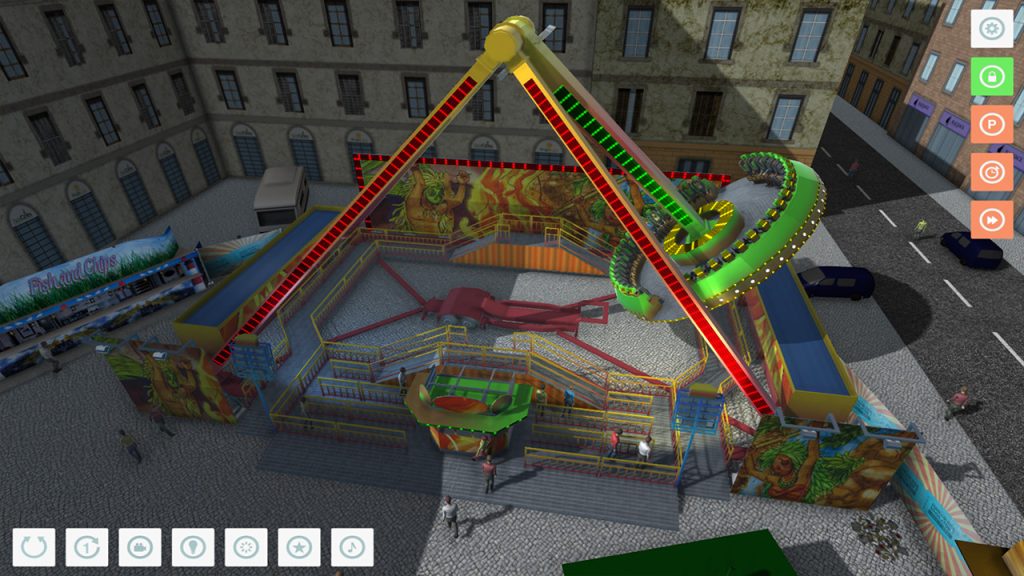
Funfair Ride Simulator 3 zeros in on a different part of the theme park fantasy. You are not the manager doodling blueprints on a napkin. You are the ride operator behind the console, deciding when to start, how fast to spin and what music to play. That shift in perspective makes for a very different loop. Instead of thinking about path layout, you think about showmanship and timing. You learn a ride, get a feel for its controls and then try to run it in a way that makes guests cheer.
The controls replicate the real-life operator desk surprisingly well for a phone. Buttons for sequences, sliders for speed, toggles for lights and effects. You pick a ride from a selection that covers plenty of fairground staples, then get to know its quirks. Some reward a slow build and a dramatic finale. Others work best with tight cycles that keep the queue moving. Because you see the ride from multiple angles, including an operator viewpoint, it carries a vibe that most management games skip.
It helps that the rides feel weighty. Camera shakes and mechanical audio give a sense of mass that suits the subject. There is strategy in here, just not the usual kind. If you run a ride too gently, it feels flat. If you push it too hard, it becomes noise. Nailing the cycle is its own kind of optimization puzzle. The more you practice, the more your runs feel like little performances. It is a great side dish to a more traditional park builder, and on some days it will be the main course.
How to pick the right Android theme park game for you
Theme park games cover more ground than the name suggests. On Android, they split into a few clear styles, and knowing which one you want will save you a lot of fuss.
- If you want deep, scenario-based park building with real management decisions and classic coaster construction, pick RollerCoaster Tycoon Classic. It is the closest thing to the old-school experience on a phone.
- If you want a modern 3D builder that treats the map like a creative canvas, with easy coaster riding and a steady flow of new attractions, RollerCoaster Tycoon Touch is the obvious choice.
- If you want to build a park wrapped around a recognizable cast and story, where placing attractions feels like curating a living set, Disney Magic Kingdoms hits that beat squarely.
- If you like crunchy placement puzzles in a compact package, Dream Park Story gives you adjacency bonuses, rankings and staff development without burying you in menus.
- If you prefer a park that stars living attractions and folds collection into management, Jurassic World: The Game is designed for you.
- If you only have short bursts to play and enjoy optimizing flows more than designing from scratch, Idle Theme Park Tycoon makes a strong case.
- If you are just in love with the machinery and want to run the rides yourself, Funfair Ride Simulator 3 scratches that itch.
All of these will run on a wide range of Android phones and tablets. The difference between them lies in pace and focus, not just presentation. Before you install something, ask what kind of decisions you want to be making. Do you want to wrestle with staff routes and coaster g-forces, or do you want to tee up a set of character quests and check back later. Both are valid ways to scratch the theme park itch, and the right pick is the one that fits how you actually use your phone.
What these games get right about parks
They all understand that parks are about flow. Even the most creative layouts are boring if guests get stuck. The good Android titles find different ways to communicate that. RollerCoaster Tycoon Classic does it through clear sim feedback. You can see litter pile up where paths confuse people. You can see where a queue line sags because the ride runs too long between trains. Dream Park Story does it through bonuses that amplify smart placement. Idle Theme Park Tycoon points you directly at weak throughput and lets you fix it quickly. Disney Magic Kingdoms softens it into a story beat but still rewards parks that make visual sense.
The other common thread is a respect for the ride fantasy. A first-person view of your own coaster in RCT Touch might seem like a small thing, but it makes the map feel like a place. Funfair Ride Simulator 3 leans all the way into that, giving you dials and switches that feel like they are doing something meaningful. Even Jurassic World: The Game, which is nominally about dinosaurs, sells the park identity through how the grounds evolve around enclosures.
Mobile helps in one specific way. It breaks a big problem into snackable pieces. That can be a curse for long-form sims, but it suits parks. Real management is a chain of little decisions. Place a bin. Add a sign. Upgrade a station. Swap out a stall. When the feedback loop is tight, a phone is a great place to work through that chain, one link at a time.
Quick tips if you are new to building parks on Android
- Think about exits, not just entrances. The path out of a ride is where guests decide what to do next. Place facilities there that match the ride. Big coaster next to a drink stall, family ride near a gift shop, that kind of logic.
- Keep paths simple. Fancy curves look nice, but detours create dead zones. Use decoration to add character, not confusion.
- Watch the metrics that matter. In RCT Classic, excitement, intensity and nausea tell you everything about a coaster. In Dream Park Story, adjacency bonuses act like a compass. In Idle Theme Park Tycoon, queue length is king.
- Staff matter. In any sim that lets you assign routes or roles, do it. A single mechanic on a sensible patrol saves more grief than any number of firework displays.
- Ride your rides. In games that let you, hop into first-person. You will spot rough edges that the overhead view hides, and it is fun, which is the whole point.
The list at a glance
- RollerCoaster Tycoon Classic
- RollerCoaster Tycoon Touch
- Disney Magic Kingdoms
- Dream Park Story
- Jurassic World: The Game
- Idle Theme Park Tycoon
- Funfair Ride Simulator 3
Android has its share of park sims that do not quite land. These seven do, each in their own way. Whether you want a crunchy management problem to chew on, a creative space to decorate, a character-led park to curate or a console of buttons to mash like a real ride operator, there is something here worth your time. Pick the one that fits your pace and your taste, then start laying paths. The best moment in any theme park game is the first crowd filtering past a ride you placed. It never gets old.

![How to fix Metadata file supplied is not a supported version [39] with an updated il2cppdumper](https://androidrebels.com/wp-content/uploads/2026/06/il2cppdumper-error-39.jpg.pagespeed.ce.PVbKvbIZKX.jpg)