Life simulation on Android comes in a lot of shapes. Some games drop you into a village where days tick by and neighbors remember what you did last week. Some are pure text, letting you spin up a messy career, a happy family, or a glorious disaster in a few minutes. Others are cozy but deliberate, built around chores that feel like rituals. That range is the appeal. You pick the version of life you want to manage, then decide how seriously to take it.

If you searched for the best life simulation games for Android, you likely want two things. First, a shortlist that covers different flavors of the genre, not seven clones doing the same thing. Second, enough detail to tell whether a game fits your routine. Do you want something you can peck at between classes, or a world that can swallow a free weekend. The seven games below are here because they offer strong loops, clear progression, and a sense that you are living somewhere, not just ticking boxes. They include premium one-time purchases and free-to-play titles. They also span farming, town life, text life, and social worlds. WorldNeverland: Elnea Kingdom is here because it does something few other mobile games even try: a living kingdom that keeps going whether you pay attention or not.
What counts as a life sim on mobile
On Android, the label covers a wide field. The core is the same: you are managing daily rhythms more than endgame bosses. That can be literal household life, a farm in a friendly town, a generational family, or even a chatty virtual world with jobs and apartments. Progress usually looks like better routines and deeper relationships: faster crops, a bigger home, a promotion, a circle of friends that stops feeling like props. Good mobile life sims also respect time. The best ones let you choose your pace rather than punish you for not logging in every few hours. And if they are free, they earn their keep without turning every interaction into a purchase screen.
Stardew Valley
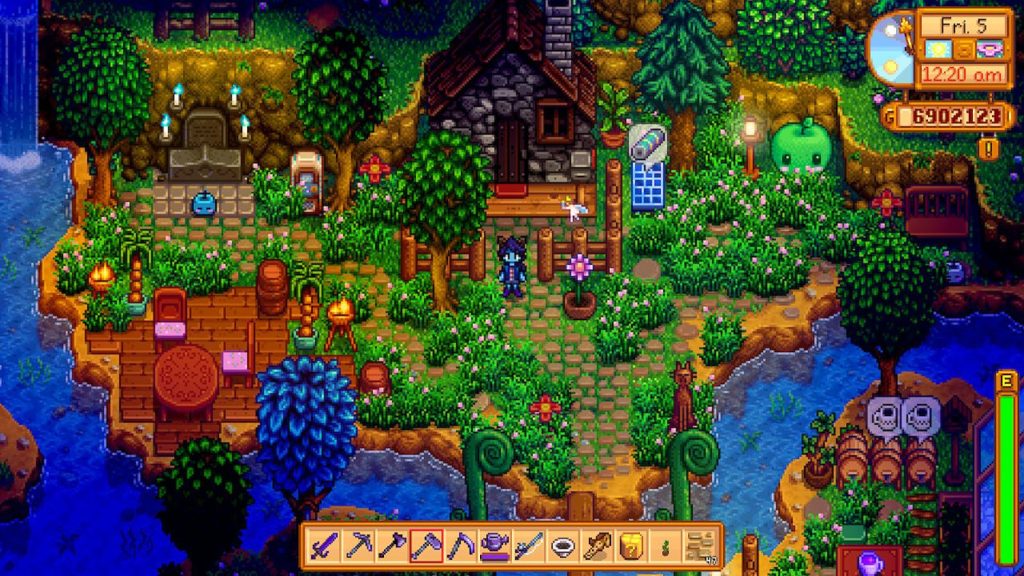
If you want a game that feels like an actual place, Stardew Valley is still the benchmark on Android. It looks like a farming sim, and yes, the first thing you will probably do is clear a scraggly field and plant parsnips. That is the hook. The loop is broader. Mornings you water crops and feed animals. Midday you might head into the mines for ore and a bit of danger. Evenings can be for a quiet line in the river, a birthday gift for a neighbor, or town festivals that break the rhythm just enough to make it feel human. Every day you make a plan, then the plan changes a little when the weather or a random event nudges you somewhere else.
Progression is layered. Your farm layout gets smarter as sprinklers and barns cut busywork. Tool upgrades open new parts of the map and shave minutes off chores. Town relationships develop in believable steps, with small cutscenes that pay off if you bother to learn what people like. There is a romance system, but it does not feel bolted on. It is part of the rhythm, like deciding whether to stay late in the mines and risk passing out on a floor you cannot quite finish.
On Android, the touch controls are thoughtful. You can tap to move and interact, or use a virtual stick if that feels better. Session length is whatever you want. A single in-game day takes a handful of minutes if you sprint, or a gentle half hour if you linger. The game is a one-time purchase and does not need an always-on connection, which matters if you want to sink into a long session on a train or a flight. It suits players who enjoy systems knitting together: planting that makes mining make sense, fishing that pays for a backpack, relationships that reward showing up. If you need daily login rewards and a checklist that barks at you, this will feel quiet. If you want a place to live in, it is perfect.
The Sims Mobile

The Sims on mobile splits into two lines. The Sims FreePlay is older and leans into real-time town building. The Sims Mobile aims for a more personal loop built around your Sim’s career, hobbies, and relationships, wrapped in short sessions that fit a commute. If you are after the classic make-a-Sim, decorate a home, host a party feeling on Android, The Sims Mobile is the smoother entry point.
Daily play revolves around story-driven tasks across jobs and hobbies. You pick a career, start a shift, burn through actions, then watch story nodes nudge forward. You build a home room by room and decorate with new items as your Sim levels up. Friendships and romances use event chains too. It is closer to a TV season than a sandbox. You are chasing story milestones and seasonal events more than writing your own emergent chaos. That structure is both the draw and the limit. It gives clear goals and frequent rewards. It also means energy gates and timers are ever-present.
Monetization sits front and center. Energy systems slow you down unless you plan around them. Limited-time events and collections push you toward checking in multiple times a day. If you like seeing a plan unfold over a week, that can be satisfying. If you prefer long freeform sessions, the gating can grate. The build tools sit in a sweet spot for phones, with enough flexibility to feel personal without drowning you in nested menus. The game is online and social features let you visit other players’ spaces and run small gatherings, which helps if you want a bit of life beyond your own lot. For anyone who wants mobile-friendly Sims that you can play in five to ten minute bursts, this is still the one to try.
BitLife – Life Simulator

BitLife is what happens when you boil a life sim down to decisions and dice rolls. There are no houses to place or avatars to nudge around. It is pure text, and that is why it works so well on a phone. You start as a baby somewhere in the world with a few stats and a family. Each year you make choices. Study or slack off. Be kind or pick a fight. Start a side hustle that could turn into a scandal. The interface is simple enough to play one-handed, which is exactly how most people end up playing it, thirty seconds at a time between actual life tasks.
The loop is remarkably sticky. School years set up your first career options. Work unlocks special choices, new assets, and oddball events that get darker or sillier depending on the path you choose. Relationships and kids add wrinkles that stack into real consequences. You see arcs without the friction of moving a character around a room. Because it is RNG heavy, your third or fourth run will go sideways in a way your first did not, which keeps the stories from feeling stale.
Progression is both wide and quick. You can aim for respectable success, or set fire to it all and see how many laws and hearts you can break before it collapses. That range is the point. It is replayable because a single life can wrap in minutes, and because the next one will likely tempt you into a different experiment. The monetization is straightforward: free with ads, with an optional Bitizenship upgrade that removes ads and unlocks extra toggles. It plays fine offline if you do not mind the absence of ad-based bonuses. BitLife is best for players who like narrative choices and unexpected outcomes more than building a pretty home. If you have ever read a choose-your-own-adventure and wished it talked about student loans and oddball midlife crises, this scratches that itch.
WorldNeverland: Elnea Kingdom

WorldNeverland: Elnea Kingdom is a rare kind of life sim on mobile. It feels less like a set of menus and more like a place with its own calendar and people who keep their schedules whether you watch or not. You arrive in the kingdom as a newcomer with a tiny home and a lot of options. You can take a job, cultivate a field, go fishing in the morning and delve into a dungeon in the afternoon. You can chase romance and start a family. Over time, you can raise kids and eventually play as the next generation. That generational arc is the trick. The world is persistent and the NPCs are not cardboard. They get married, form rivalries, and climb ladders alongside you.
The core loop is deliberately open. You check the day’s notices, then decide what to chase. If you want structure, the game has guilds, national contests, and seasonal festivals that thread in goals. If you prefer vibe, just wander. You will bump into familiar faces doing their routines. Combat is real but light, more about resource gathering and a sense of adventure than precision timing. Farming and crafting layers give you reasons to return to the same places at different points in your life. It is the long arc that sells it. You can be a smith in one life, then try for an office in the castle next time. The kingdom feels different when you know people’s names and their history with your family.
It is free to start, with in-app purchases for cosmetics and conveniences. The economy is not aggressive, but like most free games, it offers boosts that speed up the grind. It is a single player experience without the chaos of global chat or forced co-op. Sessions can be very short, but it also supports long, cozy nights of chipping away at a career or wandering for no reason other than to see who you will meet near the river at dusk. If the kind of life sim you want is about living in a place and leaving a mark on it, Elnea Kingdom does that better than anything else on Android.
My Time at Portia
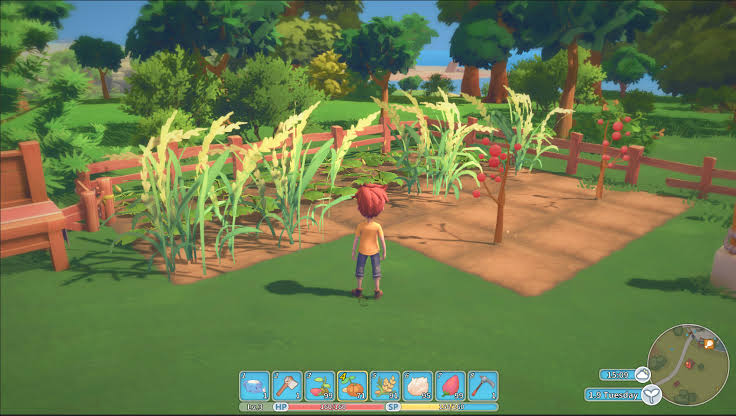
My Time at Portia is for players who like their life sim with a heavy dose of crafting and a town that keeps you busy for months. You inherit a rundown workshop in a post-post-apocalyptic seaside city. Your days revolve around commissions for townsfolk, longer projects for city upgrades, relationship building, and a surprising amount of dungeon crawling for parts. The loop hums once you learn it. Wake up, queue some smelter runs, grab materials, talk to neighbors, check the commission board, then head out to gather what you need while side quests stack up as you pass different districts.
Progression is satisfying because everything interlocks. Better machines mean bigger builds, which open more of the world and push story threads forward. Social links are meaningful. Gifts and play dates are not filler. They unlock perks and moments that make the town feel like a community rather than a quest hub. There is combat in ruins with a light action feel. It is not a brawler, but it breaks up the craft-gather-build loop in a good way. On mobile, the port trims some edges to fit touch screens. Menus are condensed. The camera and controls take an hour to settle into, but once you map your own rhythm the game becomes a comfortable routine.
This is a premium purchase, which buys you the full experience without ads. It is a big game and can be heavy on storage and battery. If you play on a mid-range device, expect occasional frame dips in crowded areas, but it is very playable and benefits from patience and planning. Portia is ideal if you love to-do lists that turn into a village you recognize by the way morning light hits your yard as the furnaces kick on. It is less for players who want quick social check-ins or a purely cozy tone. Portia gets cozy, but it is also a grind in the most rewarding sense of the word.
Animal Crossing: Pocket Camp
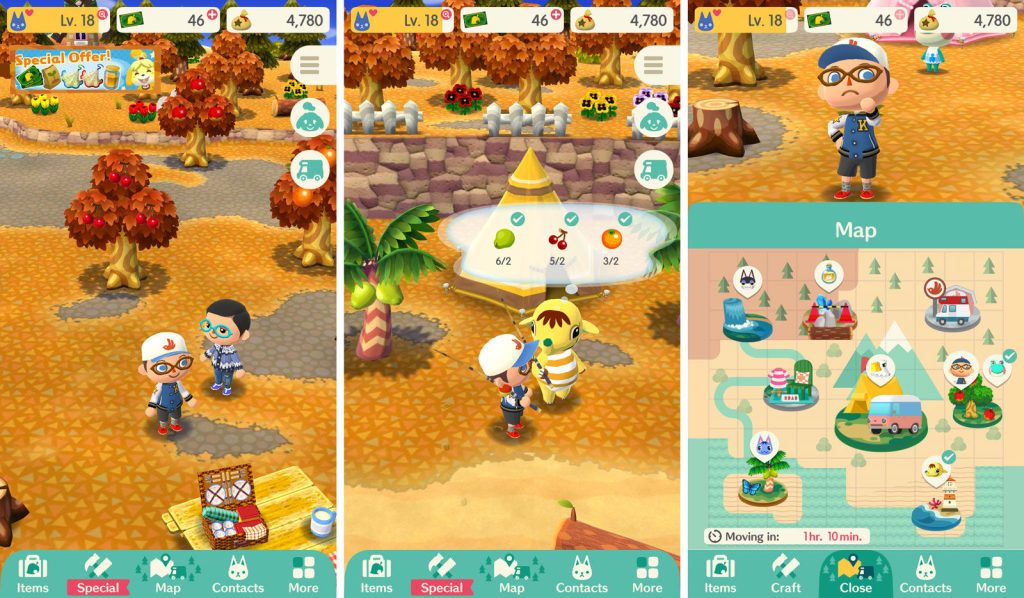
Animal Crossing on phones was never going to be a one-to-one port of the console games, and Nintendo did not try. Pocket Camp is a campsite manager, not a town mayor. You decorate a small patch of forest, invite friendly animals to hang out, and run a perpetual loop of crafting and collecting. It is lighter and more transactional than the mainline series, but it nails the look and many of the rituals that make Animal Crossing feel like a warm place to visit.
Daily play is built around short bursts. Animals rotate with requests every few hours. You gather fruit, fish, and bugs to fulfill them, earn materials, then craft furniture and decor for your campsite and camper. Events roll through constantly with themed items and minigames that keep the calendar busy. Where Stardew is a place to lose an evening, Pocket Camp is for five minute breaks. You pop in, do errands, tweak a layout, and leave with a little dopamine drip of completed tasks and cute animations.
Monetization is heavier than some will like. There are fortune cookies that act like a gacha for exclusive items, and an optional subscription that offers conveniences. If you are sensitive to FOMO, limited-time sets will either delight or aggravate you. There is no offline play. On the plus side, the social element is gentle. You can add friends, browse their camps, trade a few resources, then go back to your own little corner. If your ideal mobile life sim is more about collecting, decorating, and the mood of a place than deep systems or long sessions, Pocket Camp still earns a spot on a small phone screen.
Avakin Life
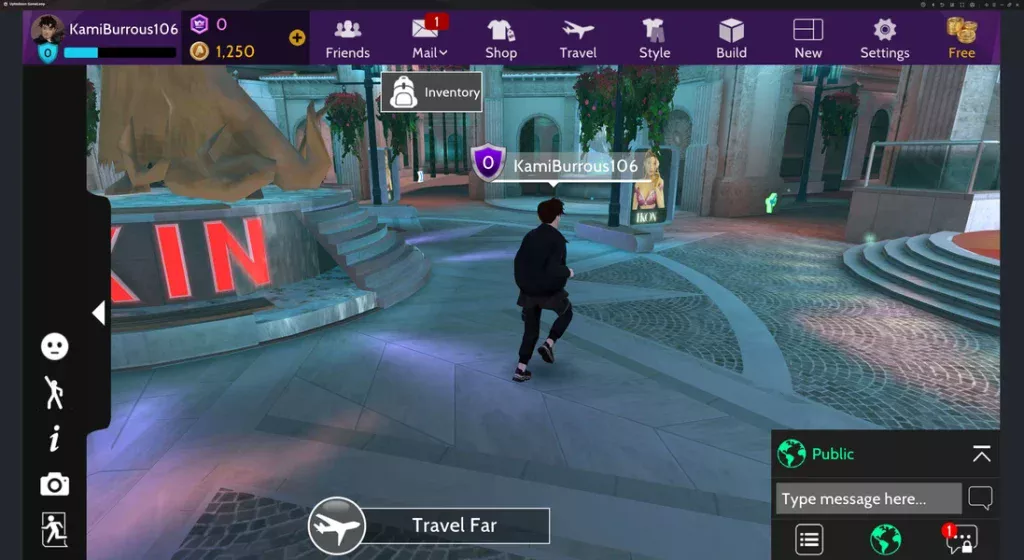
Avakin Life sits at the social end of life simulation. It is less about simulated chores and more about building an identity, a home, and a network of places to be seen. You create an avatar, dress it from an almost absurdly large wardrobe, pick an apartment, and start bouncing between public spaces and private parties. The draw is the feeling of being in a buzzing virtual world that actually has people in it, at all hours, from everywhere.
The loop is simple. You log in, check events, chase a few goals for currency, then spend that currency on fashion, furniture, or a new space. Minigames and seasonal challenges give you targets if you want structure. But the real content is social. Dancing on a beach at midnight with a group of strangers in matching outfits is either your idea of online hell or a perfect way to blow off steam after work. Avakin gives you the tools to stage that kind of moment easily, which is why it has stuck around for years.
It is free and monetized through cosmetics and bundles. You can play without spending, but the appetite for new looks and interiors is the engine, and the store is never shy. Moderation tools exist, but like any large social space, public rooms can be messy. If you are looking for a life sim where the simulation is people, Avakin Life is the most active version of that on Android. If you want farming, crafting, or a scripted family arc, look elsewhere. This is a place to dress up, decorate loudly, and lean into the crowd.
Virtual Families 3: Our Country Home
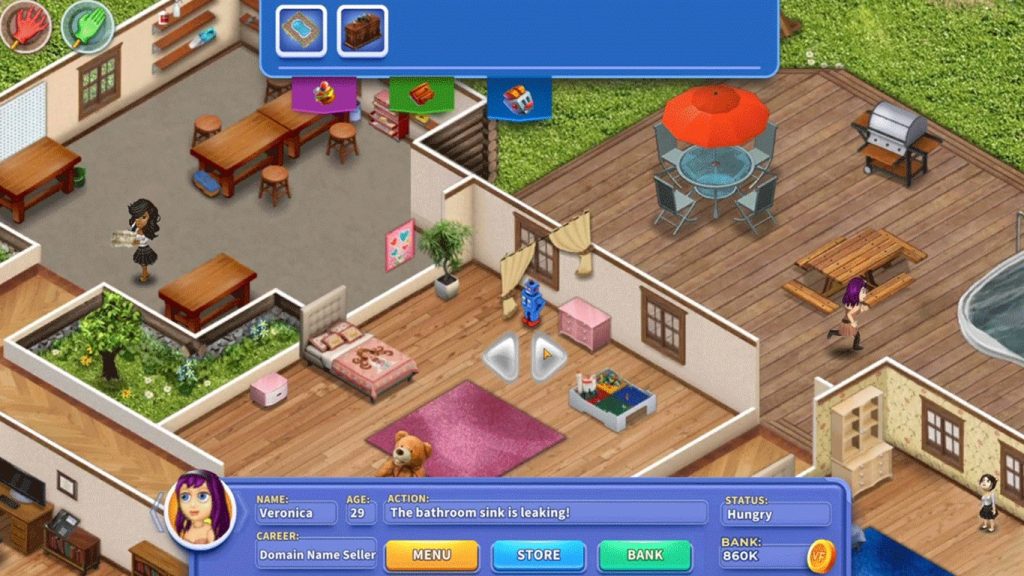
Virtual Families 3 goes in a very different direction from social worlds. It is about the small dramas of a single household, played in real time. You adopt a person, nudge them toward a career, fix up a dilapidated country house, marry, have kids, and keep the line going as the years tick by. The pacing is the point. Hours pass while you are away. You return to minor crises that feel familiar if you have ever balanced a job, a home, and a family calendar that somehow filled itself.
The loop is chill but surprisingly sticky. You set a few goals, assign tasks, upgrade rooms, and watch habits form. The house is a character. You will spend as much time dealing with the backyard as you do with careers. It is not flashy. It does not chase you with pop-ups every minute. It asks you to check in, steer a little, and let the simulation breathe. That real-time cadence makes it perfect for players who want a game that lives in the background. You do not need to grind. You need to show up now and then, make a few smart choices, then let time do its work.
It is free to start, with in-app purchases for currency and convenience. The economy is slower than arcade-like mobile sims, so spending can be tempting if you want renovations to happen fast. If you accept the pace, you get a distinctly homey kind of life sim. The joy is not a rare sword or a festival. It is finally fixing a roof, setting up a nice kitchen, and watching a child pick up a hobby that one of their parents ignored. For anyone who wants more family than fantasy, this is a reliable pick.
How to pick the right life sim for your phone
Start with time. If you want long, absorbing sessions without energy gates, pick a premium game like Stardew Valley or My Time at Portia. If five minute breaks are your rhythm, The Sims Mobile, Animal Crossing: Pocket Camp, and BitLife are designed for quick loops. If you want a world that feels alive across weeks, WorldNeverland: Elnea Kingdom and Virtual Families 3 reward slow, steady play.
Think about what you want to manage. If you like overlapping systems that reward planning, Stardew and Portia will scratch that itch. If you enjoy collecting and decorating as the main event, Pocket Camp and Avakin Life fit better. If you want narrative choices with sharp turns and a lot of outcomes, go with BitLife. If you want a gentle generational arc, Virtual Families 3 or Elnea Kingdom are the sweet spot.
Finally, be honest about monetization tolerance. Free-to-play can be great, but it changes the texture of time. Energy systems and event timers push you to log in on the developer’s schedule rather than your own. That is not always a bad thing. If you like steady nudges, it helps. If you want to finish a project tonight because you had a rough day, you will be happier paying once for a game that gets out of your way.
What to download first
If you have room for only one and want the strongest all-around life sim for Android, start with Stardew Valley. It lets you decide what a day looks like and rarely tells you no. If you want a free option with a real sense of place, try WorldNeverland: Elnea Kingdom and give it a week. The kingdom opens up as you understand its rhythms. If your mood is lighter and you like short sessions, BitLife and Animal Crossing: Pocket Camp are both easy to fit into a busy day. Players craving social buzz should try Avakin Life with friends. And if you want something that waits for you between meals and meetings, Virtual Families 3 is that little house in your pocket that keeps getting better, one chore at a time.
Whatever you choose, the best life sim on Android is the one that turns small decisions into stories you want to tell later. That can be a farm harvest at sunset, a promotion you planned across three in-game weeks, or the time your text-based life spiraled after a single bad choice in your twenties. The genre is wide enough to hold all of that. That is the fun. You pick a life. Then you live with it.