[ad_1]
With over one hundred arenas in the game, ours guide today will conclude the selection of scenarios coming from Super Smash Bros. Melee, the chapter for GameCube. In the last two episodes we have introduced the concept of walk-off and we have expanded our explanation of what a Smash Meteora is, but today we will close our tour by making a necessary study. Among the gameplay elements introduced in Ultimatein fact, it Final zoom accentuates the spectacularity of the conclusion of a fight … or maybe not? There is a lot to discuss, so let’s move on without delaying too much.
Preamble of the Appendix
Here’s what to expect from the arena and scenery guide of Super Smash Bros. Ultimate. In each of these twelve events, we will talk about each scenario, its origins, who are the fighters who play at home and, in the case of the DLC, also the availability. No scenario, except for the aforementioned downloadable content, needs to be unlocked: everything is available right from the start of the game. Ironically, you may need to unlock historically associated characters at certain levels, but there is a guide for that too. Furthermore, as for the wrestlers, here too the images precede their respective section. Are you ready?

Mushroom Kingdom II – Super Smash Bros. Ultimate arena and scenario advanced guide
The layout of the various arenas will only become more complicated by Brawl onwards, but the scenarios taken from Melee at this point of the guide a Super Smash Bros. Ultimate they are still easy to describe. For the Mushroom Kingdom II, it is a small platform in the center, accompanied by two larger ones on either side of the arena with walk-offs. Occasionally Birdo will peek from the sides (which will shoot eggs, unless he attacks her first), as well as Piggì aboard his flying carpet (which you can ride). The logs that fall from the waterfall can serve as platforms.
- Origin: Doki Doki Panic (Japanese original), Super Mario Bros. 2 (in the west), Super Mario USA (Japanese reissue)
- Stage representative of: Mario, Luigi, Peach
- History: Simply called Kingdom II in Meleethis scenario replicates for better or worse everything that originated in the dream realm of Subcon, theater of Super Mario Bros. 2. If the music is the same as in the original game, when you reach the last life (screw fight) or the last minute (standard timed scrum) the song will change to make way for the fight with Birdo. The original Super Mario Bros. 2later released as “The Lost Levels”, Was considered too difficult for Western gamers at the time, which is why Nintendo opted to rearrange instead Doki Doki Panic. The two different sequels were included together in the remake Super Mario All-Starsfrom which the arena takes up the graphics.

Onett – advanced guide to Super Smash Bros. Ultimate arenas and scenarios
We followed an order not very faithful to that of EarthBoundbut fear not: we are also here to talk about Onett. The arena is on the ground, and as such features two walk-offs. On the left we have a building with a canopy as a secondary platform, while on the right the roof of the house is accompanied by the wire that hangs from the two pylons. Completing the picture, then, we have two platforms in the center, which however often fall (and then recompose). Pay attention to the three different cars when you are on the ground: a sign will warn you of the danger, but when in doubt always try to stay as high as possible.
- Origin: EarthBound/MOTHER 2
- Stage representative of: Ness
- History: Onett is, as the first three letters of the name say, the first city of EarthBound and the place where Ness has always lived. Sadly, the bully Porky Minch (or “Pokey” in the original 1990s translation) is also one of the boy’s neighbors, long before there was any talk of alien invasions and psychic powers. Porky has a city dedicated entirely to his huge ego in him MOTHER 3but we’ll talk about it in two episodes.

The Pokémon Stadium – advanced guide to Super Smash Bros. Ultimate arenas and scenarios
Don’t be fooled by the name of the arena: the Pokémon Stadium it has nothing to do with gambling Pokémon Stadium. In fact, it is a manifestation of the constant confusion that has dominated the representation of Pokémon in the context of Smash up to the fourth chapter. The idea is to propose a stadium that thematically “transforms” the attacks of Smash in a Pokémon battle, but the generic approach didn’t last long. The base arena features one main platform and two smaller ones, but if hazards are active its layout will change to reflect Grass, Fire, Water, and Grass types.
- Origin: series Pokémon
- Stage representative of: Pikachu, Jigglypuff, Pichu, Mewtwo, Lucario, Pokémon Trainer, Greninja, Incineroar
- History: There is an interesting anecdote behind this arena, actually. The transformations of the scenario are announced with a symbol on the big screen visible in the background. However, the symbols in question were originally supposed to be much more unambiguous. It should have been the icons for the various types of Energy in the card game. The idea was later … discarded for unknown reasons.

Princess Peach’s Castle – Super Smash Bros. Ultimate arena and scenario advanced guide
Unlike the arena simply called “Peach’s Castle”, the Princess Peach’s Castle boasts a more specific name for a reason. It is in fact a more faithful reproduction of the roof of the aforementioned castle, and as such consists of a single platform with a tower in the middle. The switches activate various platforms, and occasionally Banzai Bills rush into the arena for the sole purpose of engulfing anyone in range with a disastrous explosion.
- Origin: Super Mario 64
- Stage representative of: Mario, Peach, Yoshi
- History: Ironically, while Banjo and Kazooie represent the protagonist of a platformer after collecting all the power-ups, this arena instead shows us an end-game setting. The inside of the castle is undoubtedly where the rest of the game takes place, but once you reach 100% the last cannon of Super Mario 64. At the end of the adventure, in fact, a place that was initially unreachable awaits him: the roof. Up there, Yoshi is just waiting to send him a message on behalf of the developers: to have fun indefinitely, with a gift of a hundred lives.

The Rainbow Path – advanced guide to Super Smash Bros. Ultimate arenas and scenarios
Were we talking about endgame scenarios? The rainbow path it is literally the last regular level of Super Mario 64. Here, for the first time in our guide, we have an example of a wandering scenario. The conformation of the level will in fact change continuously, proposing a circular path that starts (and ends) aboard the legendary flying ship that was the worry of many players in 1996.
- Origin: Super Mario 64
- Stage representative of: Mario, Luigi, Yoshi, Wario (even costumes)
- History: Even in the original Super Mario 64, the rainbow path proved to be a difficult area. In fact, this is probably not only the last level, but also the setting with less land than the whole game. The flying ship was originally filled with annoying gusts of wind, which have been removed here as a token of mercy to the players.

The Temple – advanced guide to Super Smash Bros. Ultimate arenas and scenarios
We previously mentioned the three most spacious arenas in the game, and The temple is one of them. It’s like it’s a whole platformer level, with plenty of room for exploration. Of course, don’t expect to see this level design delight in the competitive scene; also because, playing with friends, it is impossible that the match does not degenerate, sooner or later, into a game of hide and seek.
- Origin: Zelda II: The Adventure of Link
- Stage representative of: Link (classic and dark costume), Link Child (classic and dark costume)
- History: The Zelda saga has plenty of sanctuaries, but this one specifically refers to those of Zelda II: The Adventure of Link. The chapter is one of the most hated for a clear division between overworld and platforming phases, among which temples like this one stand out. In particular, the final boss of the game is a Dark Link and he faces each other in a setting of this type.

Venom – advanced guide to Super Smash Bros. Ultimate arenas and scenarios
Just as Corneria allowed us to fight on the Great Fox seen in profile, Venom turn the mercenary ship of the Star Fox team in front. In other words, therefore, the four wings and the tail of the aircraft are transformed into as many interconnected platforms. There is certainly no shortage of opportunities to put opponents on the wall here… just as there is no shortage of spacecraft from which it is better to be careful. Also in this arena there is one Smash provocation: press ↓ on the directional pad (for a fraction of a second) with Fox or Falco.
- Origin: Starwing/Star Fox, Lylat Wars/Star Fox 64, Star Fox Zero
- Stage representative of: Fox, Falco, Wolf
- History: Contrary to Corneria (cosmic conflicts permitting), Venom is an arid and inhospitable planet. Fox and company are forced to pass through only to be able to track down the vile terrorist Andross. Some of the dangers of the arena have been faithfully taken from the original scenario, but the aesthetics of the planet in Ultimate resumes what was seen in Star Fox Zerodiscussed semi-remake of Star Fox 64 released on Wii U.

Yoshi’s Story – Super Smash Bros. Ultimate arena and scenario advanced guide
The second arena in the series to pay homage Yoshi’s Story it also stands out in its almost total lack of danger. That’s right: we have another legal scenario used in tournaments without anyone turning up their noses. Hurray! It is a layout almost identical to Le Rovine, with only one substantial difference: the edges are a bit sloping. On top of that, there are Shy Guys (made totally useless if played without tools) that flutter, plus a cloud that sometimes helps players get back on the pitch. Nothing to scream scandal about, though.
- Origin: Yoshi’s Story
- Stage representative of: Yoshi
- History: There isn’t much to say about the Great Tree of Happiness. If nothing else, being the arena born on GameCube, the power of the hardware (before Ultimate put everything back on the same level) allowed the imagery seen on Nintendo 64 to really show off its paper aesthetic.

Yoshi Island (Melee) – Super Smash Bros. Ultimate arena and scenario advanced guide
And with this they make three. The third arena to represent Yoshi without referring to Yoshi’s Island is Yoshi Island from Melee. Here is everything you need to fool a competitive player: a slope to the left, semi-destructible platforms in the middle and in the air, and a walk-off (sloping) to the right. Adjust accordingly.
- Origin: Super Mario World, Super Mario Advance 2: Super Mario World
- Stage representative of: Mario, Luigi, Yoshi
- History: The plumber’s debut on Super Nintendo happened with Super Mario Worldbest known for the internal rivalry between fans of this game and the most die-hard fans of the previous one Super Mario Bros. 3. Everything faithfully reproduces the aesthetics of the original game, including the blocks that once hit temporarily turn into traversable platforms. The Lakitu and Banzai Bill in the background are for demonstration purposes only, of course.

Third insight in the appendix: be wary of special Zoom and Final Zoom
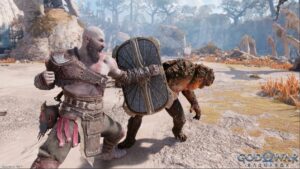
Look at the image above: it’s the coup de grace, right? Well, not necessarily. Ultimate introduced the concept of Special zoom for particularly strong and / or difficult-to-land attacks (the Hero’s critical hit or Captain Falcon and Donkey Kong’s special punches), while Final zoom (above) accompanies any blow that should send the opponent out to his last life. Keyword, it should. In reality, in the case of final Zoom, at the lowest percentages the KO is ensured only if the recipient does not tilt the analog lever in the direction of the scenario. Be careful never to put down the controller prematurely!
[ad_2]