
[ad_1]
We are really running out the scenarios and arenas of this ours guide to Super Smash Bros. Ultimate. In a couple of episodes we will have gone through every single level of the game, and today we will close the accounts with the fourth chapter of this amazing series. In the next two episodes, in fact, we will examine all the innovations introduced on the Nintendo Switch. In the appendix, we will talk about an advanced technique that can prove to be a real watershed between intermediate and professional players. Today, we will talk about the Perfect shield and windows of opportunity (and counterattack) that it can open to you!
Preamble of the Appendix
Here’s what to expect from the arena and scenery guide of Super Smash Bros. Ultimate. In each of these twelve events, we will talk about each scenario, its origins, who are the fighters who play at home and, in the case of the DLC, also the availability. No scenario, except for the aforementioned downloadable content, needs to be unlocked: everything is available right from the start of the game. Ironically, you may need to unlock historically associated characters at certain levels, but there is a guide for that too. Furthermore, as for the wrestlers, here too the images precede their respective section. Are you ready?

PAC-LAND – advanced guide to Super Smash Bros. Ultimate arenas and scenarios
Unfortunately, thanks to an asymmetrical element of gameplay that cannot be proposed on a fixed console, that masterpiece that is PAC-MAZE will not be part of this guide as it is exclusive to arenas and scenarios of Super Smash Bros. for Nintendo 3DS. In its place, from the Wii U version, we have PAC-LAND. This is a two-dimensional side scrolling arena (with walk-off: yes, the tournament bingo is complete) in which we will face the comings and goings of the original game avoiding fire hydrants, ravines and free-falling logs.
- Origin: PAC-LAND
- Stage representative of: Pac-Man
- History: The incarnation of Pac-Man and his supporting characters in the 1984 arcade game is based on the animated series of Pac-Man of that period, by the Hanna-Barbera duo. The house of Pac-Man made its gaming debut here, only to reappear in the series Pac-Man World. In the original game, Pac-Man’s job was to rescue (and escort home) a fairy. This was one of the platformers to implement parallax levels, that is a simulation of perspective through the different speed of scrolling of the background compared to the objects closest to the frame.

Palutena Temple – Super Smash Bros. Ultimate arena and scenario advanced guide
The third and final (or rather, not quite, as you will see shortly) “huge arena” of the game is the Temple of Palutena. Unlike its pre-Kid Icarus Uprising, Pit’s homeland re-proposes the gameplay of the “on foot” sections of the original game with a side scrolling version of the level design seen in the Nintendo 3DS adventure. Bridges, floating islands, moving platforms and even underground labyrinths: this is most likely the biggest scenario in the game, and the presence of trampolines and dangerous pitons only confirms its ban on tournaments.
- Origin: Kid Icarus Uprising
- Stage representative of: Pit, Palutena, Pit Oscuro
- History: We would not like to make spoilers, but if it is possible to face your own house as a level full of enemies in Kid Icarus Uprising there is a reason. After all, Destroyed Skyworld is one of the possible tracks in the arena. Here Pit, in reference to the fun dialogues of the original game, enjoys one Smash provocation (↓ on the D-pad for a split second) for each fighter in the base game plus the Piranha Plant. For the two Fighters Passes, however, the conversation is generic.

Pilotwings – advanced guide to Super Smash Bros. Ultimate arenas and scenarios
Paying homage to two different generations of one of the Big N’s lesser-known franchises, Pilotwings it is a less “annoying” traveling scenario than others in competitive terms. The first main platform is a biplane, accompanied by the lower wings of the aircraft as additional platforms. When the flight moves from the two-dimensional map of the first game to the Wuhu Island of Wii Sports, the biplane will shake us off and then drop us onto another plane. As this is a different aircraft, there will be no lower platforms. The two phases alternate continuously. Planes never stay in the same horizontal position, so be careful when they hang!
- Origin: Pilotwings, Pilotwings Resort
- Stage representative of: no one in particular (unless we count Mii warriors)
- History: The first Pilotwings for Super Nintendo it was a flight simulator that made use of the pseudo-3D called Mode-7 for the rotation and enlargement of sprites. In the game it was possible to exploit various aircraft. Sakurai and his team have decided to gloss over Pilotwings 64instead passing directly to Pilotwings Resort for Nintendo 3DS. There, the Miis are the ones who rule it, moving to a new setting: Wuhu Island Wii Sports And Wii Sports Resort (hence, in fact, Pilotwings Resort). In the game, Miis could fly by other methods as well, including jetpacks and other amenities that also appear here.
Oltrenuvola – advanced guide to Super Smash Bros. Ultimate arenas and scenarios
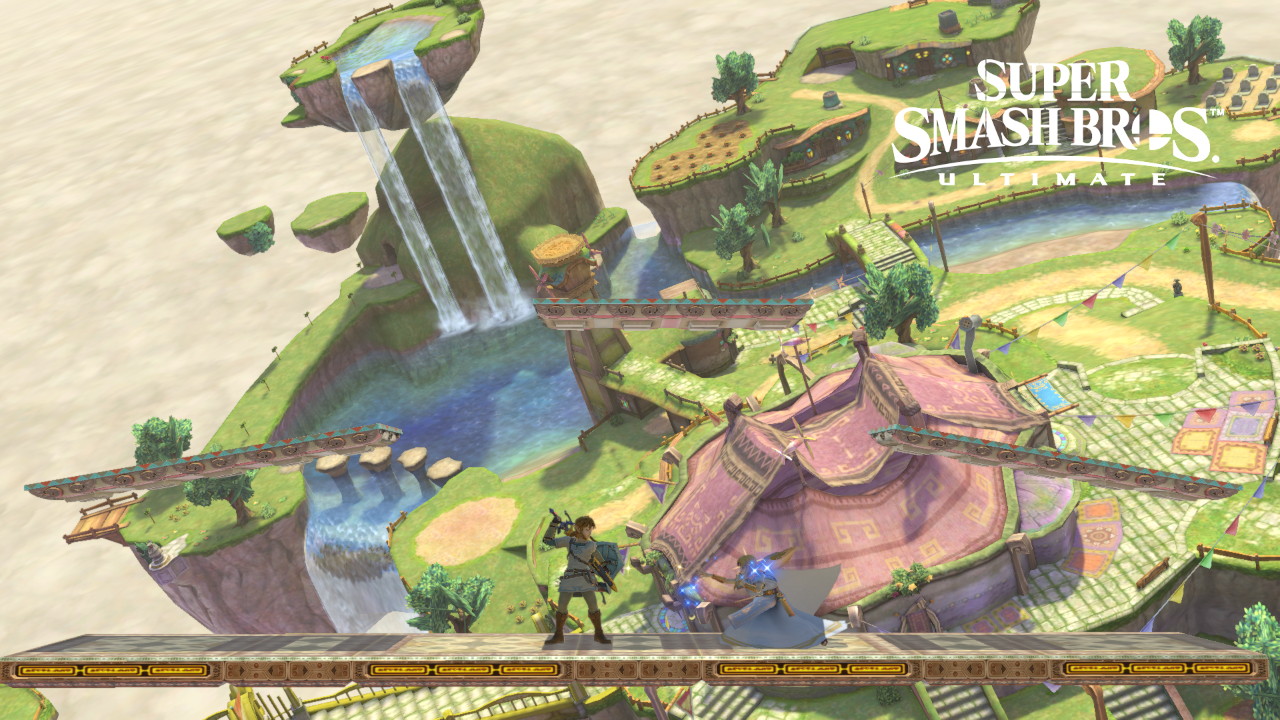
Let’s move from one itinerant scenario to another with Oltrenuvola. The arena passes through various locations of the celestial city (about 10), maintaining an otherwise competitively acceptable layout consisting of solid and traversable platforms.
- Origin: The Legend of Zelda: Skyward Sword
- Stage representative of: Link (seventh costume)
- History: Skyward Sword is chronologically placed at the beginning of the entire saga of Zelda, and here the eponymous girl is not even a princess. Oltrenuvola is a floating island from which the inhabitants of the sky, including Link, plunge into the surface world aboard their huge birds, the Solcanubi. The antagonist of this game, Mortipher, incorporates in its design the distinctive elements of several different antagonists, such as Ganondorf / Ganon, Vaati and many others. With the promise to haunt Link also in his future reincarnations …

The Great Speleological Offensive – advanced guide to Super Smash Bros. Ultimate arenas and scenarios
We haven’t technically lied to you. We have already reviewed the three largest arenas in the game … the external ones, means. Unlike the Temple, in New Pork City and (a few lines ago) the Palutena Temple, here we have a colossal but… internal scenario. The Great Speleological Offensive it is a triumph of tunnels and mine carts, where to move quickly you will have to rely on cannons and shortcuts. Lava surfaces are used to have points where to inflict a KO, as they prove fatal from 100.0% damage onwards.
- Origin: Kirby Super Star/Kirby’s Fun Pak, Kirby Super Star Ultra
- Stage representative of: Kirby
- History: The Great Speleological Offensive is, like any other mode of Kirby Super Star, part of the game’s constant roulette gameplay. Years before de The Labyrinth of Mirrors for GBA, in fact, this was Kirby’s first tango with the metroidvania genre. Carelessly fallen into a ravine, Kirby will have to explore the underworld from top to bottom before re-emerging, conquering all the various treasures contained in the huge labyrinth. The Computer Virus miniboss (in the Italian localization of Kirby Super Star Ultra è “Turn-Based Battle”) inspired Super Kirby Clash and its predecessors.

Countryside and City – advanced guide to Super Smash Bros. Ultimate arenas and scenarios
The basic idea behind Countryside and City doesn’t change much from Smash Village. The difference is made by the transitions between the rural layout (a main platform and two that can be crossed just outside, plus one in the center) and the city one (a central platform and two that can be crossed above the arena, on the right and left). Like Smash Village, also in this case the background depends on the internal time of the console. KK Slider Concerts Included! Everything is almost always usable in tournaments.
- Origin: Animal Crossing: Let’s Go To The City
- Stage representative of: Inhabitant
- History: The episode of Animal Crossing for Wii, as the title suggests, it has moved the player’s life close to a small town, reachable by bus. The city is home to various exclusive places, such as the Griffe di Griffa boutique, the Shampoo & Champagne center and much more. The original title also included a peripheral for giving voice inputs to the game.
Wii Fit Gym – advanced guide to Super Smash Bros. Ultimate arenas and scenarios
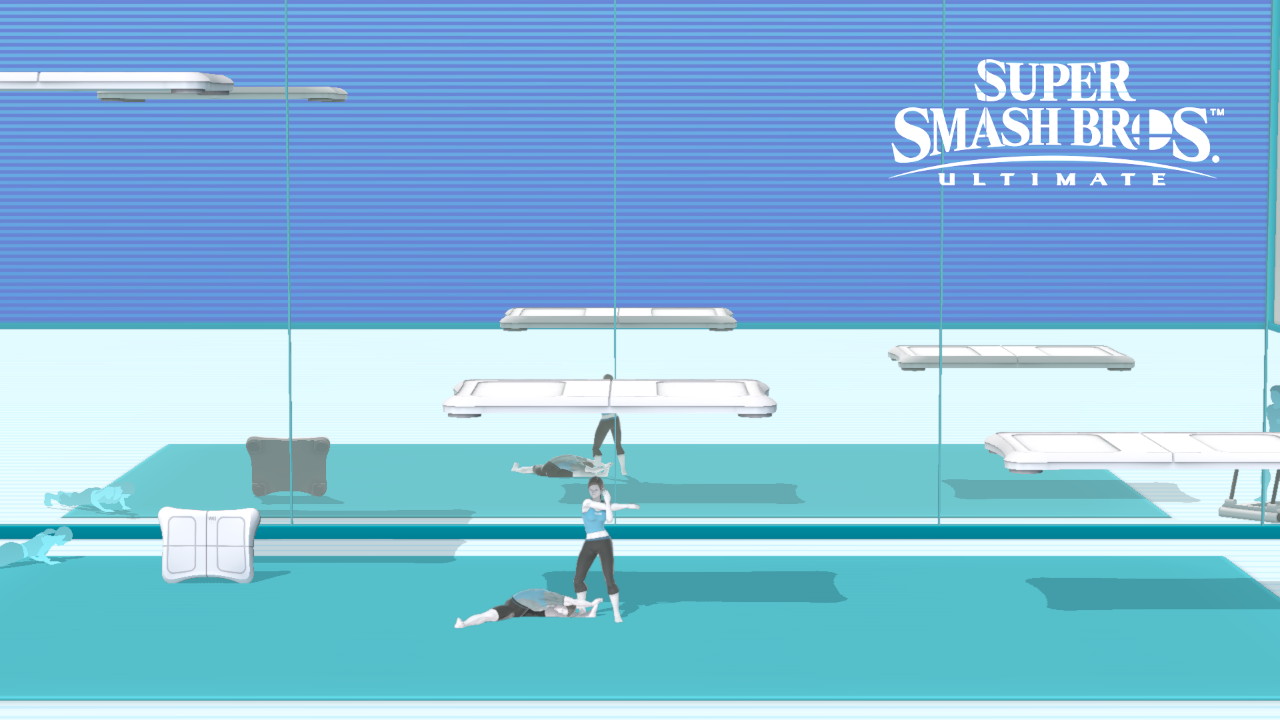
There Wii Fit Gym it’s easy to summarize. It is mostly a flat floor that connects the two walk-offs on the sides of the scenario. Usually, the wall in the background is a mirror, but sometimes it leaves room for a white wall on which various yoga positions appear. The Wii Balance Boards act as traversable and moving platforms, which move upwards without inflicting a KO on the wrestlers. Switching to the white background removes the platforms.
- Origin: Wii Fit
- Stage representative of: Wii Fit Trainer
- History: Wii Fit was a Wii title in which the player’s job was to replicate the different yoga postures shown on the screen. The Wii Balance Board is a peripheral for Wii and Wii U with which the game tracks our fidelity to the movements to be reproduced. The scenario made its first appearance in the presentation trailer of the Wii Fit Trainer, shown a few hours after that of the Dweller and that of Mega Man.
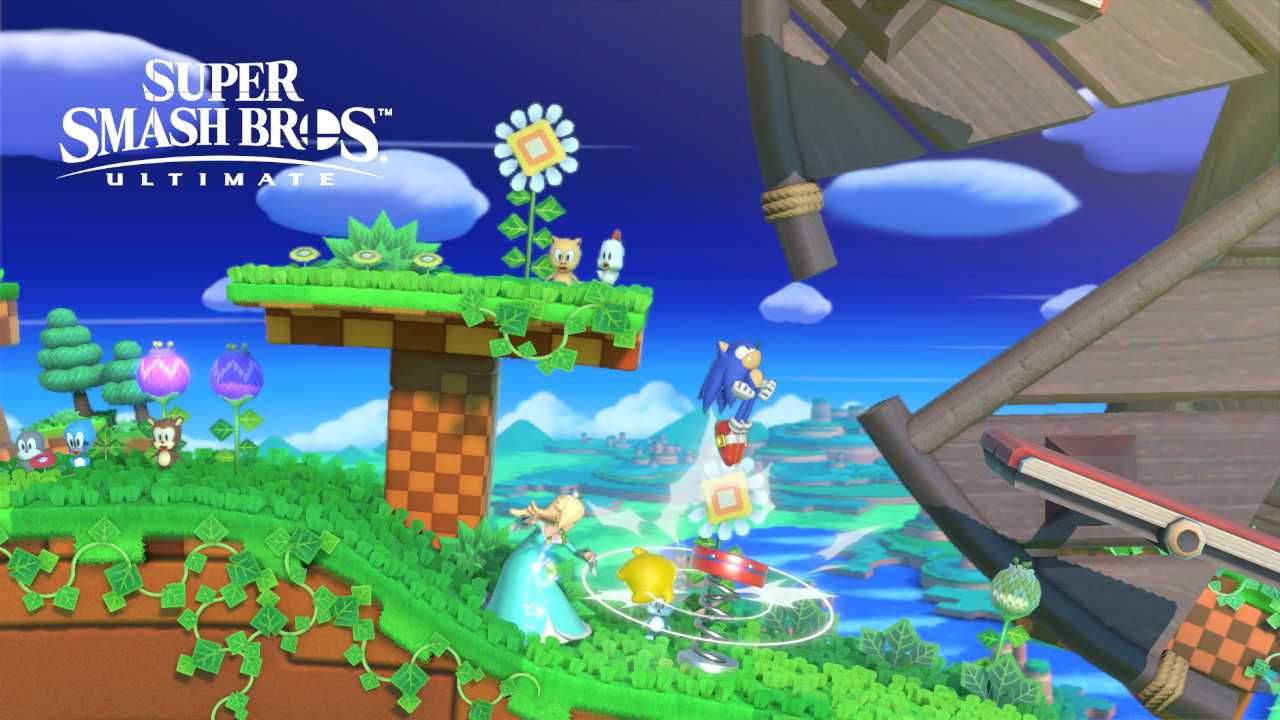
The Windy Hill area – advanced guide to Super Smash Bros. Ultimate arenas and scenarios
The Windy Hill Zone enjoys the same “arc” gravity as Mario Galaxy. However, it is mostly a single curved platform with a slope. Above the scenery are three slender platforms, with two springboards in mid-air on either side and a windmill with attached rotating platforms on the right.
- Origin: Sonic Lost World
- Stage representative of: Sonic
- History: Like the scenery, too Sonic Lost World in its entirety it boasts the same gravitational headaches as Super Mario Galaxy. In this game, born as a Nintendo exclusive, Sonic and Tails explore a floating world in ruins called Lost Worlds. The first area of the game is Windy Hill, where Sonic learns the basics of gameplay and where he frees the Flickies (the animals in the background of the scenario) at the end of each level, before clashing with Zazz of the Nefarious Six.
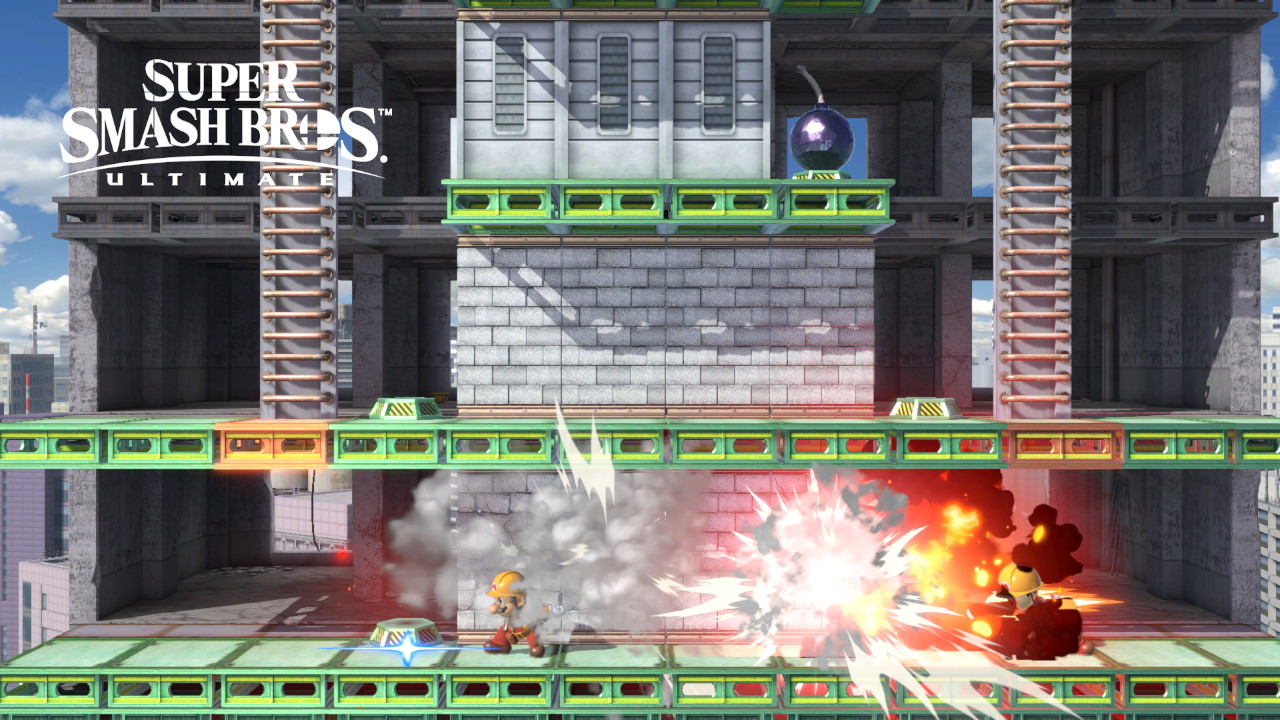
Wrecking Crew – Super Smash Bros. Ultimate arena and scenario advanced guide
The layout of Wrecking Crew it is random for each fight, but usually the elements of the scenario are always the same. You will have a main platform at the bottom and, depending on the case, one or more platforms that can be crossed above it. The latter represent the various upper floors of the building to be demolished by hitting the various bombs. Be warned: if a barrel collapses on your head, you’ll have to elbow a lot to get out. To move up and down you will have ladders, from which you can also attack while hanging.
- Origin: Wrecking Crew
- Stage representative of: Mario (fourth and fifth costume), Luigi (third costume), [tecnicamente] Wario (eighth costume), ROB (unlocked in this arena)
- History: The scenario practically reproduces the gameplay of the entire original game. In fact, it was necessary to destroy the various walls of the palace while avoiding the enemies. The bombs can trigger a chain reaction, and sometimes bring up the Golden Hammer (to be read with the voice of Maurizio Merluzzo, preferably). Yep, the tool of Super Smash Bros. it comes right from here!
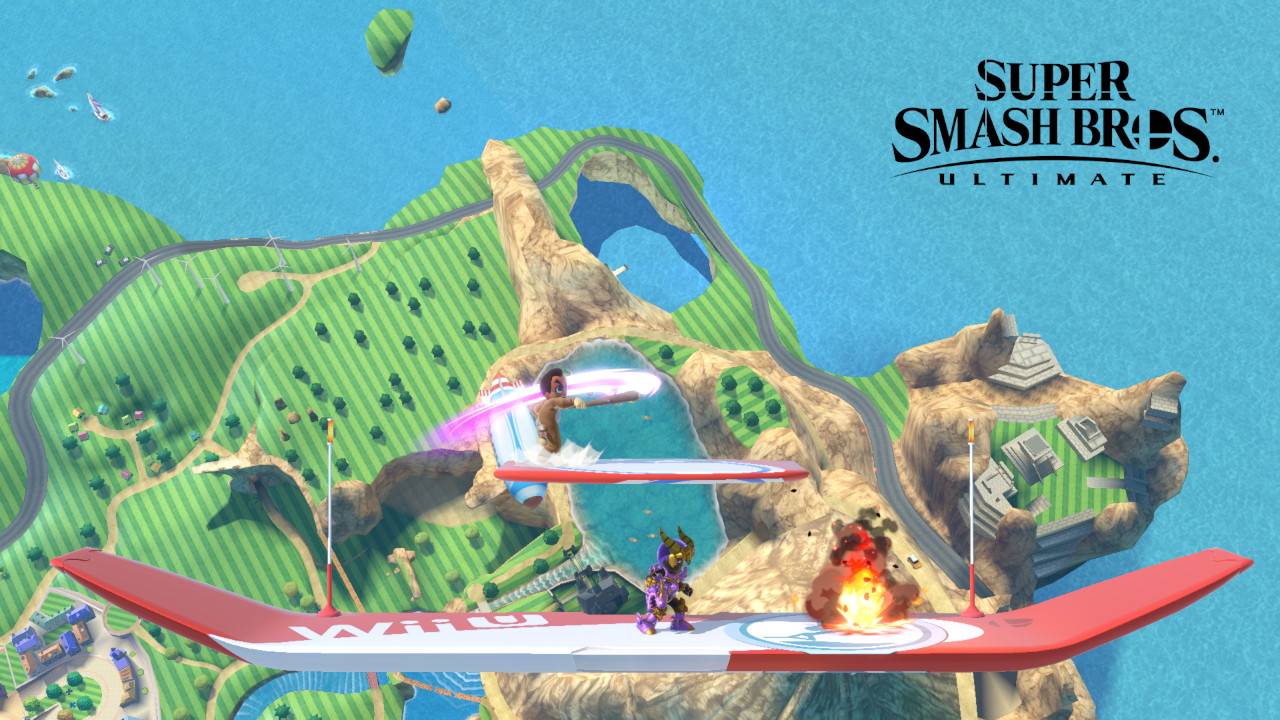
Wuhu Archipelago – advanced guide to Super Smash Bros. Ultimate arenas and scenarios
While Pilotwings just flies over the setting, theWuhu Archipelago is the arena expressly dedicated to this world. As a traveling scenario, here too the arena alternates various layouts in the passages from one location to another, and then stops at various points of the tropical paradise. Be warned, as some of the stops include a suspension bridge (two walk-offs plus holes), a yacht (water) and a beach (walk-offs plus water)!
- Origin: Wii Fit, Wii Sports, Wii Sports Resort, Pilotwings Resort
- Stage representative of: Mii Warriors
- History: Some external scenes of Wii Fit are set on Wuhu Island, but it is Wii Sports to use the setting more (mostly in golf). Wii Sports Resort he later clarified the geography of the place. One of the minigames in the latter title allowed you to fly over the island, thus paving the way for Pilotwings Resort. Also Mario Kart hosted this scenario, with the Wuhu Circuit and Wuhu Mountain tracks in 7and with the Wuhu Village arena in the battle mode of 7 And 8 Deluxe.
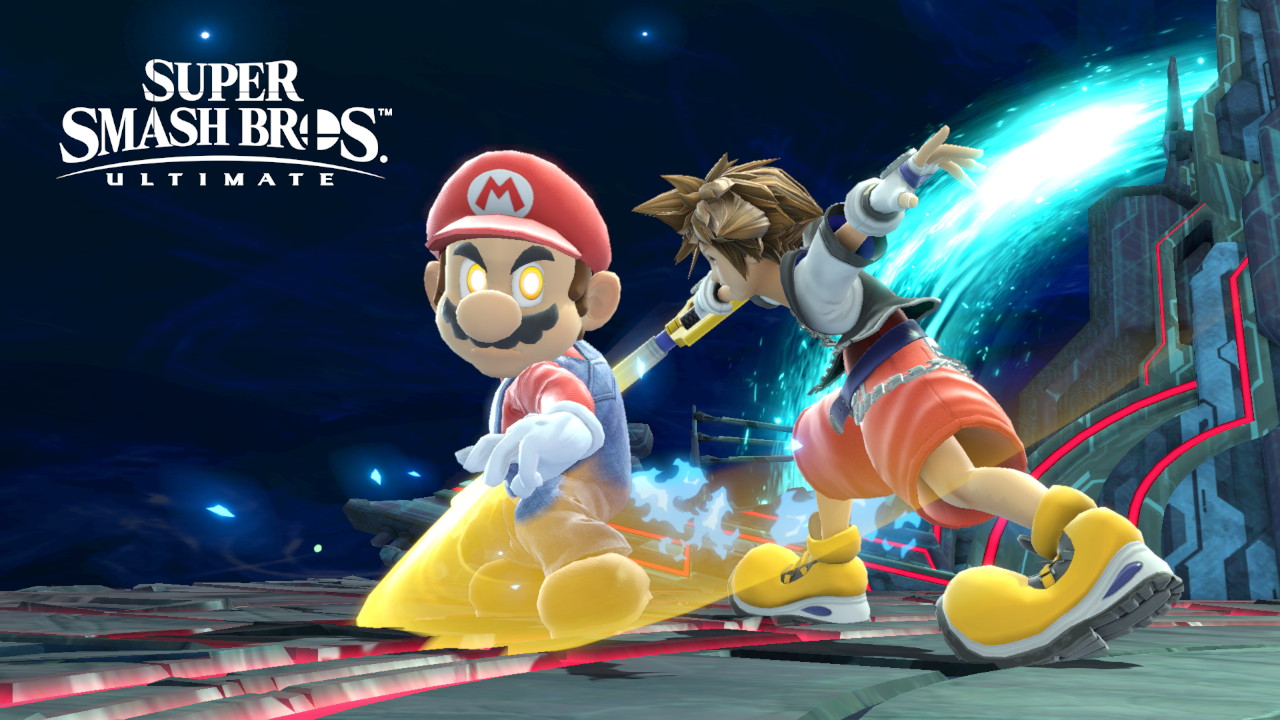
Tenth study in the appendix: Perfect shield
Jokes about “Mario was possessed by Xehanort!Aside, what you see above should give you a doubt. “But aren’t yellow eyes for the final Smash? And where is the aura?“If you’re wondering, it’s because the plumber actually just parried Sora’s blow with one Perfect shield. If you let go of the shield button (controller triggers) the moment the attack hits you, you will be able to attack immediately, enjoying a few frames of invulnerability. Getting used to it won’t be easy, but if you can, you’ll become much harder bones than your opponents expect!
[ad_2]