
[ad_1]
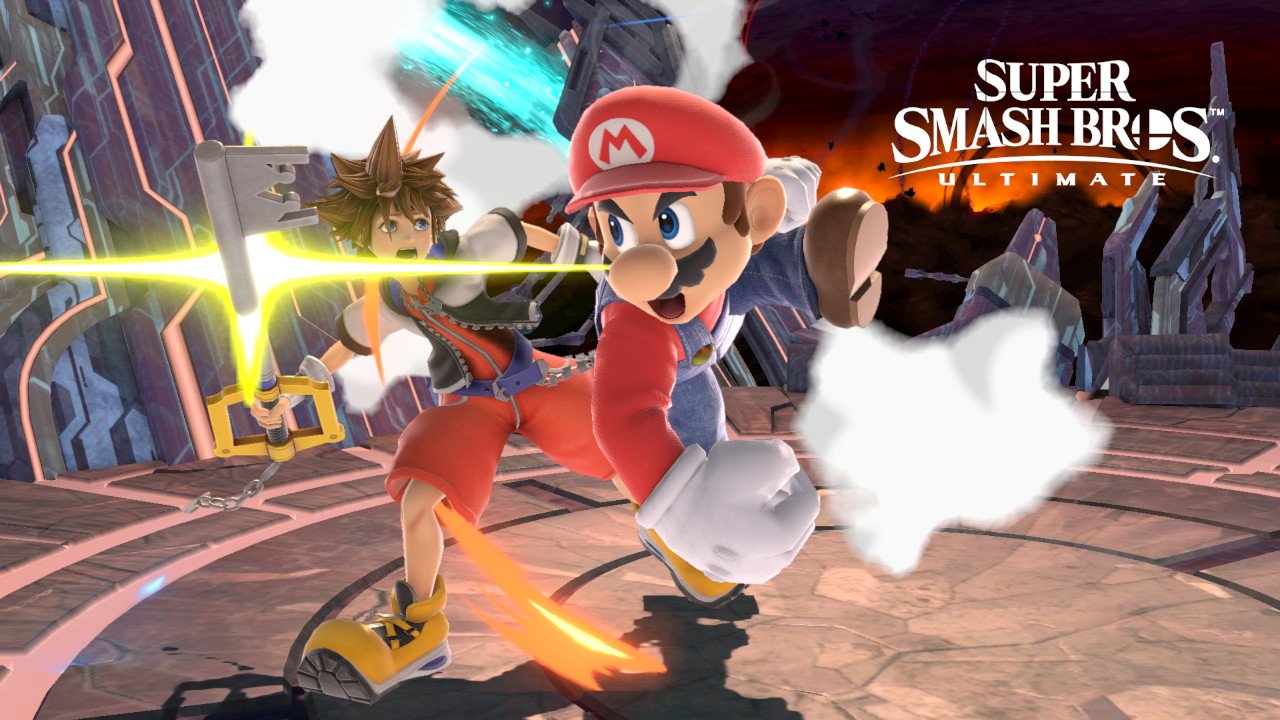
With a few months of delay, we have finally finalized the appendix to ours guide that we promised you, to close the circle with the arenas they scenarios from Super Smash Bros. Ultimate. The game has over a hundred locations in which to give it a damn, and that is why we have calculated in advance how many extra bets to dedicate to the game. This will be the first of twelve appointments, with which we will keep you company for the next few weeks. Since at this point you will already know how to use the various characters, the final section of each episode will be dedicated to the competitive corner. Today we will talk about walk-off.
Preamble of the Appendix
Here’s what to expect from the arena and scenery guide of Super Smash Bros. Ultimate. In each of these twelve events, we will talk about each scenario, its origins, who are the fighters who play at home and, in the case of the DLC, also the availability. No scenario, except for the aforementioned downloadable content, needs to be unlocked: everything is available right from the start of the game. Ironically, you may need to unlock historically associated characters at certain levels, but there is a guide for that too. Furthermore, as for the wrestlers, here too the images precede their respective section. Are you ready?

The Ruins (normal, XL, XS) – advanced guide to Super Smash Bros. Ultimate arenas and scenarios
Among the most popular arenas of the competitive scene, what will be one of the simplest scenarios of this guide cannot be missing: The Ruinsfirst level shown for Super Smash Bros. Ultimate. Like its counterparts (and not, see Duel Zone from the first chapter), also in this case it is a single platform accompanied by three smaller ones. Due to its simplicity, it is one of the very few legal scenarios in tournaments. Over the years, the arena has included more and more background details, transforming it into a real battlefield (hence the English name Battlefield). There is also a version XS and a version XL: the first reduces the small platforms to two, the other increases them to have six.
- Origin: series Super Smash Bros.
- Stage representative of: no one in particular
- History: There is no real story, but it can be assumed that it is the result of an unprecedented clash in that jumble of videogame worlds that is the story mode, The Star of Hope. In that sense, it is heavily implicated in Brawl that the third version of The Ruins was born following the destruction of the Great Labyrinth by Tabuu.

Final Destination – advanced guide to Super Smash Bros. Ultimate arenas and scenarios
“No tools! Only Fox! Final destination!”, This is the competitive scene of Melee summed up in six words. Okay, it’s not own like that, but we haven’t even gone far. It is a single flat platform, and together with Le Rovine, in Ultimate extends its layout to all other levels as well. By pressing X on the level selection screen it is possible to alternate between the normal arena, the counterpart “The Ruins” (one large platform and three small ones) and the Ω version (one large platform). In Classic Mode, this is usually where Master Hand, Crazy Hand and / or Giga Bowser face off. In the competitive scene, needless to say, it’s legal.
- Origin: series Super Smash Bros.
- Stage representative of: none in particular (technically, Master Hand)
- History: Sticking to the always shaky canonicity of the series, if Master Hand is the hand of a child intent on playing with his Nintendo action figures (first chapter) it is possible that Final Destination must represent the simple surface of a table. Take it with a grain of salt, though.

Dream Land (64) – Super Smash Bros. Ultimate arena and scenario advanced guide
The first thematic arena of the series, as well as part of the (almost) totality of settings that make their return from the very first Smash. What about Dream Land (64)? This is an arena with an almost identical layout to that of Le Rovine, with the exception of Whispy Woods in the background. Its gusts of wind can be annoying, but by deactivating the dangers (or choosing the variant Le Ruine) you get an arena functionally identical to the first we described.
- Origin: series Kirby (attributable to Kirby’s Dream Land on Game Boy oa Kirby’s Adventure on NES)
- Stage representative of: Kirby
- History: The main song (by default), Gourmet Race (64)is a rearrangement of the theme of the same name from La Gara dei Buongustai da Kirby’s Fun Pak (better known elsewhere as Kirby Super Star). The arena is based on Whispy Woods, literally “whistling grove”, which usually always appears as the first boss in the various chapters of the saga. When it doesn’t, it still presents spiritual heirs (Kirby and the Mirror Labyrinth, Kirby Triple Deluxe, Kirby and the Lost Land) or corrupted versions (Kirby Planet Robobot). King Dedede appears in the background when he is not taking part in battles in this scenario.

Hyrule Castle – advanced guide to Super Smash Bros. Ultimate arenas and scenarios
A slightly larger arena, this one, but still very standard in its conformation. The first scenario of the Classic mode (“1P Game”) of the first Smashthe Hyrule Castle, consists of a wall, a tower with a few balconies to act as a platform and a turret in which to chain repetitive attacks. Occasionally, a tornado will appear to knock the fighters away.
- Origin: The Legend of Zelda: Ocarina of Time
- Stage representative of: Link (mostly odd costumes), Link Child, Ganondorf
- History: Even in the textures, the castle follows its counterpart of Ocarina of Time, whose Zelda (a design seen only in Melee, but remained in the series via Kirby’s cap) confided to a young Link his suspicions about Ganondorf’s future betrayal. The top of the castle has never been visited in the original game, while its post-apocalyptic counterpart (Ganon Castle) was the scene of the final battle that divided the timeline of the Zeldian saga in three.

Kongo Jungle – advanced guide to Super Smash Bros. Ultimate arenas and scenarios
Another simple arena. There Kongo jungle it consists of a main concave platform with others, smaller, on top. The barrel-cannon poking back and forth under the ground can prove to be a lifesaver for returning to the field, if the player is lucky enough to stumble upon it while in flight.
- Origin: Donkey Kong Country
- Stage representative of: Donkey Kong, Diddy Kong
- History: The aesthetic of the level follows the eponymous first world of Donkey Kong’s solo debut, in the first Donkey Kong Country of 1994. The first level, in particular, showed a spectacular (for the time, but not only) transition from afternoon to sunset, until evening. The iconic tune composed by David Wise for Jungle Hijinks (from us Giungla Gincana) was traced in Smash and accompanied the reveal of Donkey Kong Country Returns in E3 of 2010.

Mushroom Kingdom (64) – Super Smash Bros. Ultimate arena and scenario advanced guide
If the arenas in the first row of the scenario selection screen seem retro to you, try a level that opted for the retro aesthetic in the first game. The Kingdom of Mushrooms it is a real love letter to the first Super Mario Bros., and as such it presents many obstacles from that same game. This is the first arena in the game to feature the walk-off, or the possibility of ending up outside the scenario even without finding yourself in mid-air. In tournaments, any arena that features a walk-off is banned by default.
- Origin: Super Mario Bros.
- Stage representative of: Mario, Luigi, Bowser, Peach, Piranha Plant
- History: The arena does not refer to an area of Super Mario Bros. specifically, opting instead for a global look at Mario’s first side-scrolling adventure. Specifically, here are the platforms with pulleys, a POW borrowed from Mario Bros. (which we will talk about in a few episodes), of the cubes containing objects, tubes that allow teleportation (Piranha Plants not playable permitting) and, in the background, the mini-castle at the end of the level.

Peach’s Castle (64) – Super Smash Bros. Ultimate arena and scenario advanced guide
In the first Smash the Mushroom Kingdom had to be unlocked, while (similar to a concert lineup) the first scenario available to represent Mario’s then most recent adventure was the Peach Castle. The arena features a main deck, a bumper on top, two slippery triangles on the sides, and a drawbridge underneath everything else. The concept is similar to that of the Kongo Jungle with the cannon, but perhaps in a more accessible way.
- Origin: Super Mario 64
- Stage representative of: Mario, Peach, Bowser
- History: “A dollhouse“. The never-too-praised Nintendo The Official Magazine has thus defined Peach’s castle, and we cannot blame its editors. The game took Mario into the third dimension, but it also gave a canonical home for the first time to the princess of the Mushroom Kingdom, trapped within the walls of the plumber’s headquarters for one of his best adventures.
Saffron City – advanced guide to Super Smash Bros. Ultimate arenas and scenarios
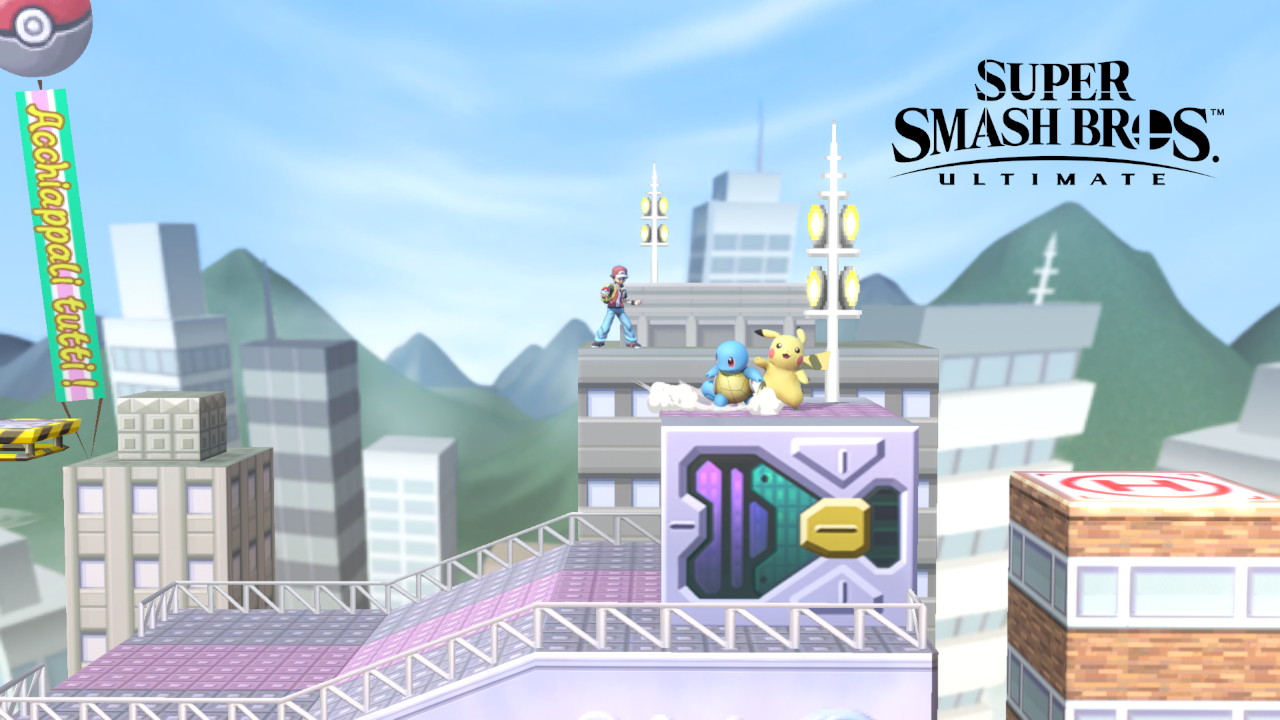
At a time when the Pokémania was still young, Masahiro Sakurai wanted to opt for the anime as the main influence behind the first arena Pokémon of the franchise. Saffron City it offers a very spartan layout: two static platforms on the sides, one moving vertically, and the roof of Silph SpA to act as a theater for the clashes. However, the inevitable elevator hosts an unpleasant surprise for those who hang out at the exit: a random Pokémon, ready to contribute to the defeat of the victim.
- Origin: Pokémon Red Version and Pokémon Blue Version
- Stage representative of: Pikachu, Jigglypuff, Pichu, Mewtwo
- History: As we explained when talking about the regions Pokémon and their real-world inspiration, Saffron City is Tokyo’s fictional counterpart as the nerve center of its home region. Silph SpA started a long line of big fictional companies, such as Devon of Hoenn and PokéKron SpA of Sinnoh. Curiously, in reality it is the commercial center of the nearby Celadropolis that boasts a roof (one accessible, of course), and not the “megacity” of Saffron City.
Big Tree of Happiness – Super Smash Bros. Ultimate arena and scenario advanced guide
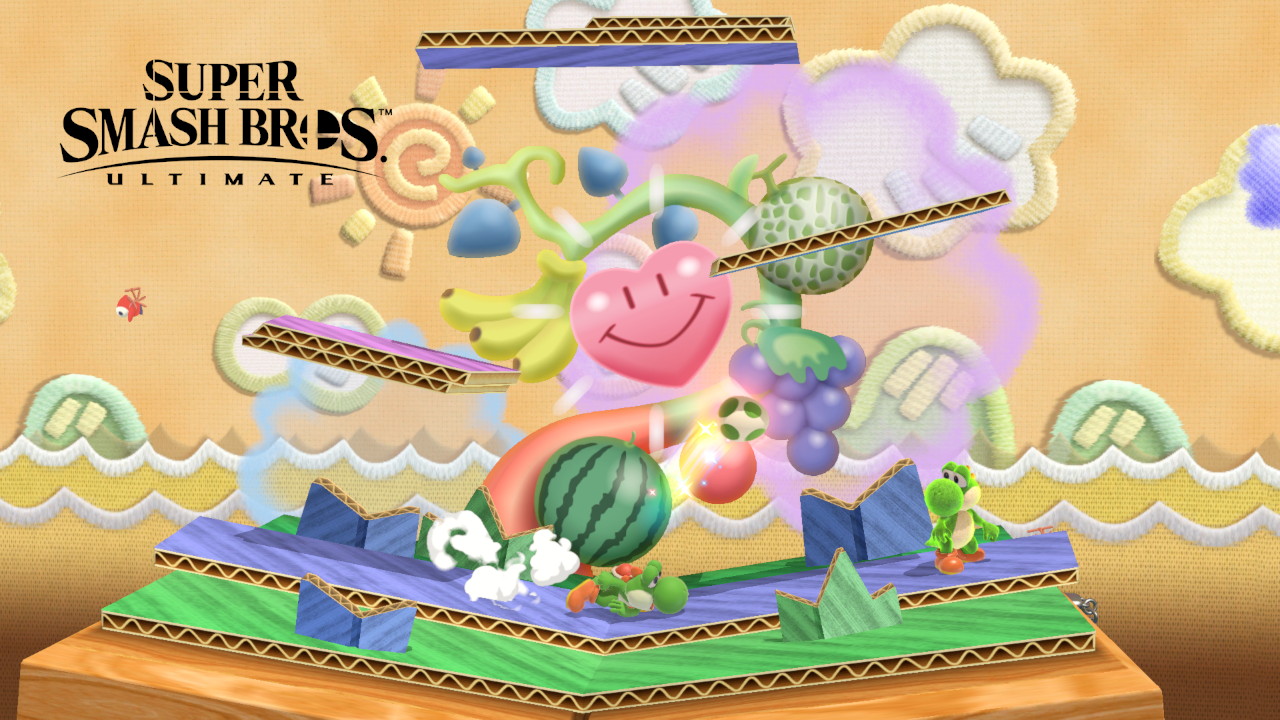
Originally called Yoshi’s Island, this arena harks back to the Nintendo 64 semi-sequel Yoshi’s Story. Alone Brawl, as we will discover in a few episodes, would have created a real arena dedicated to the classic for the NES. The Big Tree of Happiness follows the layout of Le Ruine, but enlarging and tilting the platforms at the top. The generous distance from the edges is due to the sporadic appearance of clouds that can act as temporary platforms.
- Origin: Yoshi’s Story
- Internship representative of: Yoshi
- History: In fact, the animated book aspect of the game world of Yoshi’s Story it goes beyond a simple fact of stylistic choices. In fact, it was Baby Bowser who transformed the island of the Yoshi into an animated book, to take over the tree. It will be up to the Yoshis to restore it to its former glory by recovering the lost fruits. The tree appears as a background during the final showdown with Baby Bowser.
First study in the appendix: walk-off and legality in tournaments
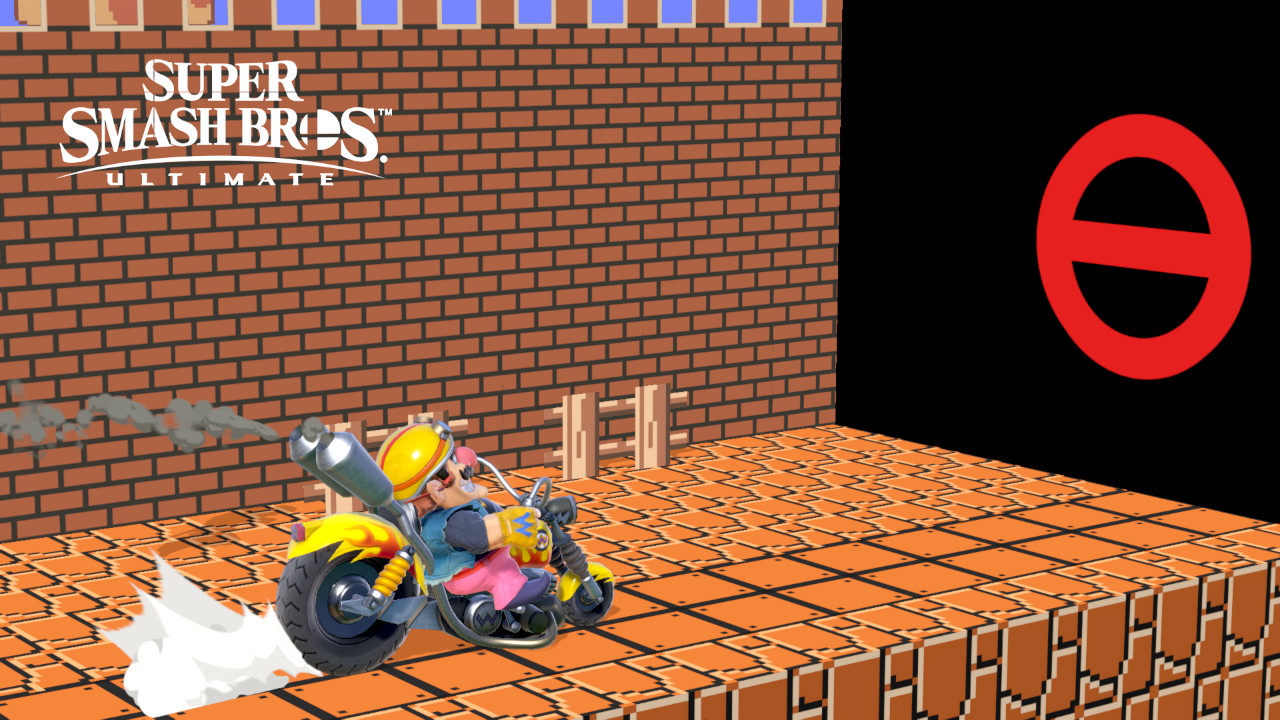
Not all arenas are as brutally honest as the Mushroom Kingdom you see above. The edges of the arena are visible in a small legend when someone walks out of the frame, but we talk about walk-off when they are reachable on foot (or by motorbike, but they are details). Each scenario equipped with a walk-off is banned from tournaments by nature, and the same goes for any arena that presents dangers (unless they are not very influential, such as in the case of Dream Land 64). The reason behind the hatred of walk-offs is simple: anyone is able to place themselves near the edges of the scenario and carry out an elimination without inflicting damage (and without exposing themselves to risks).
[ad_2]