
If you searched for the best match-3 games on Android, you probably don’t need a definition of the genre. You want a short, trustworthy list that cuts through thousands of lookalikes and tells you what’s worth installing and why. Match-3 has splintered into several subgenres: pure puzzle marathons, makeover stories with a level gate, and RPGs where a good cascade hits like a crit. The right game depends less on art style than on pace, monetization, and how much meta-management you actually want between boards.
The seven games below cover those lanes without stacking clones on top of clones. I focus on the loop you’ll repeat for hours, how progression feels after the honeymoon, and what sort of player each one rewards. Where ads, energy systems, or subscriptions matter, I call them out. The goal is simple: pick one tonight and know what you’re getting into.
Candy Crush Saga: the baseline for bite-size puzzling
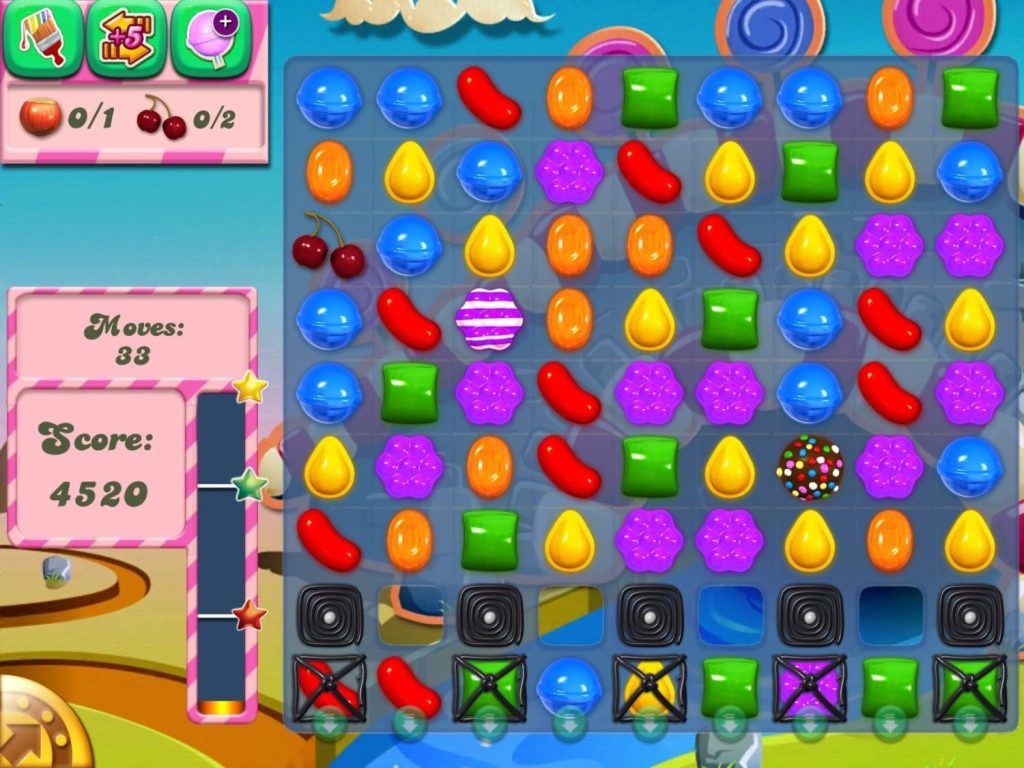
Even if you’re not actively playing Candy Crush, it still defines what most people expect from a match-3 on Android: short boards, a clean ruleset, and a rhythm of near-misses and sudden saves. You’re clearing jellies, dropping ingredients, or collecting orders within a move limit. The core loop stays tight: match three to chip away, build four- and five-matches for special candies, then detonate combos to punch through layered blockers.
The real hook is how levels escalate. Early on you feel clever for lining up a striped candy into a color bomb. Around the 200s and 300s, the boards start tucking necessities behind licorice locks, icing layers, chocolate creeps, and conveyor belts that shift your plans. It nudges you toward setting up two-move traps and saving a hammer for when a last jelly hides under a frosting stack in the corner.
Progression is relentless: there are thousands of levels and rotating events that shower you with limited-time boosters if you keep a streak alive. Outside of events, it’s a classic five-lives system with optional ads for little boosts depending on your region. Standard levels work offline, but events and team features want a connection. The monetization is familiar rather than aggressive: extra moves, hammers, and pre-level boosters for sale. If you want clean match-3 with five-minute sessions that still demand some planning, there’s a reason this is the reference point.
Who it’s for: Players who want a crisp, low-commitment puzzle fix with a huge level runway and near-instant understanding of the rules. Also a safe pick if you like checking in daily for streak rewards without committing to a meta game.
Royal Match: relentless level design without the fluff
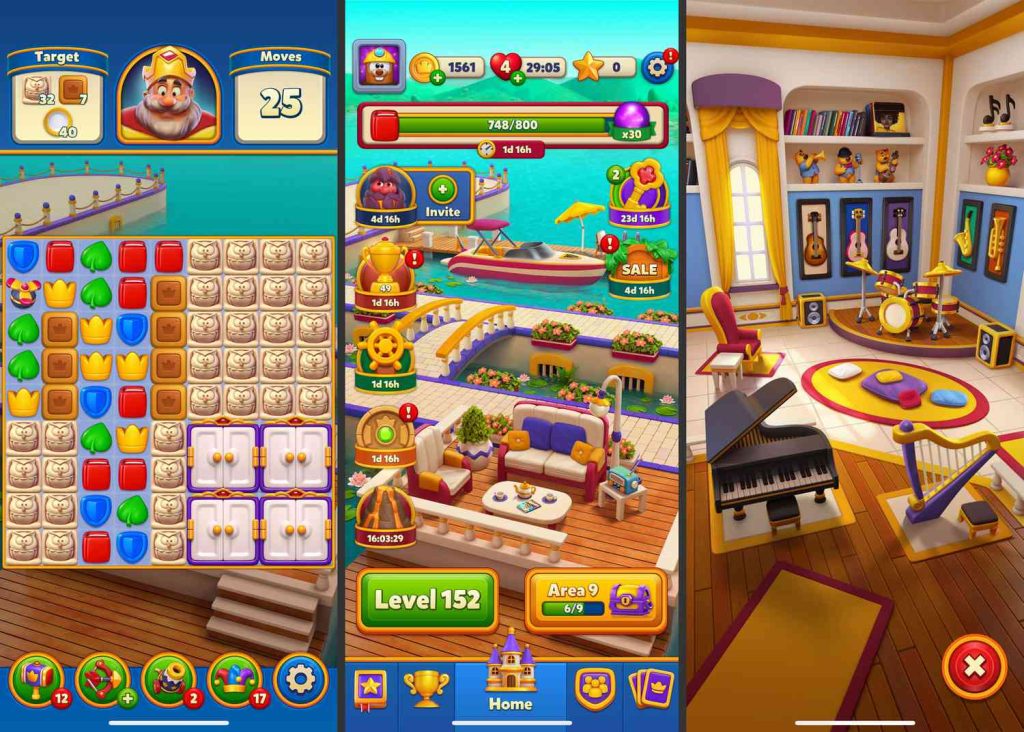
Royal Match cuts the story fat and doubles down on modern board craft. There’s a light castle-decor layer, but it mostly leaves you alone so you can blitz levels. That matters. Many match-3s bolt narrative on top of the puzzle to slow you down. Royal Match does the opposite: it lives or dies on the board’s flow and how its power-ups chain.
The loop is familiar but tuned for momentum. You’re clearing specific blockers, charging power-ups, and trying to convert early turns into board-wide swings. The game throws a rotating cast of obstacles at you, from locked cells that require adjacent matches to rope-bound tiles and light bulbs that demand directional hits. Where it stands out is how often the board lets you set up double power-up detonations a turn or two in advance. Placing two rockets or a rocket-plus-bomb correctly can clear entire lanes without relying on lucky cascades.
Progression is chaptered into sets of levels with special challenge stages in between. Team features hand out extra lives and coins, and there are frequent limited-time modes to bank boosters. Crucially, Royal Match doesn’t shove interstitial ads in your face. You’re still dealing with a standard life system and the usual in-app purchases for coins and power-ups, but the lack of forced ads keeps the pacing snappy. It’s comfortably playable offline for core levels, with events and social bits gated behind a connection.
Who it’s for: Anyone who loves the sensation of chaining power-ups back to back and wants the “pure puzzle” feel without a heavy story layer. Great if you prefer “just one more board” loops that regularly turn into ten.
Gardenscapes: cozy story with a real puzzle backbone
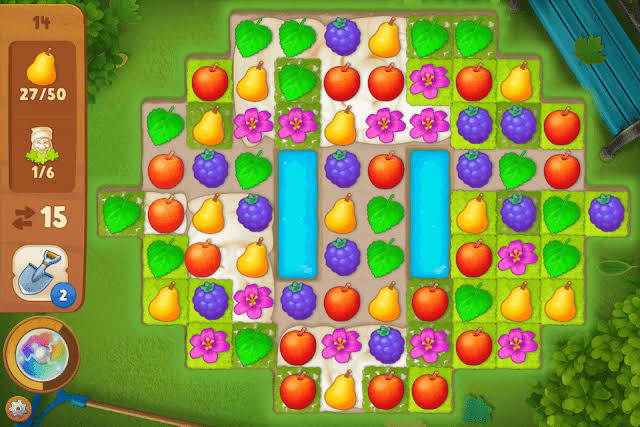
Gardenscapes became a meme for its off-brand ads, but the actual game is an effective mix of match-3 and light renovation sim. The core is familiar: beat a board, earn a star, spend stars to tidy up the estate, unlock new garden sections, and push the story forward. What differentiates Playrix’s design is the steady arrival of new board elements that interlock in ways you can’t ignore.
Mid-game levels demand planning around blockers like crates that need multiple hits, lamps that charge and burst, honey that slows tile movement, and color-locked gates. You learn to pocket a rainbow blast for when the board introduces color-specific blockers, and you start using pre-level boosters intentionally rather than reflexively. The story beats are breezy enough to act as a breather between harder segments, and the renovation tasks give you micro-goals even if you’re stuck on a single board for a day.
Events run constantly: seasonal gardens, infinite-life windows, and competition tiers that spit out extra boosters. Monetization is the familiar triangle of lives, boosters, and extra moves. You can definitely play free, but the difficulty spikes are deliberate; your progress will ebb and flow with lucky boards, resource hoarding, and patience. Offline play works for normal levels, with social features and events tied to online sessions.
Who it’s for: Players who like a gentle narrative wrapper and the satisfaction of slowly restoring a space, but still want boards that require set-ups rather than blind swiping. It’s also good if you enjoy collecting cosmetic choices as a secondary motivation.
Marvel Puzzle Quest: match-3 where you build a roster and fire powers
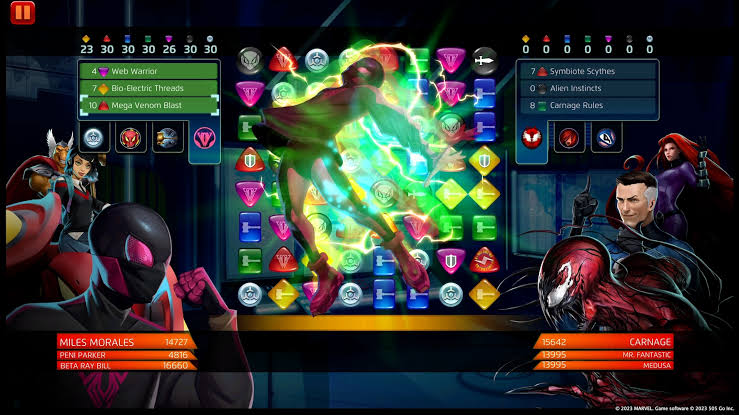
Marvel Puzzle Quest is where match-3 becomes an RPG. You field a three-hero team, match tiles to gather colored AP, then spend that AP to trigger character abilities that shift the board or directly damage enemies. It turns tile priorities into tactical trade-offs. Do you chase yellow to charge Captain Marvel’s AOE now, or feed blue into a control power that will deny the enemy team their red burst next turn?
The match itself is turn-based, so there’s time to plan. Abilities create or consume special tiles, and enemies do the same, so reading the board is about more than cascades. Synergy matters. A passive that strengthens friendly strike tiles pairs beautifully with a hero who floods the board with them. The roster side is a long climb: you acquire “covers” to unlock and rank powers, invest ISO-8 to level heroes, and expand roster slots with a second currency. Events rotate daily and weekly, from story nodes to competitive brackets with score targets and defense teams.
It’s a live service game through and through. You can log in for quick dailies or grind a few hours during special events to earn new covers, but long-term progression relies on persistence. Monetization revolves around draws for hero covers and resources; spending can speed things up, but smart play and event participation also move the needle. New players should expect a slower on-ramp while you collect a few solid low- to mid-tier teams that can clear event milestones.
Who it’s for: Marvel fans who want their matches to feel like tactical combat rather than a race against a move counter. If you enjoy theorycrafting teams, watching powers interact on the board, and chipping away at a roster over months, MPQ hits a niche very few match-3s do.
Empires & Puzzles: base building meets color-stacked raids
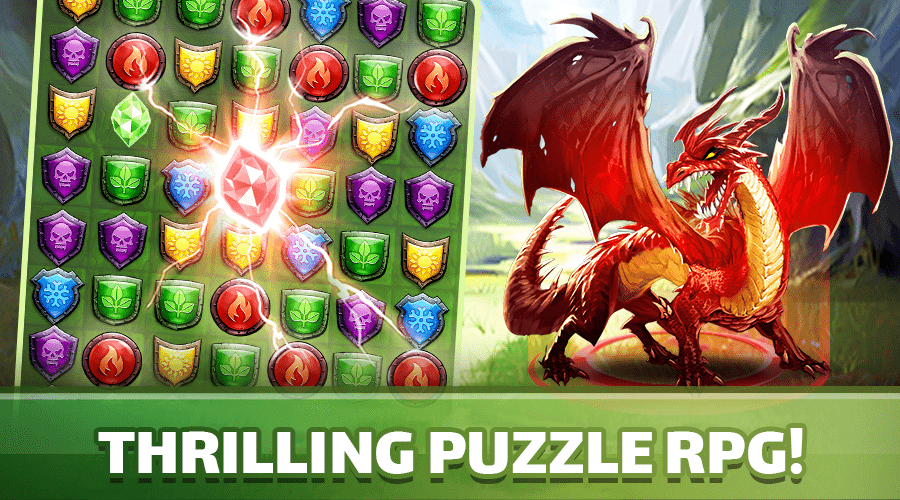
Empires & Puzzles frames match-3 around a village builder and hero-collecting RPG. Boards play out vertically with your matches launching tiles upward into enemies. Matching feeds mana to your team in that color, and enemies fire skills back as turns pass. It looks simple until you start stacking two or three heroes of the same color to focus damage, time dispels before enemy buffs land, and aim tile streams to avoid charging the wrong target.
Between battles, you upgrade buildings, train troops, craft battle items, and slowly push your stronghold higher. That base generates resources that feed your hero and troop development. The loop stretches well beyond the campaign: there are titan hunts with your alliance, rotating challenge events, wars, and tournaments that restrict hero rarities or colors to freshen strategies. The game rewards patience and planning more than quick reflexes. Your raid success often comes down to board management under pressure and whether you brought the right counters for enemy passives.
Monetization is centered on hero summons and ascension materials. You can play for free and make steady progress if you join an active alliance and hit daily tasks, but chasing specific heroes is a gacha gamble. Energy systems cap how many campaign or raid flags you can spend at once. Offline play is limited, since nearly all meaningful modes connect to servers and social systems.
Who it’s for: Players who like the RPG grind and the social cadence of an alliance, with match-3 as the combat layer. If you want long-term goals, raid metas to follow, and the satisfaction of punching above your roster’s weight with smart tile play, Empires & Puzzles is built for that.
Grindstone: chain-matching that feels like puzzle-combat
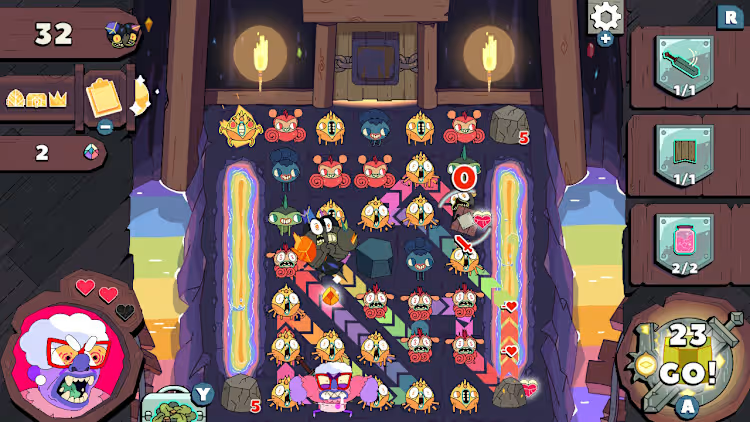
Grindstone isn’t the usual “move one gem” match-3. You draw a path through same-colored creeps to create long chains, then cash them in as your sword swing for the turn. Longer chains spawn grindstones you can route through to switch colors mid-chain, opening up board-spanning routes that feel like solving a geometry puzzle under threat. Enemies telegraph attacks and move around, so your chain not only clears space but also positions you for the next turn or opens a path to the exit door.
That makes the loop feel more like a turn-based brawler than a traditional puzzler. You collect materials to craft gear that changes your options: a shield that absorbs a hit, potions for emergency heals, arrow shots to puncture a key enemy when your path won’t reach. Levels introduce hazards like explosive creeps, ice, and locked chests that tempt you into greedy detours. The satisfaction comes from plotting a 20-creep chain that uses a grindstone pivot at just the right tile to also snag the chest key and line you up safely for the incoming wave.
On Android, Grindstone is part of the Netflix Games catalog. That means no ads and no in-app purchases, but you need an active Netflix account to install and launch it. Progression is a steady mountain climb with optional challenge routes and daily runs that reward mastery over luck. Sessions can be short, but the game rewards planning and experimentation more than blind swiping.
Who it’s for: Puzzle fans who want something more tactical and premium-feeling, and who have a Netflix subscription. If typical match-3s feel too automated, Grindstone’s chain-drawing and risk-reward loop is a palate cleanser.
Best Fiends: link-matching with character perks and objective variety
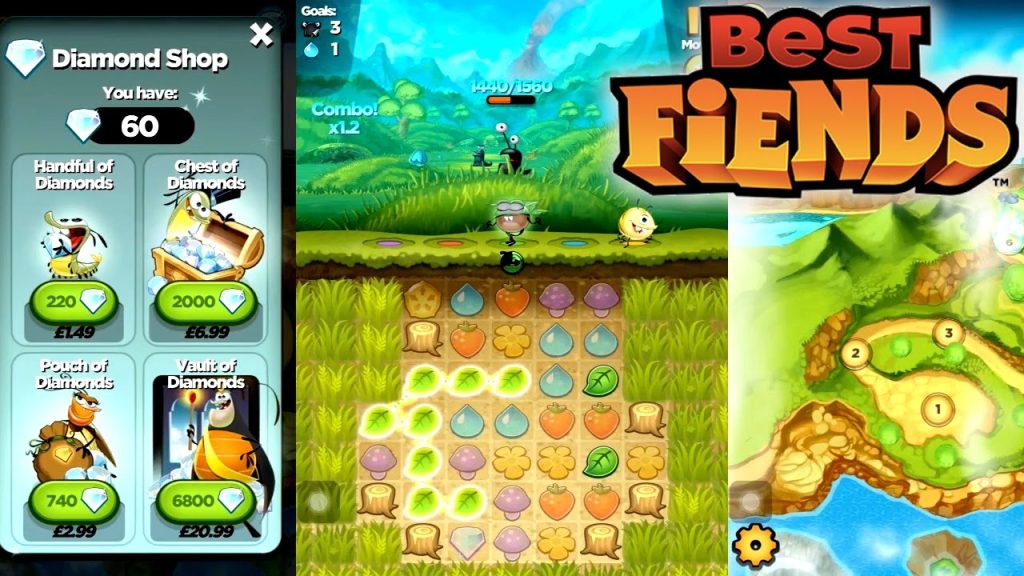
Best Fiends sits in the “link three or more” branch of the match-3 family. Instead of swapping tiles, you draw a line through as many same-colored pieces as possible, with longer chains spawning special pieces that explode or slice through obstacles. The twist is your squad of little creatures, each aligned to a color and offering passive boosts or triggered effects. Picking the right team shapes what chains you should prioritize and which objectives you can handle efficiently.
Level goals aren’t just “clear all the jelly.” You might be collecting a certain number of a color while also breaking cages, pushing fallen logs, or dropping items to the bottom. The board elements stack in ways that encourage one small setup before a big sweep, and the link mechanic lets you snake around blockers to pick up one last color you need. There’s a light collectible layer as you unlock and evolve characters with materials and currency earned from levels and events.
It’s free-to-play with optional ads for bonus spins or extra energy, and it’s friendlier than many when you just want to clear a few levels without interruption. Difficulty ramps lean on resource management and making the most out of special tiles you create, not just praying for perfect cascades. Offline play covers the basics, while events and social features expect a connection.
Who it’s for: Players who like the tactile feel of drawing long chains and want a lighter, more colorful take on the genre with just enough team building to add variety, not homework.
How to choose the right match-3 for you
These games all ask you to clear a board, but they scratch different itches. A quick way to narrow the field:
- If you want five-minute bursts with clean rules, pick a pure puzzler. Candy Crush Saga and Royal Match are built for short sessions and satisfying power-up chains.
- If you like a story wrapper and a sense of place you’re improving, go for Gardenscapes. The renovation tasks become a reason to push through harder boards.
- If you want combat and long-term team building, choose a match-3 RPG. Marvel Puzzle Quest emphasizes tactical power timing; Empires & Puzzles adds base-building and alliances.
- If you have Netflix and want a premium-feeling puzzle-combat hybrid with no IAP, install Grindstone.
- If you prefer drawing long chains over swapping tiles, Best Fiends is the most polished version of that style on Android.
Also consider your tolerance for timers and shops. Most free-to-play puzzlers use life systems or energy to pace progress. That’s not inherently bad, but it changes how the game fits your day. If you hate running out of attempts, look for titles with generous events that hand out free lives during streaks, or a non-IAP option like Grindstone if you’re already paying for Netflix.
What we didn’t include, and why
Plenty of match-3s are popular but overlap heavily with the picks above. Toon/Toy-style “blast” games share DNA with Royal Match but rely on tap-clearing clusters rather than swapping, which drifts from traditional match-3, so we built a separate list for the best games like Toon Blast for Android which we recommend you to check out. Some classics have uncertain support or availability on Android across regions. Rather than spread thin across near-duplicates or titles with shaky app store presence, this list focuses on seven you can install confidently and that represent distinct flavors of match-3 right now.
The bottom line
Match-3 on Android isn’t one thing anymore. If you want clean, quick puzzles, Candy Crush Saga and Royal Match are better now than their reputations suggest, with level design that rewards observation instead of autopilot. If you want a reason to keep coming back beyond a level counter, Gardenscapes’s steady renovation loop scratches the same part of the brain as finishing a small project every night. If you want strategy, Marvel Puzzle Quest and Empires & Puzzles turn tile-matching into team building and timing, for better and for grindy. And if you’re tired of shops and ads altogether and happen to have Netflix, Grindstone is a gift.
Start with the one that matches your mood, not the charts. The right match-3 is the one that turns five spare minutes into a satisfying little win without nagging you after the fact.

![How to fix Metadata file supplied is not a supported version [39] with an updated il2cppdumper](https://androidrebels.com/wp-content/uploads/2026/06/il2cppdumper-error-39.jpg.pagespeed.ce.PVbKvbIZKX.jpg)